Author Attacked by Ape!

I recently visited Gibraltar. Gibraltar is a UK territory attached to the south of Spain. The Rock of Gibraltar is home to the Barbary Macaque Apes.

macaque ape.jpeg

I’m a person who likes a challenge; I crossed the highest, longest suspension bridge in North America, I swam with sharks. But, moreso, I like to explore; I saw a grisly bear in the Yukon, held a Koala in Australia, traversed the catacombs in Paris, etc.

So, I was there on the Rock of Gibraltar to get a peek at both Spain on one side and Africa on the other all the while standing in Europe. Pretty freaking cool.

The apes, which look more like monkeys (and are referred to as such), wander free there. They hang out on the patio of the visitor’s center, play in the trees and bushes, and hang out on the roads.

I did get close enough to one to have a photo. But I know better than to attempt to feed a wild animal. I did see four young women getting their picture taken by a park ranger while they fed one of the adult Macaque’s not far from the “Do Not Feed” sign.

From the visitors’ center, you can hike to other views, other places on the Rock and even all the way down. There’s another shop on the Rock where you can see a cave and buy trinkets, which is what I did. When I travel, I like to buy holiday ornaments for my tree as a remembrance.

I have the Big Ben, the Eiffel Tower, a Santa Star Fish from Hawaii, and even a Santa Chili Pepper from New Mexico to name a few.

I hiked back up to the center to grab some water and lunch before taking the cable car back down to the city. ape.png

I’d been warned not to take a big back pack or food with me. The monkeys, they said, will jump on you. I heeded these warnings, had only a small pack/purse and no food.

But approaching the visitors’ center, one of the juveniles (juvenile delinquent!) jumped on my back. I raised my hands in surprise and she bit me. She then opened my bag, took the ornament, and hopped off. (This is the picture of the monkey as it tried to eat my ornament! Thank you, Geoff)

I’m okay. Maybe “attacked” is a strong word, perhaps assaulted is better?  She left a dental impression and some scrapes on my hand. Yes, a little blood, swelling, bruising. My doctor is a little vexed with me.

But what does this have to do with writing?

We must challenge ourselves, we must overcome, we must use incidents such as these as inspiration or fodder. I feel all of these adventures make me who I am and my writing what it has become over the years.

better an oh well than a what if.jpg

I’m not suggesting you put yourself in harm’s way! I am suggesting that once in awhile get out and face your fears, do something new, experiment, explore, learn something new – this will create fresh shifts in your writing (and in yourself)!

The whole incident has me thinking of a half a dozen stories!

The Anxiety of Non-Influence

cover life of clouds

I had this image in my head of a father telling his little girls stories to teach them lessons. The stories were about clouds and he sang them in an old fashioned, rhythmic way.

The little girls have images in their heads, familiar sounds from far away and long ago.

But Daddy’s not there. The songs are gone. And a piece of the girls got lost somewhere.

This is what I think of when I think of Life of Clouds.

But the story really has a lot to do with anxiety. So many of our young people experience anxiety and depression – and these girls are suffering.

There’s hope though. Somewhere, there’s always hope.

Family Secrets

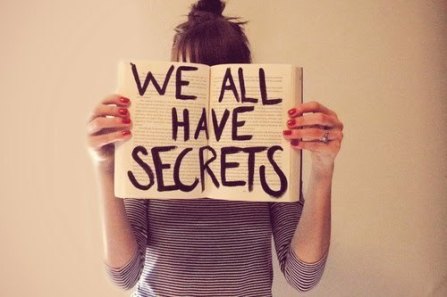
girl with book that reads we all have secretsAll families have secrets. I think that’s why some of us become fiction writers. Maybe, much to our family’s horror.

Secrets released in fiction is like water under pressure – there’s a spurt which resembles something other than what it really is. So, mostly, our family is safe.

Some secrets come to us second hand – the things people told us, what we know of other families, friends, acquaintances. In all honesty, these are my favorites.

The Gold Tooth is an amalgamation of family secrets. These are separate things from the gold tooth cover.jpgdifferent people whispered to me at times, laughed about at other times, assumptions from other people – all mixed up in a writer’s brain to spurt out under the pressure of a story.

My grandmother told me a story in which a mother, in trying to teach her children biggest is not best, used to offer the children unmarked gifts in various sizes. Whoever choose based on the biggest gift didn’t necessarily received the best gift.

A friend told me she’d inherited teeth from an aunt.

Another friend provided details about an uneven and questionable disbursement of a will and trust.

They all mashed together to create this story of a mother who tried to teach her daughters a lesson, protect one, maybe both, by the terms of a her will.

Feel free to tell your secrets to a fiction writer. They’ll never tell the whole truth.

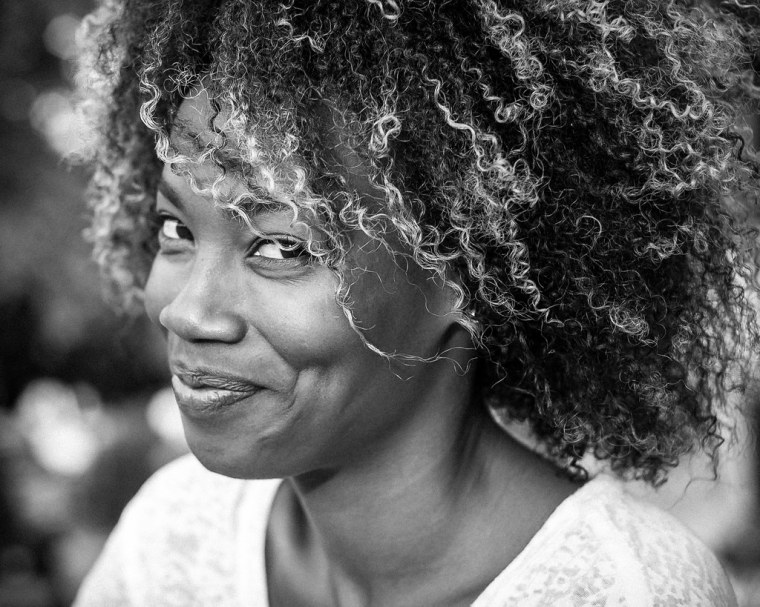
beautiful woman with wry smile.jpg


When they believe it’s about you….

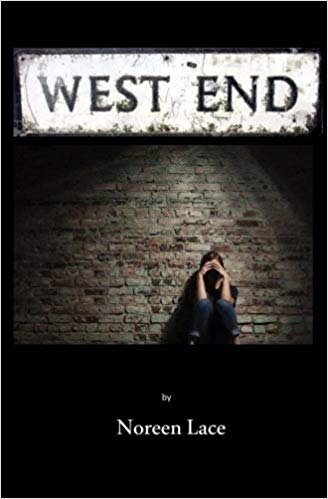
cover of west endI’ve written so many stories from first person point of view. At first, I was nervous because people did ask – is that real? is that you? and even contacted me and said – I know that’s about you.

So, it does make a person nervous about what they write and publish.

But at some point, you’ve got to let people think what they want to think. None of it will affect you in the long run.

I had an editor refuse a fictional story because, he said, it’s memoir and ultimately we didn’t ask for your personal story.

I thought – it must be good if he thought it was me! But I didn’t bother to correct him. It was a fiction call and I’d submitted fiction. If the editor didn’t realize the “I” didn’t necessarily represent the author, but the character, he is probably not the editor I need to work with nor the journal I want to be published in.

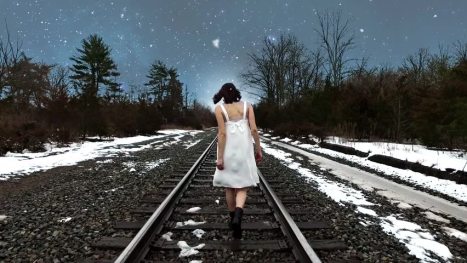
I worried about this with West End – my first big publication. One of the big criticisms girl on train tracks.jpgfrom someone who believed they knew me thought it wasn’t a realistic portrayal of me. I had to tell him because the character was not me! While the same story convinced another person that I’d led a secret life prior to moving to California.

Possibly, one of the convincing elements of the story is the setting. The place, the west side of Cleveland, where I grew up, is real. You can trace the steps of my characters who walked the path passed the baseball field and lost themselves on the train tracks, or those who played in the abandoned buildings. The streets are still there, the houses still stand, except the one which burned to the ground – a vacant lot interrupts the landscape of the neighborhood.

West End was a passion project. It was for the kids who I’d known and those I didn’t who never made it out. But it wasn’t me. Maybe parts of me live there in the pages and parts of me live on those streets.

Ultimately, you can’t allow another person’s possible opinion of you affect your writing.

6 Reasons Self-Publishing Beats Traditional Houses and Agents – Guest Blog by John Grabowski

For most writers, getting a contract from a traditional publishing house is the golden biscuit, the grand reward after a struggle with run-on sentences, superfluous commas, and tired clichés. Many people will then spend years looking for an agent, and then have an agent try to place their work with a publishers, big or small.

But here’s reality: unless you’re J.K. Rowling or Stephen King, you’re almost certainly not going to receive the red carpet treatment you’re no doubt envisioning. Once upon a time, not a long time ago, self-publishing was considered the literary outback, the place for hacks. Now, in an ironic twist, we just may be witnessing the reversal of fortune. The Bix Six seem to be wallowing in their formulas. Meanwhile, much fresh thinking is coming from self-published authors who build their followings online. So rather than wait for your genius to be appreciated, here are six reasons you should consider being self-published:


  • You are your own editorial voice. While every self-published work should go past the eyes and red pen of an experienced editor, ultimately you can write and publish what you want. You don’t have to deal with an editor or agent who wants a happier ending, a younger protagonist, or the locale moved from Pittsburgh to Paris.


Your hired editor may suggest changes, and you should listen. But ultimately you stand or fall on the product. You won’t have to deal with the agent who refuses to read a manuscript because she never looks at anything that begins with dialogue, or one who says she won’t consider a novel written in the first person, or one who says the work cannot have a “Prologue” or an “Afterward.” Ask yourself if a reader ever put a book back on the bookstore shelf for any of those reasons and you’ll begin to see how silly and random the process can be.


  • You set pricing and distribution. Ever wonder why some really great book has not been reissued, forcing you to buy a beat-up second hand copy? The publisher decides distribution, pricing, and how long the title will be in the catalog. If they don’t want to keep it in their catalog, there’s nothing the author can do.


With self-publishing, your works can live on forever. Or, if later on your freshman effort embarrasses you, you can make it disappear with the click of a mouse.


  • You control the book’s cover design and artwork. This may be intimidating for some but it’s liberating to me. While some professional cover designs are great, others are simply terrible: a stock photo, the title centered above it, the author’s name beneath it. Not surprisingly, artwork like that tends to go to the lesser-known and novice authors.


If you’re unsure how to design a cover (and it involves a lot more than putting your title over a picture and your name on the bottom), google some freelance artists who do it. Study their work and contact the ones you like. If you don’t want to shell out the cash, and you have access to some design tools yourself, find covers of comparable works and study what you like, then try to imitate it as best you can.


  • You can fix mistakes. Even some very big, very famous novels have typos in them. Or formatting errors. When it’s your own work you can go back and fix the mistake, then re-upload the file. With traditional publishers, your mistakes remain, oftentimes even in second and subsequent editions.


  • You promote your work the way you want. Don’t think being published by a big house means jaunts to NPR interviews and author events at prestigious venues. Most houses do nothing to promote the majority of their authors. You have to do your own marketing and PR (an art in itself), so you might as well own and control what you’re working so hard to promote.


  • You can write the next novel you want. The curse of traditional publishing these days is even if you are a smash hit, they will want more of the same. If your goal is to write a second novel that’s different from your first, you may find doors shut to you. Despite claims on websites that agents and editors are looking for “fresh,” “new” voices, most are really chasing trends; that’s how they keep their jobs. Self-publishing is a wonderful opportunity for you to be you, and today’s self-published books look every bit as good as the product of the Big Boys. Rather than write your one-hundredth query letter, why not consider a faster, more streamlined way to reach readers?


John Grabowski worked in advertising, television news and public relations before daring to write his first novel. Entertaining Welsey Shaw was praised by Kirkus Reviews for being witty, fast-paced, and “filled with flirtatious banter.” A collection of his shorter fiction, Violet Rothko & Other Stories, will be published in September 2019.  authorjohngrabowski.com

____________________________________________________________________________________


Thanks, John!

noreen

On my bookshelf

I’ve finished my Tana French detective series and didn’t want to go to bed without another book in hand. (Nevermind there are three on my bedside table).

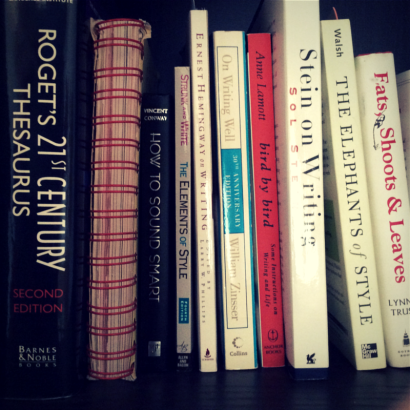
bookshelf.pngI began browsing my bookshelf, which is semi-organized: books I’ve read and loved. Books I want to read. School books. Writing books. and, of course, Poe books

I also have something mixed in that would seem, at first glance, not to belong. Books on psychology, the law, philosophy. I assume many writer’s bookshelves are this way.

A writer needs a wide variety of knowledge.

I know we have google at our disposal; however, I find reading books about, for example, the Psychology of Marketing allows me to get an in depth look that a wikipage or a few short articles are not going to give me. This allows me to create a more realistic character or more thorough background to make the story more believable.

For West End, I needed to understand two things, the idea of an absent or unloving mother, and the different forms depression can take. Anxiety runs throughout my work from Of Strays and Exes to Life of Clouds – which features children affected in different ways by the disappearance of their father.

I’ve heard handymen say they are the jack of all trades. I think writers are akin to that. We need to learn many things in order to live many lives.


Are you a rule follower?

rules.jpgJudy Blume recounts a story in which she took a writing for children class and they set out the rules involved in writing for young children, then she went and broke all of them.

Rules have purpose, have value. They give us the basics.

Hear me out on this – I believe we need to know the rules. We don’t need to necessarily continue to follow the rules.

Picasso followed the rules. But when he was comfortable and confident, he broke them in order to develop his own style.

Every writer should know the rules of writing. Even if they choose not to follow them.

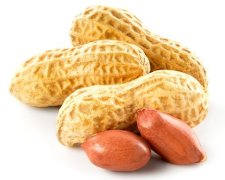
How is a Writer like a Peanut?

How are you like a peanut?

I gave this prompt to my students. Even as I was assigning this prompt, I saw the looks on their faces. They were not the first class to question my sanity; that happens regularly. So, my answer, must be “I’m a little nutty.”

Some of my students came up with amazing responses.

peanut

  • Like a peanut, I have a hard shell. But once I open up, I’m quite pleasant to know.
  • Like a peanut, I’m coming out of my shell.
  • Like a peanut, I’m a little rough around the edges, but smooth on the inside.
  • Like a peanut, I am versatile.
  • Like a peanut in a shell, I am not alone.
  • Like a peanut, I’m caramel colored.

This is challenging and, as writers, we must challenge ourselves. When we challenge ourselves, new parts of us open and allow us to grow and see life from a different point of view.

Choose an item from your refrigerator or snack drawer and compare it to yourself.
(Or choose an item and compare it to your main character.)

If you’d like to share it in our group, please do. peanut2


Use it or Lose it – for writers?

muscle-armWhen we think of “use it or lose it”, many of us think of the physical body. And, I have to admit that I was reading something about the physical aspect of our beings when I thought of applying this to writing.

When I don’t write for a day, a week, or a month, then I start again, it’s difficult and frustrating; the writing comes out scratchy, not making much sense. But, then, as I sit there forcing out the words, pushing the bad stuff out of the way, it might take me another week or month to get it moving again, but it does move and the flow is active once again.

Think of writing as a muscle – it needs regular exercise in order to flow smoothly. keepwir

If muscles aren’t exercised regularly, they lose mass. However, once they begin to work and move again, they regain the mass rather quickly. But the movement must be continual to see progress.

The same goes for writing. We need to write regularly in order to keep the flow of ideas as well as the flow of the story moving and our skills steady. Any disruption over a period of time will make the first times back difficult and challenging.

As always, the advice is – Keep Writing. Your skills will improve with practice and time. Your flow of ideas will improve and grow as long as you keep exercising those creative muscles.


Think of it like this:

Actually what the brain is doing is changing its local wiring, changing the details of how the machinery controlling your behavior is connected. It’s also changing itself in other physical, chemical, and functional ways. Collectively, those changes account for the improvement or acquisition of any human ability.

Special Needs Authors and Readers – an Interview with Patty Fletcher

Hello:

Thank you so much for having me on your blog. I’m very glad to be here.

As I’ve been reading over the questions you ask, I’ve decided the best way to begin answering them is to start by telling a bit about myself, and why I write.

As you read, you’ll also see that I’ve included Campbell my Seeing Eye Guide Dog and why I chose to do so.

SmashwordsCoverMy name is Patty L. Fletcher. I’m a single mother with a beautiful daughter, of whom I am very proud. I have a great son-in-law and five beautiful grandchildren. Three girls, and two boys. I own and handle a Black Labrador from The Seeing Eye™ named Campbell Lee—a.k.a. Bubba Lee or King Campbell, to give just a couple of his nicknames.

I’m multiply disabled. I not only suffer from Bipolar Disorder, and Fibromyalgia but I’m totally blind as well. I was born premature and my blindness was caused by my being given too much oxygen in the incubator. I was partially sighted until 1991, at which time I lost my sight due to an infection after cataract surgery and high eye pressure. I used a cane for 31 years before making the change to a Guide Dog, which was the inspiration for my first book, ‘Campbell’s Rambles: How a Seeing Eye Dog Retrieved My Life’ CN-2014.

When I began my writing career with the publishing of that first book, my purpose was to tell the story of how going to The Seeing Eye™ and getting Campbell, learning to love, handle, and work him, then coming home and adding him to my life, gave me true freedom. I told of how changing from being a 31-year cane user to being a guide dog handler taught me things about myself I had never known before. I told of the wonderment I experienced when I finally took that chance.

Continuing onward,  as in the beginning, a major goal of mine is to help others who find themselves in domestic violence situations. I also want to help others learn more about mental illnesses and how different situations and environments can drastically affect those with such challenges.

As I write I focus on bipolar disorder, on how it can go horribly wrong and cause a person to behave in ways they normally would not.

Another thing I have attempted to show in these many years of writing is how, in certain institutional settings, attachments can develop—and how those attachments can become unhealthy for all concerned if they are not handled correctly. Most simply, I want others to know more about me.

I’ve written a second book as well. Campbell and I wrote it together.

‘What do you mean? What was the purpose of this book?’ You ask. Let me explain.

The book is, ‘Bubba Tails From the Puppy Nursery At The Seeing Eye’

In Bubba Tails From the Puppy Nursery At The Seeing Eye, it is King Campbell Super Seeing Eye Dog A.K.A Bubba’s turn to tell his tale.

While helping to ready a group of pups to go and meet their puppy raiser families, so they too, might one-day become Seeing Eye dogs, he tells of what it was like for him, to grow up and become a Seeing Eye dog.

As he speaks to the wee pups, he speaks about the importance of facing one’s fears, of honesty and how telling the truth no matter how hard, is always best. He speaks of love, faith and of believing in one’s self

Because Campbell and I are together I feel it is important for you to know him as well.

WHO IS CAMPBELL AND FROM WHERE DOES HE COME…?

Campbell was born in Chester N.J. November 28, 2008.

He lived with his Dog Mother and Litter Mates until he was approximately eight weeks old, and then he went to live with his Puppy Raisers.

Then, when he was just over a year-old, he was taken away from his Puppy Raiser family, to be trained at The Seeing Eye.

After only four short months he was chosen to become the guide of his now human mother Patty L. Fletcher.

One more important thing we must add, because of The Seeing Eye being the first ever school of this kind and due to its continuing to be the largest and oldest school in the world, before we continue, we’re obligated to post the following information. We’d love it if you’d visit the site sometime to learn all about how this wonderful Guide Dog movement began and what it takes to continue today.

Legal Notes THE SEEING EYE® and SEEING EYE® are registered trademarks of The
Seeing Eye, Inc.See: www.SeeingEye.org


What do you think the publishing world needs to do more of in order to meet the needs of those who are differently-abled/disabled?

I must say I am quite pleased to have an opportunity to answer this question. Being a multiply disabled writer most certainly can be extremely challenging. So much so that I wrote an article about it. Which, I might add was well received by many in the self-publishing world. If readers would like to have a look they may visit:  https://­campbellsworld.wordpr­ess.com/2018/02/07/­challenges-of-a-disab­led-writer/.

In the article which was also published in the Indie Publishing Magazine, I talk about the various challenges disabled writers face. Things such as:

  • Photos, Screenshots, and Memes which have no descriptive text.
  • The challenges of correctly dealing with words which sound the same and are spelled different, and:
  • Books that aren’t TTS (Text To Speech) enabled, websites that aren’t accessible to those using screen reader or voice over technology, and lots of other things the general writing world just doesn’t consider when dealing with writers who have special needs.

I must say the next question you ask is my favorite and comes to me at a time in my life when I find daring to be different whether by design or choice is hard as the devil to do.

You ask:

What do you think the world in general needs to do in order to understand the needs of those who are differently-abled/disabled?

The best way I can answer this is this…

Be open minded. Don’t put people into boxes. I’m a multiply disabled person. I think, act, and work differently than anyone else.

But.

That’s not all due to my disability and I see a lot of this going on.

The world needs to be more accepting of things that aren’t the “Traditional way of doing things.”

One of the biggest reasons I gravitated to Indie Publishing and especially blogging was so that I could go my own way, do my own thing and be OK doing so but of late I don’t seem to fit in.

Honestly, it’s starting to seriously drag me down. Seems like no matter where I go or what I do someone somewhere disapproves.

Well, to be blunt I’m quite tired of it. No two people are the same. We’re all “differently abled” All of us no matter who we are have things that are hard for us. If people stopped and seriously took a good, long, look at themselves they’d realize that no one is without some kind of disability and I just get tired of there being all these pigeonholes that I’m supposed to fit into.

I just want to be allowed to be myself, write in a way that makes me happy, tell my stories in a way that feels comfortable to me and not have all these other people telling me what I should and should not do.

I am not them and they’re not me. They don’t live my life and I don’t live theirs.

I am a 51-year-old totally blind woman who suffers from other types of disorders as well and these disorders cause me to think, feel, and process life around me in a way that is unique to only me.

But.

Is that not true of everyone? Do we not all deal with life as it comes to us in a different way? If you read something and I read that same thing are we both going to receive the very same message?

If you choose one way to put your work out there for the world to enjoy and I choose another is your way any better than mine?

I guess I’m just tired of the “world” thinking it knows what’s best for me.

I’ve a favorite affirmation it goes like this…

“The world is not perfect, so there-for I need not be perfect.”

If I were to sum it all up into one word it would be, ‘allow’

‘Allow’ me to be who I am. ‘Allow’ yourself to be who you are.

In closing let me share these words a dear friend once wrote to me during a time in my life when I was doubting my ability to succeed. He wrote…

“Patty,

Congratulations on your success! Yes, success.  All successful people (writers are people too!) get criticized – a lot.  There is an entire industry based on criticizing books, movies, plays, sports, cars, etc.… the list goes on forever.

Don’t let the criticism get to you.  You put in the work, you made it happen – only you get to decide if it turned out the way you intended.  No one else is qualified.  Forge ahead, do what is in your heart, write your books, sing your songs, dance your dance – be you.  Everyone else can worry about being themselves!”

Thank you very much for this opportunity to speak about myself and what it is to be a disabled writer in a world in which it can at times be hard to work and belong in.
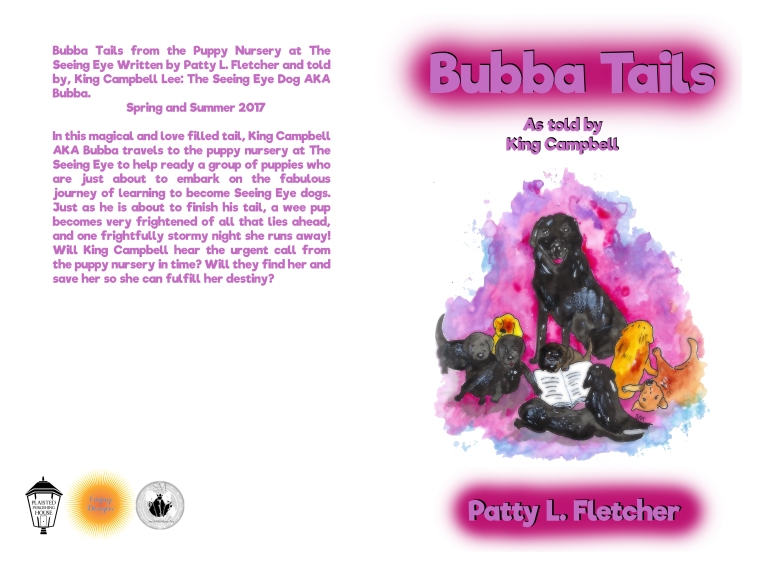
Bubba Tails Wrap 6x9


~~~~~~~~~~~~~~~~~~~~~~~~~~~~~~~~~~~

Thank you, Patty!

noreen