A Writer’s Space

2018_09_30+Scientific+writing2Do you feel the need to have a certain, special place to write? Maybe you have little items you feel inspire you sitting around your desk, computer, in the same room, maybe there is a stone of carnelian or citrine to spark creativity, or even big dark shades to hide you from the world.

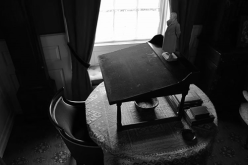
My writing space is usually the dining room table, two windows, a bird feeder on one so my cat, usually sitting beside me can be entertained. But I also write on the couch in the living room with a lap desk, and sometimes in my bed.

Dan Brown (author of the Da Vinci code and many others) believes writing space isn’t important. It’s the ritual and the commitment, not the space. He relates a story in which he was visiting his parents and he wrote in the laundry room, lap top on the ironing board while sitting on milk crates with the washer running – because he needed an undisturbed space.

I’d say that space would disturb me – and talk about holes in a story. My apologies, Mr. 0 v7CyD5RM41-JF6Kk.jpgBrown. However, if he gets up at 4 a.m. to write (as he states), who is doing laundry at that time? And, if the laundry was put in later, then obviously someone came in to disturb you. And, by that time, he couldn’t move to another room?  Okay, sorry, sorry. Back to the point.

We do need a space to write. Ideally, we want to have certain creature comforts around us; for me, it’s a cup of tea. However, I have written on concrete benches, lying across the hotel bed, in a tiny corner that had a table and chair, in coffee shops with noise, and alone in my house at 4 a.m.

The point is our desire for the ideal space should not limit our writing time or commitment (and I think this was Mr. Brown’s point as well). If we limit our writing to the ideal, we’ll have an excuse to not write when any little thing is out of place.

Brown states he writes 365 days a year. That’s what this blog is about, right? 365. It’s about commitment. It is my challenge and my commitment to write 365. I’m doing okay, regardless of the space I’m writing in.


Far and Wide and Every Lost Minute.

Stack-of-books-great-education-1000x520

I was doing an exercise in a seminar I was taking. I was given an article; a long, seemingly rambling, however, well executed nonfiction piece on the downfall of certain companies. Just writing that sentence feels painful. Why did I waste my time?

But, see, it turned out not to be a waste of time. In a lecture, recently, a similar topic came up and I was able to give a reasonable discussion about how this downfall relates to the business of writing.

Wow – I did not see that coming.

That is something I’ve always done, however. I’ve actively added to my body of knowledge by reading far and wide, not limiting myself just to my genre or even just to fiction.

What I’ve found is that this adds depth to my characters, validity to my narrative, realism to my stories. I’m don’t limit myself, therefore, my characters seem more authentic.

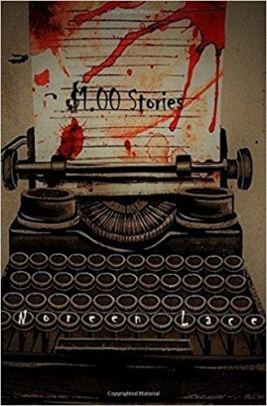
In 51WOVy2yYkL._SX326_BO1,204,203,200_$I.00 Stories, I developed the homeless man from articles I’d read about mental illness and the homeless. In West End, I was able to add more depth to my character having read psychological texts on motherless daughters.

My advice is always – read far and wide and don’t limit yourself. Read when you’re waiting in line at starbucks, read before bed, read when you wake up, or you’re waiting to pick up your kids, or meet your friends. Get off of facebook and twitter or stay on those sites and subscribe to the digital magazines.

I hear people say – I don’t have time to read. Yes. You. Do. Find where you’re losing time and capture it.


Interruptions…

I’m going to interrupt the flow of this blog , but windex1.jpge really should talk about how we deal with interruptions to our work.

I try not to take phone calls during my work time; however, sometimes I have to. A doctor appointment, a work call – all important, can’t wait until later. At least with those, you know you won’t be on the phone long.

The other day a friend called me. I hadn’t talked to him in over a month, so I wanted to see how he was. We live in different times zone, which makes scheduling time for a chat rather challenging. I told myself, even upon answering, that I wouldn’t talk long. But we did get carried away in catching up.

Set boundaries. I finally did tell him I needed to get back to my writing. He understands. Many people don’t, so I don’t regularly say that. I do tell them I can talk to them later or that I’m in the middle of something – both of which are true.

Phone calls and text messages are easier to put on hold – put the phone in the other room or turn it off. It really is not that hard.  Having children or spouses is a whole different topic, which I’m going to talk about during another blog.

*

Right now, as I said, I need to interrupt the flow of this the gold tooth.jpgblog with an announcement.

You can win my short story, The Gold Tooth! Click here. This is only for a limited time.

Long lost sisters are reunited at the reading of their mother’s will. Celeste who has cared for their mother in her declining years is awarded a small, broken music box. The force of nature, Nancy, who hasn’t been seen they were teenagers, is awarded the entire estate. Before they leave the office, Nancy is given the option to exchange the estate for the box. Nancy laughs off the incredible offer and moves into the estate. What’s discovered in the music box could cost one sister her freedom and the other her life.

It Hurts!

yogaWriting hurts – no, seriously, sitting for long periods of time makes my back ache.
Now, we have standing desks, but studies show that’s only moving the pain around, not really as good for you as first thought.

My trainer recommends getting up every fifteen minutes to stretch and walk around. But, when I’m in the flow, three or four hours have gone by and I’ve even forgotten to eat!

Longfellow may have been the first yoga3to use a standing desk; he alternated between sitting and standing, which I think is a good idea.

Charles Dickens described his writing as “prowling rooms, sitting down, getting up….”; It’s purported he owned “all manner of comfortable easy chairs.”

It’s more about the way we sit and stand that is hurting us. Our shoulders coming forward and our heads hung puts far too much pressure on the back of our necks and can cause permanent damage.

Laptops don’t help. When we hadyoga4 our desktop computers, it was all about raising the screen to eye level, sitting in an ergonomic chair, with our arms at a comfortable angle. With laptops, either our head is tilted down or our forearms at a strange angle.
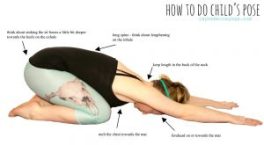

ChildsPoseNoBackground-300x165Yoga to the rescue! In order to keep our backs and legs healthy, there’s a few simple yoga poses (you could even do some of them at your desk!).

Spinx pose will help with those rounded shoulders and neck pressure.

Child’s pose and/or downward dog will also relieve some of the yoga2pressure.

Thread the Needle Pose is one of the best.

These are the easiest, but writers can benefit from a regular yoga class or a yoga routine.


My Family Can’t Find Out!

woman-in-shadow-1280x853-1024x682Many posts in writers’ groups and questions in writerly gathering surrounds the fear of family or friends finding out what they are writing.

Surprisingly, some of these are fiction writers. Although many are memoirists, poets, fiction writers and essayists are also concerned with offending someone they know.

My response to this is: They’ll probably never recognize themselves! The truth is many people see themselves far differently than others do.

Furthermore, studies show that we remember events differently; to be more accurate, we remember different details of the same events, and our memories are not as reliable as we’d like to think.

Legally, in memoir, if names are changed, there is little a person can do if they do recognize themselves. One attorney told me: They’re welcome to write their own version of the events.

Fear stock-fearshould never hold a writer back. A small change in details or location can allow for some question if someone does think the story might include them.

Even if you think you’ll never publish it – write it. You’ll feel better!


Monday Motivation

A writing exercise to get your rusty writing pipes lubricated.

Write the same scene from three different points of view.  I know this doesn’t sound new and groundbreaking, but when is the last time you did it? And what types of characters did you choose?dad-shining-cover

Let’s lighten it up for you – stretch your skills. If you’ve never written from the opposite gender point of view – try it. This is an exercise I did with Dad Shining. This story could not have been narrated by a woman, it had to be chronicled by a man. And that man, it turns out, had to be the son. Dad Shining was published by Chicago Tribune’s Printers Row Journal – so I must have done something right.

But don’t stop there – go further. Write it from a pet’s point of view. The Art of Racing in the Rain is an adult novel narrated in total by the dog. And it is a GREAT novel! Imagine a story from outside of the human point of view.

Or write it from a child’s point of view.  Because my children are older, and I’m presently writing a story which involves a nine year old girl, I’ve had to call my friends. I was fortunate enough to spend time with a delightful little girl and found the time and the young woman inspiring. I have even more ideas than I can handle.

Let me know how it goes – share in our Writing 365 Group.


Reader Response

Some authors are unhappy when readers see something in their story, novel, or poem that was not intended.

I subscribe to the theory of reader response. Our work is going to touch different people in different ways; readers are going to get out of it something related to what they bring to it, so if they don’t see what we originally intended, they are not wrong, nor did they read it wrong, they are merely giving the writer an insight.front-cover-small

I, personally, am thrilled when readers see something I hadn’t intended. For my novella, West End, one reader said the melancholy of the main character haunted her. Other readers believed some of the characters might have actually been spirits or ghosts. One of the characters, I left open. His questionable appearances deepened the story and the effects on the main character who is dealing with depression.

However, when another reader felt that the son might have been a ghost – it made me go back and reread my own work!

Once the story, novel, or poem is out there, readers are going to take away or put into it whatever is in their own toolbox and we can not control it. We may not like it – I had one person mistake me for one of my characters – but we do have to accept it. I usually thank the reader for their insights, regardless of what I feel about the response.

All readings are good readings!

If you’re interested in reading West End – it’ll be on sale Saturday and Sunday. And – then let me know what you think!

Writing Exercise

malcolm-gladwell.jpgI’m a big fan of Malcom Gladwell, writer for the New Yorker and author of The Turning Point, Outliers, and many others.

A writing exercise from Malcom Gladwell:

Begin a correspondence with another writer. Each of you take turns sending and responding – and respond immediately with something interesting or intriguing.

It’s a good way to practice intelligent conversations so you can learn to chat with just about anyone.


A Habit of Success

66 days –

That is what a new study says it takes to form new habits.  The study participants reported a range from 2 to 254, with 66 being an average.

writing+ritual+It depends on the person. With me, it takes 3 to 4 weeks for me to stick to my commitment. And every year my teaching schedule changes, so there’s two to three months a year for me to recommit.

The holidays, however, throws many people off.

However, once the commitment is made and the habit is in place, it’s much easier to get back into the mind space. The secret is to jump right back into the habit after a holiday or change.  writing

Also, I think you have to make an effort to guard that commitment. Don’t be tempted to make lunch plans on a writing hour, make it for later or for a different day.

Life too easily distracts us and, without habits firmly in place, we are easily swayed.

A Tribute to Poe on his Birthday

January 19th, is the 210th anniversary of Poe’s Birth.

poe4Although many people are content with the reason of Poe’s continued relevance in our society is the stereotypical tortured artist.  There is no doubt he was tortured, and for reasons of which we are all familiar; he was an orphan who lost every women he ever loved.
His battles with alcohol, I believe, are highly exaggerated. But it makes for a good story. I’m not saying he never drank – he drank to excess plenty of times, he may have officially been an alcoholic as we understand the word today; however, it was not a constant. There were many years through his marriage to Virginia that he did not drink or drink to excess. Before his death in 1849, he’d joined the Sons of Temperance Movement – to get people to stop drinking.

The reason Poe has remained relevant throughout the years is his work touchespoe our deepest fears and deepest desires. He has continued to inspire other writers


poe2and artists of all types.


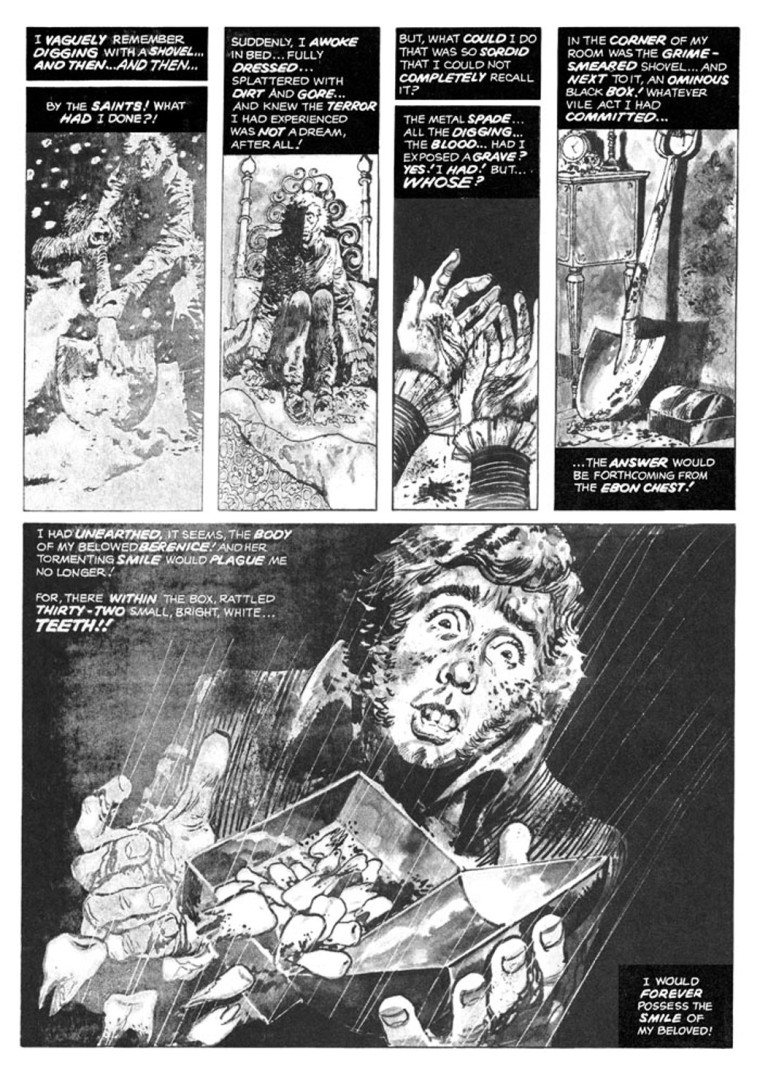
He wrote far more than what we, today, consider horror. He wrote essays, literary analysis, investigative pieces. He wrote about street paving, Stonehenge, and he was inspired by what he read in newspapers.  Berenice and others were inspired by stories of grave robbers in local papers.

poe3

The famed portrait of Edgar Allan Poe was taken three days after his suicide attempt in 1848.

Edgar_Allan_Poe_daguerreotype_crop.png

And, Eddy, my imaginative fiction, was inspired by that suicide attempt. He bought two bottles of laudanum on a cold winter night meaning to do himself in. He’d lost Virginia and felt he had no one. (Laudanum contained opium and derivatives of morphine and codeine.)

eddyfinalredonefromtresized


For Poe’s Birthday, I offer an excerpt from the novella:

   He stumbles from the pub, slips, and falls on the iced over bricks of Boston’s November streets. Save for the muddled voices beyond the closed door, the street is quiet as his body thuds to the ground. His breath billows in front of him as he gasps and grumbles and struggles to his knees, then his feet, to regain his drunken balance.

   The gaslamp on the corner offers a wavering yellow glow for the struggling figure on the lonely winter night. Thin strands of hair blow in the chilled breeze; he runs his hands over his head, straightens himself before he pulls at the sagging overcoat and tugs it closed.

     Remembering the tinctures of laudanum pried from the chary pharmacist, he hurriedly shoves his hands in his pockets, retrieves the bottles.

   His heavy breath mounds in front of him and, for a moment, he can’t see; then the luminous cloud of brandy scented air dissipates. The medicines are intact. Relieved, he stuffs them back in his pocket and buttons his jacket.

   “Edgar,” someone calls from the corner; the noise from the pub trails the swarthy figure out until the door slams to a close behind him. “You alright?”

   Edgar waves him off without turning around.

   The thick shadow chuckles as he staggers in the opposite direction.

   The winter is freezing cold, but the snow hasn’t endured. Small white crystals pile in corners and fill the air. The icy rain soaks him before he reaches his chamber on the second floor of the boarding house. The room is small, impersonal, but warmer than the street. An unlit lantern shimmies on the desk as he unsteadily seats himself, glances out the window.

   A barely discernable outline disquiets the otherwise muted darkness on the corner of the street below. He knows it’s the black dog that’s stalked him his whole life. Suddenly angered, he shoves himself forward, pushes the unlit lamp aside and topples the ink jar.

   “Get outta here, you wretched creature.” The incensed command lost in the night.

      Recovering the secreted bottles of opium from his coat pocket, he sets them side by side in front of him. Unsteadily he tugs the lid from one and snorts in a single gulp.

For More Posts on Poe – click this link.

To get the book at 3.99 – this weekend only – click this link.

To get the ebook at .99 – today only – click this link.


edgar_allan_poe_3.jpg


Much love and luck.