Guest Author: Paul White and Love

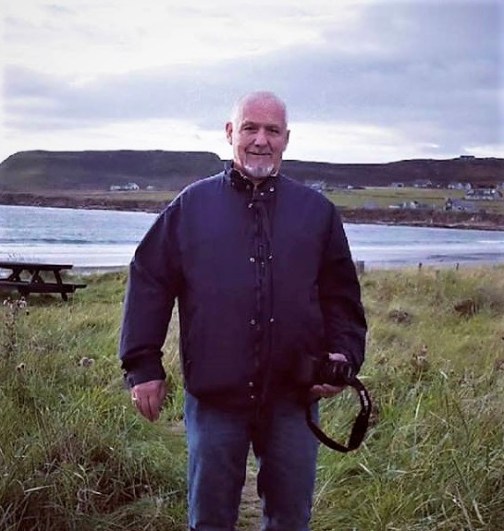
41530671_446651229159319_7854224569849085952_n - CopyWhen Noreen asked me to write a guest post for this blog, I was happy to oblige. However, I had no idea what I should write, until she suggested I write about the love, my love, of writing.

You see, Noreen picked upon a paragraph from a post from my own blog ‘Ramblings from a Writers Mind’, this is it…

In my heart of hearts, I believe the soul of the writer, the artist that lays within, is the greatest asset of all. No one can learn to write unwillingly; the writer must have love and passion above teaching and education.

A writer must want to write, above all else.

So, with the introduction over, I’ll wander through my thoughts about this subject as they come to mind.

***

Personally, I believe the passion for writing starts early in life when a child begins to compose stories, poems or simple essays.

My own first ‘published‘ work was a poem called ‘The Angel of Death’, which may seem a rather disturbing title for an eight-year-old boy to use, until you relate it to the Bible. Now, I am not a religious person, but back then, in 1966, the world was a very different place and religious studies in schools here in England were almost exclusively Christian.

At the tender age of eight, I was just beginning to understand the descriptive power of words and, even though I could not yet meld and mould them as a wordsmith, I still found their basic meanings influential.

The following is that poem, written by an eight-year-old me in 1966.

It is as basic and childish as one would expect but, looking back with the knowledge and understanding I now have, I can see what my teacher saw in the writing and why she insisted it is printed in the school’s annual magazine.

The Angle of Death

In Egypt, there was a quiet night.

But when the velvet sky turned grey,

A sword, gleaming, white,

And blood dripping.

A cry, a scream from every Egyptian house.

The sky turns back into starry velvet.

Sobs come from the Egyptian houses.

***

I think once the passion for writing gets a hold of you, once it is deeply buried under your skin, it is an affliction which stays with you for the rest of your life.

Is it an addiction?

Is it some sort of a hormone imbalance?

All types of weird answers can be found on the Internet.

Some claim the motivation is all about money. Others insist on fame and popularity. Still, others mention egotism.

All of us are different and, in all honesty, there are probably just as many reasons for writing as there are people on earth.

Some of us hope to win awards. Others want to influence people’s thinking, maybe by teaching, or to inspire or motivate.

But they all miss the point.

The passion, the love for writing in the first instance is something, I am certain, you are born with.

I do not think the individual reasons matter. The important thing is to discover the root for your own reasons, discover where your love began so you can use that strength, utilize it.

Never be frightened of revealing your passion through your writings.

***

The pursuit of the writing life through the love of the pen is nothing new.

Many people rise at the crack of dawn to write before going to their day job. Some burn the midnight oil and beyond, often watching the sunrise on a new day.

Anthony Trollope, the prolific and well-known Victorian novelist was, in the daytime, a post office clerk. As was Charles Bukowski and Franz Kafka worked for an insurance company.

These are a few authors we know of because they became famous, but there were, and still are, a thousand more writers who we will probably never know about, ones who wrote just as passionately and with just as much love for the written word.

In years to come, in the future, I may be one of those forgotten souls. But even that thought will not stop me writing because I have my own reasons, a reason I voiced once before in an old blog I used to have.


These are the words I posted on that blog.

But it’s just a dream, I guess.

I write to leave a trace of my being, however faint that may be.

I hope, or dream, at some point in the future, someone somewhere will dust off the cover of one of my books and open it. Turning the yellowing, fragile pages for the first time in a millennium.

As they read my words, they shall hear my voice echo through the centuries, be touched by my narrative. I wish them to become one with my story, lost in the world of fantasy and fiction which inhabited my mind generations before… Then, I would not have lived for nothing.

But it’s is just a dream, I guess.

***

I know I am not alone in the love of writing from the heart, from the soul, from the very epicentre of my being. Here are what some other writers express.

“My writing tools were my most precious belongings. My best quill pen was made from a raven’s feather . . . I was often so poor that I could not pay my mantua-maker, but I always invested in the best ink and parchment. I smoothed it with pumice stone till it was as white and fine as my own skin, ready to absorb the rapid scratching of my quill”

Kate Forsyth


“Writing is making love under a crescent moon: I see shadows of what’s to come, and it’s enough; I have faith in what I can’t see and it’s substantiated by a beginning, a climax, an ending. And if it’s an epic novel in hand, I watch the sunrise amid the twigs and dewing grass; the wordplay is what matters.

Simply put, I’m in love, and any inconvenience is merely an afterthought.

The sun tips the horizon; the manuscript is complete. The author, full of profound exhaustion, lays his stylus aside. His labour of love stretches before him, beautiful, content, sleeping until the next crescent moon stars the evening sky.”

Chila Woychik, On Being a Rat and Other Observations


Since I was a child, the only time I was really happy was when I was lost in the pages of a really good book. I loved everything about it. The print, the paper, the intricately designed covers. And most importantly the stories held between the covers. Books were an act of love. Nothing more. Some beautiful soul had taken time and effort to pour out their thoughts. Someone had taken the time to cultivate an entirely new experience for you to immerse in. Get lost in. Feel a sense of wonder in.

Sakshi Samtani, the writing cooperative.


I hope you enjoyed reading this post and that it has given you something in return for your efforts.

This is the link to my blog, Ramblings from a Writers Mind, https://ramblingsfromawritersmind.wordpress.com/

This one is for my website, http://bit.ly/paulswebsite  please come and visit, take your time browsing and say hello.

In the meanwhile, Keep Happy.

Paul White
head2 2.jpg

Infused Writing

365day5Hobbies can reinforce our writing. I like hiking, being out in the natural world absorbing scents and sounds as well as images. I use hiking and nature to recharge my soul and in my writing by way of description.

Everyone needs something to recharge their soul. And adding authenticity to writing is always a benefit.

365day5aSome writers have hobbies, such as fencing, they use in their story. The descriptions of actual movements, aches, pains, body benefits, makes the story feel authentic.

Do you have any hobbies which feeds your creativity?

Food for Flow

5-Foods-That-Will-Make-Your-Hair-Healthier-020717

Scientists have discovered some foods are better for creativity than others. Some of those foods, Avocados, Coconuts, and Almonds have a high fat content but with what is often referred to “healthy fats”, which creates feelings of happiness and the desire to act.

I do notice that my flow is much better when I keep a healthier diet, and I do eat these types of foods pretty regularly.

Do you notice any difference in your creative juices depending on what you eat? If you never paid attention before, try it. Let me know if you sense a difference.

Writing is easy?

One of my favorite quotes:

newyear

Because, sometimes, it feels like that!

What’s your favorite quote?

Why I Write

14563288_1399791920050130_5249056612799485051_n

The second part of the statement of poetics written many years ago included the reason I write.

Of the many reasons I write, comes the desire for order.

Life is chaotic. Many things are not only out of our control, which I can live with, but happen without explanation; the lack of reasoning is challenging for me to accept.

Sometimes I write stories to understand. Therefore, I write stories to order my universe. To put life in terms I can understand.

I read a story many years ago about a child who died from cancer. How does such a precious gift leave us so soon? I wrote a fairy tale called Seeds (never published). The story could never explain or give an answer to such a sad happening, but it did give life to a little girl I never knew.

Of all the reasons you write, can you narrow it down to one or two? Share here or one of the social media accounts.

Procrasti-writing

I’ve begun procrasti-writing.Play At Work. Low Angle Of Dreary Female Freelancer Using Paper

That’s where you write, check social media, write, check email, write, look at the book sitting next to you, write, take your dogs outside. Writers know what I’m talking about.

I’m usually pretty good about sitting my butt in the chair and staring at a blank screen until the power to make words appear overcomes me.

procr1Writing is somewhere between a mystical experience and an un-tameable superpower.

Not really – it’s just hard work.

Maybe it’s the holidays, or the construction, or the baby-waiting game, but I am fighting inner-distraction at all angles.

I’ve also searched for church conversions on google. Don’t ask me why – it’s procrasti-writing. And Google is there allowing me to search anything my heart desires.

Remember the good old days, no internet, television turned to white noise at 2am, had to walk ten miles in the snow, uphill, both ways, then read books for actual research? And now, we sit at home, go no where, search google and amazon for random distractions, while not writing.

Ways to overcome procrasti-writing?

Use yoga techniques: When your attention procstrays, acknowledge it (close your browser), and come back to your breathing (which for a writer is writing).

Acknowledging that this Wednesday Writer Blog is a Thursday Procrasti-writing distraction, I leave you now to go back to my book.

Much love, readers and writers.

And Namaste.


Interviewed by Anda Stan….

Interview-Time-Guest-Author-Noreen-Lace-1280x480Hi, all.  I wanted to give you the link for the interview:  Check out AndaStan.com for almost the whole truth, a few little secrets, and some tips.


laughtIt was a very thorough interview – she poked me with a stick until I gave it all up!


Enjoy!

world-ecard-email.gif

Word Problems – a poem by Noreen Lace

communication-problems.png

Word Problems


I hate when men write

soft poetry about their ex’s.

It’s easier to read the hate

than to let your mind wonder

“what went wrong?”


It’s easier to hear, I don’t love

you anymore,

than to hear I love you, but…

and the thousand buts

that say you just didn’t add up.


I mean she…

back to the poet with the soft poetry

and the lost wife.

He writes it, not to her,

but for himself,

to remind himself

of what he let go,

the additions he didn’t add in

when he was subtracting

all she didn’t have.


All the things he didn’t have

all the while he’s telling himself

he was right

to let her go

when he did

because things would have gotten worse

had they not parted before the math was done.

At least this way he can ruminate,

look back fondly and say,


we parted as friends,

Meaning,

I departed quietly to search for something more,


she just got hurt.


*originally published in the Northridge Review 2002.

northridge review


This was written long ago, while I was finishing graduate school. I think it’s still so relatable. One person is always ready to go before the other. One person walks away, the other crawls.  (But don’t worry – the one who crawls gets up, becomes stronger, and thrives!)

Much love, readers.


Friday Feature: Snowflakes in a Blizzard, Darrel Laurant’s Project to Assist Writers

Darrel Laurant contacted me some time ago about featuring my book, West End, on his project website. I’m only happy to now have him talk about that project here.

~~~~~~~~~~~~~~~~~~~~~~~~~~~~~~~~~~~~~~~~~~~~~

PlainNegligibleGrebe-size_restricted.gif


Completing and publishing a book — any book — is a noble accomplishment. Unfortunately, it’s only half the battle.

Writing, publishing and marketing used to be co-joined triplets, or at least close cousins. Now, though, they have drifted apart into separate entities. As a consequence, the new mantra from publishers turning down a manuscript has become: “We really like your book, but we don’t think we can sell it.”

What you realize, as you skim over the Top 100 best-selling offerings on Amazon or even the hallowed New York Times list, is that “marketability” now has very little to do with what we used to perceive as “quality.” Not that a well-written book can’t be successful, but writing well is no longer a crucial requirement, writing not-so-well no longer a deal-breaker.

The good news is, thanks to current technology and increased self publishing options, almost anyone who really wants to get a book published can now do so. The bad news is, almost anyone who really wants to get a book published can now do so.

The fact that 30 million or so books are now listed on Amazon has drastically changed the rules of engagement. The issue is no longer getting published, but getting noticed.

Writers are obviously the losers in this not-so-brave new world, but so are readers. Books go surging past us like flotsam on a flood-swollen river, never to be seen again. If it was published in 2016, it has already become a relic.

The idea of Snowflakes in a Blizzard, which started three years ago, is to become just one small voice shouting: “Whoa!”

I spent more than 30 years as a newspaper reporter and columnist, wrote a lot for magazines and Websites on the side, published two books that sold over 3,000 copies each locally, and won a lot of writing awards from the Virginia Press Association.

In some occupations, all that would have helped ease my transition when I retired from journalism to write books full-time. In the publishing field, I had to check it all at the door.

When my first novel, “The Kudzu Kid,” went up on Amazon, I was excited. I now had my own little niche, exposed to the world. I had a publisher who, at least in theory, was prepared to spread the word. I had a distributor to transport my books to the far corners of the nation. Smiling contentedly, I sat back and waited for the orders to pour in.

And waited. And waited. Eventually, it dawned on me that since nobody outside of Central Virginia had ever heard of me, the odds of anyone randomly clicking on my Amazon page were infinitesimal. Why would they?

At some point during the mini-funk that followed, aggravated by the winter blahs, I was standing in front of my living room widow in Lake George, NY, watching it snow, when this thought occurred to me: “Getting noticed for a new writer these days is like a snowflake trying to stand out in a blizzard.”

A few months later, I started the Snowflakes in a Blizzard blog.

Each week, Snowflakes highlights three books. They could be novels, poetry, short stories, non-fiction, memoirs or a hybrid. What they have in common are that they are a) unique in some way and b) could use more attention. The “template” for every book is filled out by the author and goes individually to each of our 3,000-plus followers, complete with a few reviews and a sample chapter. It’s a way of getting one-on-one attention.

Also, it’s completely free. I like that for several reasons:

First, it takes the pressure off. Charging for a service is all about making a promise — in this case, pay me and I’ll sell books for you.  I can’t do that, because I have no way of tracking who might have purchased a book because of a Snowflakes post they received.

Second, it makes for a better vibe between me and other writers. They are colleagues, not customers.

Finally, I don’t feel competitive with any other writer-friendly blogs or Websites. In fact, I’d be delighted if a thousand other sites sprang up just like Snowflakes in a Blizzard, because that would still not take care of all the writers who need such a service.

You may have heard it said that the opposite of love is not hate, but indifference. In the case of the book-buying public, the enemy is our very human tendency to stick with what we know. Early in our lives, most of us have settled in on what food, music, movies and, yes, books we like.

This fact unquestionably drives the book publishing business. It has become a lot like politics — survey the public to find out what they think they want, then give it to them. It accounts for the focus on genres, the reliance on best-seller lists and the dicotomy of wealth between the top one percent of authors and everybody else.

I don’t like to point fingers at the publishing industry, because they need sales to survive. So do agents. I do, however, think that the current glut of books has contributed in many cases to tunnel vision and laziness. What used to be “Wow, this is a great book — we need to tell people about this talented new author,” has morphed into “Oh, too bad — it doesn’t have the right genre for our demographic.”

This genre fixation is one of my major gripes about the book business today. Instead of offering unique work that only they could produce, some authors are “writing to genre,” following a list of pre-prescribed rules in an effort to “fit.” Yet so many of the books that made a big impact upon arrival — think “In Cold Blood,” “The Color Purple,” “To Kill a Mockingbird,” “Roots” — probably would have flunked the genre test.

To their credit, a lot of small “indie” publishers do seek out and nurture talented new writers. Sometimes, they are richly rewarded for it.

My other gripe is the attitude held by some gatekeepers that they are doing writers a huge favor by publishing them. I growl, internally, every time I see this on a Website: “If you don’t hear from us in two months, it means we’re not interested.”

How much time and trouble would it take to type “Thanks, but not for us,” and hit “send”? Or maybe, “We’re thinking about it.”

This lack of communication shows a naked disrespect to authors who, after all, just want to enter into a business deal with them. Think of how you’d feel if you walked into a restaurant, sat down at a table, and were then ignored for an hour before you finally got up and left.

OK, so the creative universe is awash with other books. Publishers and agents can be uncaring, potential book buyers unlikely to try something new, both realities especially hard on new writers who haven’t yet accumulated prior publications, lots of good reviews or a book club fan base.

So what can we do? I make no claims of being an expert (I’ve never had a best selling book, so what do I know?), but I do have some suggestions.

  1. Look at the myriad niches that might be hidden beneath the main thrust of your book. These could include the setting, the occupation of main characters, a societal issue that is addressed, etc. Find some on-line clusters of people who reflect those nooks and crannies and send them a sample chapter. Do everything you can to show a publisher or agent that your book will, indeed, have a ready-made audience.
  2. Don’t forget the local connection. After your book is published (or even before), show up at your local newspaper office, meet the book editor, and suggest a review of your book. Don’t forget the little free papers than have mushroomed everywhere.
  3. Arrange similar meetings with small bookstore owners in your area.
  4. Set up as many book signings as you can handle, including businesses other than bookstores.

I invite you to check out the Snowflakes in a Blizzard site, and perhaps even follow it. Or, you may have a book you’d like to have featured, or know someone else who does.

My e-mail address is writersbridge@hotmail.com, and I love to talk about writing, any time.

~~~~~~~~~~~~~~~~~~~~~~~~~~~~~~~~~~~~
Much luck, Darrell. Thanks!
noreen

Writer Wednesday: Faux Deadlines

deadlines

My students, and other writers, often tell me that deadlines and time limits are the only things that inspire them. That last minute of the clock ticking down puts the pressure on enough to force them to write, and they swear better writing comes out of them.

Although I think there’s some truth to this, overall teachers and editors agree this isn’t the best form of writing.

However, what if we forced ourselves under faux deadlines?deadline1

I’m suggesting you create your own deadlines.  Some writers enforce rules for their writing, like they must produce five pages a day or a thousand words, etc. But if you feel you write best under deadlines, the pressure cooker ready to pop, then do that. Or do it for an experiment, for fun.

There are programs you can download (or are on your computer, so I discovered on mine) which will shut your wifi off for a certain amount of time. While I don’t think many of us could comfortably go wireless for an hour or hours at a time, I suggest you do fifteen minutes. Give yourself a challenge and free write for 15 minutes. After that fifteen minutes, if you want to keep going do so, but I’ll suggest another challenge – stop, read over what you wrote and pick out a really good idea or line, and then start another freewrite – maybe turn your wifi off or turn a timer on…  for whatever amount of time..

deadlineSet a timer or an alarm on your watch or cell phone for five or six minutes and write whatever comes to mind. If you can’t think of anything, then use one work to start. The word I use in my classes is “movies.” Perhaps you could use “love”, “news”, “dog.” Any word will actually do. Don’t worry about what you’re writing or where it’s actually going – just write and if at the end of five minutes all you have is a freewrite about rover doing his business on the neighbor’s lawn, then you haven’t wasted that much time. Do it again.

Speaking of wasted time, consider all the time we stand in lines doing nothing except checking email or social media. Next time you’re in line at starbucks or waiting at the doctor’s office, use your phone to brainstorm an idea. If you’re stuck, take an idea from whatever’s around you.

No excuses. Give yourself a deadline. Write ANYTHING in order to shake something loose.

DEADLINE