
Completing and publishing a book — any book — is a noble accomplishment. Unfortunately, it’s only half the battle.
Writing, publishing and marketing used to be co-joined triplets, or at least close cousins. Now, though, they have drifted apart into separate entities. As a consequence, the new mantra from publishers turning down a manuscript has become: “We really like your book, but we don’t think we can sell it.”
What you realize, as you skim over the Top 100 best-selling offerings on Amazon or even the hallowed New York Times list, is that “marketability” now has very little to do with what we used to perceive as “quality.” Not that a well-written book can’t be successful, but writing well is no longer a crucial requirement, writing not-so-well no longer a deal-breaker.
The good news is, thanks to current technology and increased self publishing options, almost anyone who really wants to get a book published can now do so. The bad news is, almost anyone who really wants to get a book published can now do so.
The fact that 30 million or so books are now listed on Amazon has drastically changed the rules of engagement. The issue is no longer getting published, but getting noticed.
Writers are obviously the losers in this not-so-brave new world, but so are readers. Books go surging past us like flotsam on a flood-swollen river, never to be seen again. If it was published in 2016, it has already become a relic.
The idea of Snowflakes in a Blizzard, which started three years ago, is to become just one small voice shouting: “Whoa!”
I spent more than 30 years as a newspaper reporter and columnist, wrote a lot for magazines and Websites on the side, published two books that sold over 3,000 copies each locally, and won a lot of writing awards from the Virginia Press Association.
In some occupations, all that would have helped ease my transition when I retired from journalism to write books full-time. In the publishing field, I had to check it all at the door.
When my first novel, “The Kudzu Kid,” went up on Amazon, I was excited. I now had my own little niche, exposed to the world. I had a publisher who, at least in theory, was prepared to spread the word. I had a distributor to transport my books to the far corners of the nation. Smiling contentedly, I sat back and waited for the orders to pour in.
And waited. And waited. Eventually, it dawned on me that since nobody outside of Central Virginia had ever heard of me, the odds of anyone randomly clicking on my Amazon page were infinitesimal. Why would they?
At some point during the mini-funk that followed, aggravated by the winter blahs, I was standing in front of my living room widow in Lake George, NY, watching it snow, when this thought occurred to me: “Getting noticed for a new writer these days is like a snowflake trying to stand out in a blizzard.”
A few months later, I started the Snowflakes in a Blizzard blog.
Each week, Snowflakes highlights three books. They could be novels, poetry, short stories, non-fiction, memoirs or a hybrid. What they have in common are that they are a) unique in some way and b) could use more attention. The “template” for every book is filled out by the author and goes individually to each of our 3,000-plus followers, complete with a few reviews and a sample chapter. It’s a way of getting one-on-one attention.
Also, it’s completely free. I like that for several reasons:
First, it takes the pressure off. Charging for a service is all about making a promise — in this case, pay me and I’ll sell books for you. I can’t do that, because I have no way of tracking who might have purchased a book because of a Snowflakes post they received.
Second, it makes for a better vibe between me and other writers. They are colleagues, not customers.
Finally, I don’t feel competitive with any other writer-friendly blogs or Websites. In fact, I’d be delighted if a thousand other sites sprang up just like Snowflakes in a Blizzard, because that would still not take care of all the writers who need such a service.
You may have heard it said that the opposite of love is not hate, but indifference. In the case of the book-buying public, the enemy is our very human tendency to stick with what we know. Early in our lives, most of us have settled in on what food, music, movies and, yes, books we like.
This fact unquestionably drives the book publishing business. It has become a lot like politics — survey the public to find out what they think they want, then give it to them. It accounts for the focus on genres, the reliance on best-seller lists and the dicotomy of wealth between the top one percent of authors and everybody else.
I don’t like to point fingers at the publishing industry, because they need sales to survive. So do agents. I do, however, think that the current glut of books has contributed in many cases to tunnel vision and laziness. What used to be “Wow, this is a great book — we need to tell people about this talented new author,” has morphed into “Oh, too bad — it doesn’t have the right genre for our demographic.”
This genre fixation is one of my major gripes about the book business today. Instead of offering unique work that only they could produce, some authors are “writing to genre,” following a list of pre-prescribed rules in an effort to “fit.” Yet so many of the books that made a big impact upon arrival — think “In Cold Blood,” “The Color Purple,” “To Kill a Mockingbird,” “Roots” — probably would have flunked the genre test.
To their credit, a lot of small “indie” publishers do seek out and nurture talented new writers. Sometimes, they are richly rewarded for it.
My other gripe is the attitude held by some gatekeepers that they are doing writers a huge favor by publishing them. I growl, internally, every time I see this on a Website: “If you don’t hear from us in two months, it means we’re not interested.”
How much time and trouble would it take to type “Thanks, but not for us,” and hit “send”? Or maybe, “We’re thinking about it.”
This lack of communication shows a naked disrespect to authors who, after all, just want to enter into a business deal with them. Think of how you’d feel if you walked into a restaurant, sat down at a table, and were then ignored for an hour before you finally got up and left.
OK, so the creative universe is awash with other books. Publishers and agents can be uncaring, potential book buyers unlikely to try something new, both realities especially hard on new writers who haven’t yet accumulated prior publications, lots of good reviews or a book club fan base.
So what can we do? I make no claims of being an expert (I’ve never had a best selling book, so what do I know?), but I do have some suggestions.
- Look at the myriad niches that might be hidden beneath the main thrust of your book. These could include the setting, the occupation of main characters, a societal issue that is addressed, etc. Find some on-line clusters of people who reflect those nooks and crannies and send them a sample chapter. Do everything you can to show a publisher or agent that your book will, indeed, have a ready-made audience.
- Don’t forget the local connection. After your book is published (or even before), show up at your local newspaper office, meet the book editor, and suggest a review of your book. Don’t forget the little free papers than have mushroomed everywhere.
- Arrange similar meetings with small bookstore owners in your area.
- Set up as many book signings as you can handle, including businesses other than bookstores.
I invite you to check out the Snowflakes in a Blizzard site, and perhaps even follow it. Or, you may have a book you’d like to have featured, or know someone else who does.
My e-mail address is writersbridge@hotmail.com, and I love to talk about writing, any time.
Much luck, Darrell. Thanks!
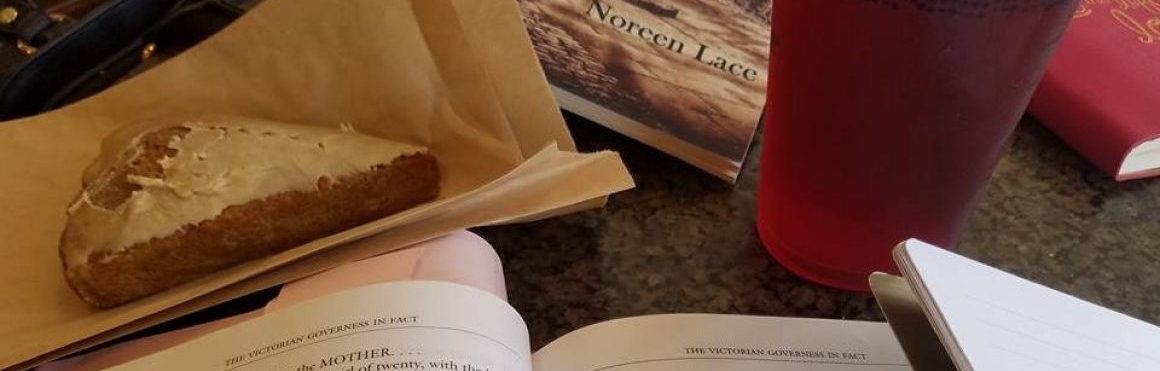


 and don’t forget about dessert, A Nut Kuchen!

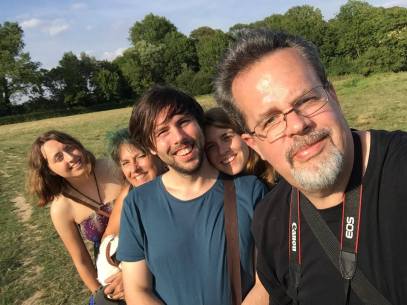 When people ask where I’m from, I give my prepared answer. ‘Not really from anywhere. Seems like I’ve lived everywhere.’
 weren’t for triple-digit summer heat, certain sections would be indistinguishable from the desolate wilds of North Dakota. It’s so non-scenic that literature has more or less left it out, too. Need proof? A Goodreads count of books set in California is nearly 600. But books set in Fresno? Three. One by William Saroyan, better remembered here as ‘That Famous Guy Who Used to Ride His Bike Through Fresno’s Tower District.’ The second is ‘The Abortion’ by Brautigan, destined thanks to the area’s politics to be a non-seller. The third is by a guy who teaches journalism at Fresno State.
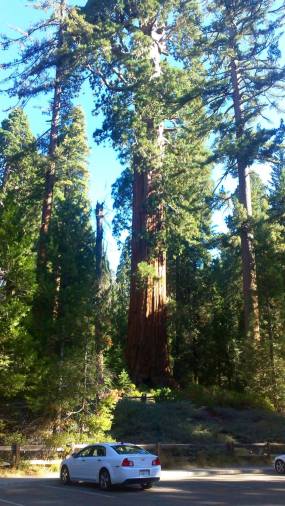 But I suppose I’m grateful that living here encourages travel, even if it does so in a backhanded, better-off-getting-outta-here sort of way. That urge to hop in a car and see something else, that desire to book a plane ticket and go even farther, is not only great for the soul, it’s great for my writing.
 with the DSLR strapped around his neck, taking shots of everything from the loo signs to the historical plaques set across monuments managed by the National Trust? Yep, me. Those photos come in handy during the writing process, too. Need the feeling of ‘being there’ recreated? Go visit the photo album. Need to check a historical detail? Dig out the plaque pics and read the answer. Need to remember exactly what order the Roman gods appeared on a bas-relief at the Adler Planetarium? It’s right there in the photo.
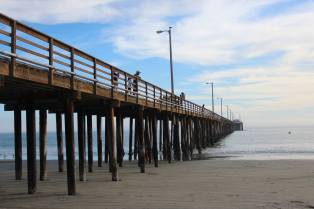
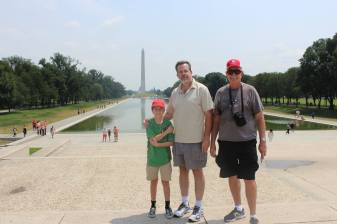 As a writer I carry those places with me, and whether I want them to or not, they find their ways into my writing. My Nebraska origins find a home in my writing as Kolej, a small town with a big dark secret in my coming book ‘Lillie Augustine.’ Minnesota and Providence figure prominently in my memoir about full-time fatherhood, titled ‘One Ugly Mother.’ That memorable Chicago trip finds itself in another draft titled ‘Fortunate Consolation,’ where a father leads his special-needs son on a journey to escape the trickster Goddess of Fate. Two very special places — West and East Hills in Hastings, East Sussex — will soon find themselves adapted as different worlds entirely in a collaborative science-fiction epic. That Pacific hamlet of Avila Beach was the setting for my published novel ‘Davey’s Savior,’ an intimate story set next to the pier on a very small stretch of an epic beach. And Fresno? While the city itself may make me want to be elsewhere, its agrarian nature still found its way into a draft my editor promises will be a moneymaker: the saga of ‘Lifeboat.’

 Chatting with my students, I reminded them I didn’t have google nor a cell phone and, if I needed to look up information, I had to walk to the library and figure out the card catalogue. (Of course, I added the obligatory “walk ten miles in the snow up hill both ways”).
 I think I would be, like many people today, too distracted to focus on creating other worlds and investigating the motivations of people/characters.
 I guess I’m saying, boredom can be good for you. Daydreaming, thinking, and spending an afternoon lounging without distraction can be helpful to a writer. We need to allow our minds wander sometimes, see where they go; keep your mind from distraction, turn off the tele, the cell, the computer, and be inhibited by the lack – your mind will rebel and it will begin to create.
 In a writer’s group, I asked a specific person how one would use a certain program. They responded with, “I’d be glad to show you; my rates are very reasonable.”
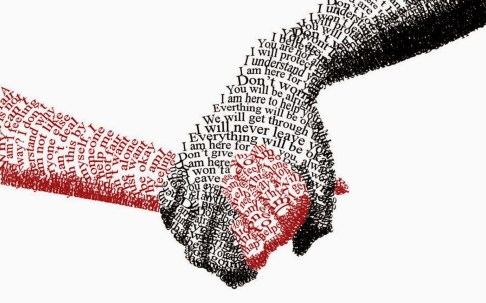 in the same boat of trying to get our books, articles, short stories, or other out there to larger audiences.
 When we all work together, we all become better humans. I want to share my ideas and experiences and share other writer’s with you, other ideas with everyone who desires to listen.

 What comes to mind? Are there images of magnificent places you’ve been, impressive people you’ve met, or extravagant stories that stimulates your soul, sparks your imagination and almost brings you to tears? These everyday inspirations lead me to be the best version of myself, however, this is not a source of inspiration for my writing.
 I like to explore the darker sides of life, which is interesting to me because I am naturally a good humoured optimistic individual. There are an unbounding instances of inspirational dualities in life, the play between light and dark, life and death, vice and virtue, and I realize as a writer I am one of them.

 Sometimes, I wish I was the driver of the Karma truck. But, I suppose, being a writer is better. Still have the problem of sitting too long, but we get to exact revenge too. The best kind of revenge – in print.
 But, first, I had to roll my eyes and throw back my head. I just wanted some sympathy, some empathy. But she gave me more than that – she gave me purpose, building from ashes, and a way for me to transmit sympathy to another by relating to a scenario which many of us have experienced. (I know, still too vague.)


 Set a timer or an alarm on your watch or cell phone for five or six minutes and write whatever comes to mind. If you can’t think of anything, then use one work to start. The word I use in my classes is “movies.” Perhaps you could use “love”, “news”, “dog.” Any word will actually do. Don’t worry about what you’re writing or where it’s actually going – just write and if at the end of five minutes all you have is a freewrite about rover doing his business on the neighbor’s lawn, then you haven’t wasted that much time. Do it again.


 See me two months ago for my first set of anxiety attacks. There’s a lot going on right now, but I’m usually the queen of calm. But too much caffeine and not enough physical exercise, and the onset of anxiety happens. I know this because my sisters have anxiety and the first thing their doctors said is “cut out the caffeine and chocolate.”
 tea, chocolate or any guilty pleasures, but to a new schedule and my body trying to get used to it – I spent one night tossing and turning and getting up and laying down, breathing deep and keeping my eyes closed, but to no avail – I ended up falling asleep around 4 in order to wake up at 6am. I felt zombie-like.
 Starbucks sent me an email (yes, me personally, about their early release of Pumpkin Spice Latte), but I ignored it, telling myself I was off the hard stuff. I didn’t need any espresso and sugar to get me through the day, just good healthy food and clean, clear water. Besides, it’s far too early to imbibe on pumpkin anything.

 Noreen Lace
You must be logged in to post a comment.