 Does your character like her/his marshmallows burned and why?
I love this – but it’s not mine.
I got this from Writer to Agent advice video from The AWP and Folio Literary Management.
Watch this video for tons of good information!
Does your character like her/his marshmallows burned and why?
I love this – but it’s not mine.
I got this from Writer to Agent advice video from The AWP and Folio Literary Management.
Watch this video for tons of good information!
 Writing a novel is not a destination; it’s a journey. It’s the hardest journey you will take with unclear signs, narrow paths, tricky u-turns, treacherous cliffs, an occasional dead end, and a steep road toward the end.
You will come out of this ragged, weary, exhausted, and wondering what it was all for. But then, your newborn book materializes before your eyes and you see it was all worth it.
January 19th, is the 210th anniversary of Poe’s Birth.
 Although many people are content with the reason of Poe’s continued relevance in our society is the stereotypical tortured artist. There is no doubt he was tortured, and for reasons of which we are all familiar; he was an orphan who lost every women he ever loved.
His battles with alcohol, I believe, are highly exaggerated. But it makes for a good story. I’m not saying he never drank – he drank to excess plenty of times, he may have officially been an alcoholic as we understand the word today; however, it was not a constant. There were many years through his marriage to Virginia that he did not drink or drink to excess. Before his death in 1849, he’d joined the Sons of Temperance Movement – to get people to stop drinking.
The reason Poe has remained relevant throughout the years is his work touches our deepest fears and deepest desires. He has continued to inspire other writers
 and artists of all types.
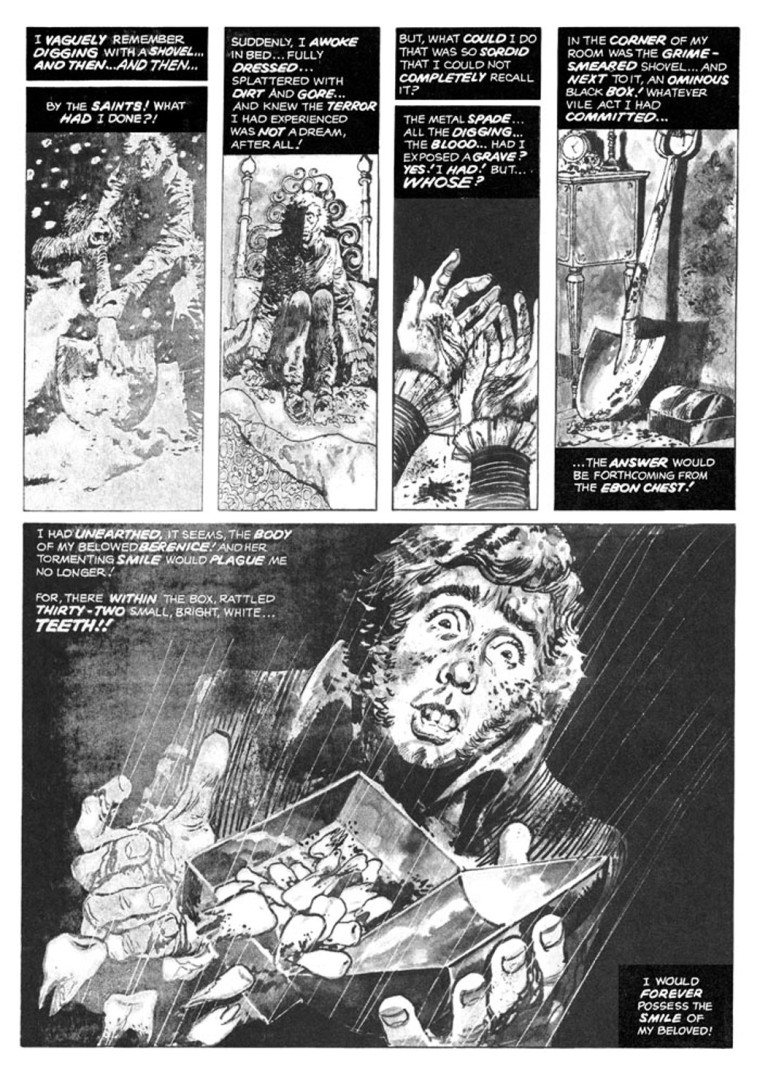
He wrote far more than what we, today, consider horror. He wrote essays, literary analysis, investigative pieces. He wrote about street paving, Stonehenge, and he was inspired by what he read in newspapers. Berenice and others were inspired by stories of grave robbers in local papers.
The famed portrait of Edgar Allan Poe was taken three days after his suicide attempt in 1848.

And, Eddy, my imaginative fiction, was inspired by that suicide attempt. He bought two bottles of laudanum on a cold winter night meaning to do himself in. He’d lost Virginia and felt he had no one. (Laudanum contained opium and derivatives of morphine and codeine.)

For Poe’s Birthday, I offer an excerpt from the novella:
He stumbles from the pub, slips, and falls on the iced over bricks of Boston’s November streets. Save for the muddled voices beyond the closed door, the street is quiet as his body thuds to the ground. His breath billows in front of him as he gasps and grumbles and struggles to his knees, then his feet, to regain his drunken balance.
The gaslamp on the corner offers a wavering yellow glow for the struggling figure on the lonely winter night. Thin strands of hair blow in the chilled breeze; he runs his hands over his head, straightens himself before he pulls at the sagging overcoat and tugs it closed.
Remembering the tinctures of laudanum pried from the chary pharmacist, he hurriedly shoves his hands in his pockets, retrieves the bottles.
His heavy breath mounds in front of him and, for a moment, he can’t see; then the luminous cloud of brandy scented air dissipates. The medicines are intact. Relieved, he stuffs them back in his pocket and buttons his jacket.
“Edgar,” someone calls from the corner; the noise from the pub trails the swarthy figure out until the door slams to a close behind him. “You alright?”
Edgar waves him off without turning around.
The thick shadow chuckles as he staggers in the opposite direction.
The winter is freezing cold, but the snow hasn’t endured. Small white crystals pile in corners and fill the air. The icy rain soaks him before he reaches his chamber on the second floor of the boarding house. The room is small, impersonal, but warmer than the street. An unlit lantern shimmies on the desk as he unsteadily seats himself, glances out the window.
A barely discernable outline disquiets the otherwise muted darkness on the corner of the street below. He knows it’s the black dog that’s stalked him his whole life. Suddenly angered, he shoves himself forward, pushes the unlit lamp aside and topples the ink jar.
“Get outta here, you wretched creature.” The incensed command lost in the night.
Recovering the secreted bottles of opium from his coat pocket, he sets them side by side in front of him. Unsteadily he tugs the lid from one and snorts in a single gulp.
For More Posts on Poe – click this link.
To get the book at 3.99 – this weekend only – click this link.
To get the ebook at .99 – today only – click this link.

Much love and luck.
Visualization, scientists believe, is important in achieving what it is you desire.
If you’re concerned about an interview – picture it first
Concerned about completing an assignment? – visualize it finished!
What do you want to happen in the near future?

Sometimes these are large goals – end result goals, and that’s good. We see the big picture. What about the little picture?
This deals with a little bit of realism. If you’re not writing and you choose a photo of you at a book signing, that’s the end result. Perhaps keep that photo, but put it on the larger board.
I’d love for you to share your results in our newly formed group: Writing 365. Join us!

Scientists have discovered some foods are better for creativity than others. Some of those foods, Avocados, Coconuts, and Almonds have a high fat content but with what is often referred to “healthy fats”, which creates feelings of happiness and the desire to act.
I do notice that my flow is much better when I keep a healthier diet, and I do eat these types of foods pretty regularly.
Do you notice any difference in your creative juices depending on what you eat? If you never paid attention before, try it. Let me know if you sense a difference.
 Hi, all. I wanted to give you the link for the interview: Check out AndaStan.com for almost the whole truth, a few little secrets, and some tips.
 It was a very thorough interview – she poked me with a stick until I gave it all up!
Enjoy!


Some years ago, John Voso Jr. put together a cookbook, Italian Recipes from my friends; the proceeds from which went to the Richie White Fund. Richie White was a young boy who spent most of his young life in the hospital battling cancer. He lost that battle a few days after his fourth birthday.
This year, John has put together Ethnic Recipes From My Friends. The proceeds benefit a number of good charities.

The book contains JackFruit tacos. You’ll remember that some months ago, I tried JackFruit tacos at a vegan restaurant and loved them.

When John Voso, his wife, Debbie, and myself met for dinner, I was surprised to find this recipe in the book! I, personally, can not wait to make them myself.
The book contains recipes from a number of different people and cultures:
Angel Wings from Poland, 
Sonoran Style Carne Asada, 
 and don’t forget about dessert, A Nut Kuchen!
Ethnic Recipes from My Friends will make a great gift and it supports great causes. Contact John Voso to order your copy!

Hi, All. Today, I asked Rebecca Clark to tell us about The Writer’s Point.
~~~~~~~~~~~~~~~~~~~~~~~~~~~~~~~~~~~~~~~~~~~~~~~~~

My name is Rebecca Clark. I am the founder of The Write Point, a free social networking community for writers, editors, publishers, beta readers, and literary agents.
Here’s my story.
For the past 15 years I’ve been writing fiction stories. Mainly for myself. It wasn’t until about 7 years ago that I thought maybe I could actually publish something! I wanted to share my make-believe worlds with others. So, I dug deep into the Internet to see what I could find about agents, publishing, the editing process, and what ever else a successful book entailed. I found several forums full of knowledgeable authors.
Forums are messy, in my opinion. I was a brand new writer lost in a world of writers who knew everything I needed to know, but somehow I felt that I didn’t fit in. There was one forum website in particular that made me feel like I shouldn’t be a writer at all. Every question I asked was answered with “google it”.
So, I googled it. I learned so much on my own, but I really just wanted to be a part of a community, some place where I felt at home with people just like me.
Last year, I decided that if I couldn’t find a place to call “home”, I’d create one. So, I did! Fortunately for me, a couple of years ago, I graduated with a degree in Computer Information Systems: Website Development and Design. I could take the time to build upon the idea, and actually understand what I was doing in the process.
The Write Point is a FREE community that I hope will become a place for new writers to feel welcome, and experienced writers can share their expertise without making anyone feel like they aren’t good enough!
Noreen, thank you for allowing me to share the story of The Write Point. To learn more about us, visit https://thewritepoint.com.
The Write Point Facebook page is: https://www.facebook.com/thewritepoint
You can also find me tweeting here: https://www.twitter.com/bekkahclark and here https://www.twitter.com/twp_network
~~~~~~~~~~~~~~~~~~~~~~~~~~~~~~~~~~~~~~~~~~~~~~~~
Many thanks, Rebecca.
Writers, Enjoy!

 I know people say writing is a commitment, but it’s more than that. Writing isn’t “like” a relationship, it IS a relationship. A writer must be involved with the whole process of writing, must love it, need it, want to continue to work to make it better. It takes commitment, time, dedication, and the desire to move forward in life with writing.
A few years ago, I was at a conference where the main speaker (don’t remember his  name) said, “You have to be selfish. You must take the time for yourself, for your writing.” He went on to say he spent every Friday at a hotel with his writing. (are you picturing him checking into a seedy, no-tell motel with an old typewriter?;-)
My friend joked, “Noreen does this thing where she actually spends time writing.” My regular action became fodder for humor because he is a writer, but he falls under the category of non-writing writers like many others.
Life happens. We have families, pets, jobs, homes, tons of responsibilities. But notice that list – I put family first. People we love comes first. This is why a writer might consider writing as a relationship – so they give it priority.
I schedule things around my writing whenever possible. I will make doctor appointments, meetings, and everything I have power to plan secondary to my writing by scheduling them before or after my planned writing time.
Once a person considers themselves in a relationship with their writing, they may  naturally form relationship goals! If writing were a romantic relationship, how would you handle it differently? Would you want to go to sleep with it or wake up with it or both? What would you want to give it? Would you spend more time with it, going over the details, working it out so it was just perfect, going over it and over it again to work it out nice and smooth? What do you do for your significant other? Take it out to dinner? On vacation?
Writing, like a lover, needs constant attention and nourishment. Placing it on the back burner means we may never get to it. It’ll be there, but not as warm and flush as we’d like. Being in a relationship with writing means the needs of both are fulfilled. Writing is fresh and flowing and continually improved and the writer is happier, more productive.
We do this because we love it, we are driven to do it. Treat writing like it’s important to you.
Think of writing before you fall asleep, when you wake up in the middle of the night just to say one more thing.

Hi, All. I was feeling West End today. I wanted to share a little portion, but couldn’t decide, so I give you all the opening selection for West End. Enjoy.

BEFORE MY MOTHER drank herself to death, I knew her as a gentle creature who fed wild squirrels from her hand. On the back patio at mid-day, she’d stand very still, calm, peanuts laced in the fingertips of her outstretched hand. The squirrel, a female, her babies came later, approached with caution, across the railing, onto the windowsill, grab the nut, run to the other side of the patio where the squirrel peeled back the shell, ate the meat, then returned for another and another. For a while, the squirrels became my mother’s greatest pleasure.
When the female squirrel stopped coming, my mother worried, but the baby squirrels continued to visit. Then, the cubs must have grown, left the nest, because one by one they disappeared until only a single squirrel came to the daily meeting.
That winter, mother’s heart sucked itself dry. Familiar faces appeared, distant relatives, long-ago friends, who talked our concerns away with assurances for tomorrow and beyond.
“Little honeys, it will be okay.”
“I brought the eggplant casserole, green dish.”
“She was a wonderful woman.”
“Call if you need anything.”
Sarah and I stood at the door where someone’s aunt told us to stand. We pointed people who carried in food to the kitchen, guided people with flowers to the dining room, pointed the rest to Daddy who sat on the couch, gaze glued to the floor. We didn’t have to say anything, and no one asked.
The familiar strangers came and went and with them, our mother, our hopeless youth, our language.
The house became quiet. I couldn’t remember the last complete sentence I spoke or heard, couldn’t remember the last partial sentence I’d said to my father or he to me. My sister and I exchanged words, hushed, sometimes soundless breaths only we knew the meanings for. We lived our lives in half-words, pale sounds that sunk into the silence, in ideas of what we had to do next: breakfast, school, homework, laundry, dinner, dishes, bed. This soundless process became our lives; a strange off-balance way to live, but we did it for some months content not to break that pattern.
One cold February morning, a descending snowstorm blocked the roads, locked us indoors, kept us from going to school, our father from his work. Our first full day alone together in the house. Sarah and I sat at the painted brown kitchen nook picking at our cold Raisin Bran; the milk just tangy enough for us to question the freshness. A tapping noise brought our eyes to each other’s. Then silence.
“Wind.” Sarah exhaled with barely enough voice to make a sound much beyond the breath itself.
“Yeah.” My voice not much stronger. We returned to the cereal.
Tap…Tap…Tap…
Her gaze followed the floor to the sink, the counter, the back door.
“The door?”
I shook my head. “Nah.” Not today, at mid-day, in this storm. “Wind.”
I slipped from the nook; she followed. We stood, somewhat unnerved when the tapping came again. We could see through the glass in the door; no one stood there. I moved to the windows to get another view of the patio, leaned over, heard shuffling, then rattling against the window. We jumped. A squirrel clattered against the window, caused us both a momentary and laughable fright. Sarah touched my arm. We each took a deep breath. Our first that winter. The squirrel, the female or one of the children, we didn’t know and could never tell anyway, gave us a quizzical look, stretched up against the window; her little paws stretched against the glass. Tears welled. Quiet, unmoving, we held our breath, each other, tried not to let out the flow of emotions the winter built up.
Father’s footsteps, heavy on the linoleum, came toward us. We straightened.
“What’s going–”
“Shhh,” we both hushed him; his rough, dry voice might drive the squirrel away.
“It’s the squirrel,” Sarah said.
He looked puzzled.
She motioned toward the window. “The squirrels Mom used to feed. She used to give them nuts.”
“Well, give it some.” He waved his hands at us.
“Where are they?” Sarah pulled open random cabinet doors.
“I don’t know.” I opened the opposite cabinet doors.
“Well, look, look. They have to be here.” Father took to the drawers.
The three of us searched for a bag of peanuts Mother bought for the squirrels, hid from us to deter our snacking.
“He must be hungry.” Father gazed out the window at the back yard covered in snow. The porch railings, the powerlines, all draped in sheets of white; the squirrel, nervous, waited at the end of the banister. “Peanut butter. Get the peanut butter.”
“Will he eat that?” Sarah reached for the jar.
“Certainly,” Father assured us. “It’s peanuts, isn’t it?”
I grabbed for the bread.
“Just spread it on,” he said, more animated than I’d ever seen him.
We did.
“Wait, he can’t eat it like that Break it up.” He put his hands in the mess with ours.
Of course, we knew, but at the moment, that strange, unsettling, yet somehow comforting moment, we all needed to take part.
Sarah set the plate on the patio just outside the backdoor. The squirrel chattered, juddered its head from her to the door, the windows, its tail jerking back and forth as if with nervous jitters, then approached the plate, took a piece, and skittered back to the railing to eat it.
Dad ordered us away from the window. The little squirrel tittered, danced delicately, tail flitting, to take more food. We backed out of the kitchen.
Something shifted inside the house. The rooms warmed. The silence faded. The house took on old noises; the refrigerator hummed; the kitchen light buzzed; switches flicked with their old sticky clicks.
Our voices returned. We spoke more than mere sounds. We’d broached full sentences. But I don’t know if we ever surpassed that. We’d never been a family of paragraphs or stories. Laughter rarely rose to the ceiling. Now, with one of the speakers forever hushed, we were destined to be something less than complete.
Winter dissolved into spring; the strawberries mother planted last summer grew green, red, wild. We left nuts out all the time. Sometimes squirrels ate them; sometimes they’d sit until the birds got them or the ants swarmed them.
Sunrise reopened in summer, but never again did we hear our names called from the front patio as we walked up the street, never again did the light intonation of words follow us through the night, “not too late,” never again, upon our return, would we be met with a drunk asleep on the table with just enough consciousness to whisper “too late” when we passed through the kitchen to go to bed.
*West End is available on Amazon, Kindle, and Audible.


 Noreen Lace
You must be logged in to post a comment.