 Does your character like her/his marshmallows burned and why?
I love this – but it’s not mine.
I got this from Writer to Agent advice video from The AWP and Folio Literary Management.
Watch this video for tons of good information!
Does your character like her/his marshmallows burned and why?
I love this – but it’s not mine.
I got this from Writer to Agent advice video from The AWP and Folio Literary Management.
Watch this video for tons of good information!
No matter how good you are, how much experience you have, there is always something more to learn.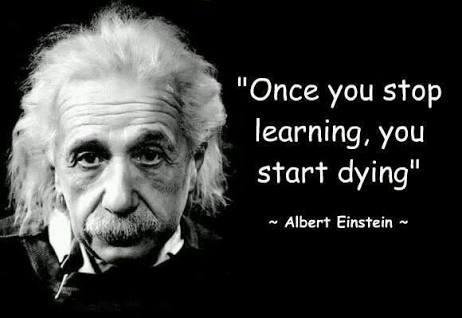
I have known writers who say they won’t attend another workshop or listen to a speaker or take another class because they’ve “been there, done that.”
While that is understandable in some cases, it’s always good to keep up with what’s new in the industry.
Beyond that, by being open to learning and to new experiences, we might pick up something new or be reminded of something we learned some time ago.
As one becomes a more experienced writer, one can be choosier and make wiser choices of who to see or what to attend – but we should all carry the idea to never stop learning.
 I’m a big fan of Malcom Gladwell, writer for the New Yorker and author of The Turning Point, Outliers, and many others.
A writing exercise from Malcom Gladwell:
Begin a correspondence with another writer. Each of you take turns sending and responding – and respond immediately with something interesting or intriguing.
It’s a good way to practice intelligent conversations so you can learn to chat with just about anyone.
66 days –
That is what a new study says it takes to form new habits. The study participants reported a range from 2 to 254, with 66 being an average.
 It depends on the person. With me, it takes 3 to 4 weeks for me to stick to my commitment. And every year my teaching schedule changes, so there’s two to three months a year for me to recommit.
The holidays, however, throws many people off.
However, once the commitment is made and the habit is in place, it’s much easier to get back into the mind space. The secret is to jump right back into the habit after a holiday or change. 
Also, I think you have to make an effort to guard that commitment. Don’t be tempted to make lunch plans on a writing hour, make it for later or for a different day.
Life too easily distracts us and, without habits firmly in place, we are easily swayed.

Some people do not understand the basic rules of professionalism. Speaking to, writing, or responding to an editor or publisher should be undertaken with care. These people are our colleagues in the best sense of the word.
I’ve worked with a few literary journals and have talked to editors at others. The things authors say and do completely surprised me.
I’ve only had a single editor be so completely unprofessional I became embarrassed for her (and forwarded her email to her boss). On the other hand, I’ve dealt with a number of writers who have taken pride in their unprofessional behaviors.
One writer posted a snarky response (he supposedly emailed) to an editor. Whether he actually wrote that to an editor is one thing, it’s quite another message to post it on social media for all to see. He may have felt he had won the battle, so to speak, but what he actually did was show how unprofessional he behaved with a colleague, and what a risk other editors or publishers might find him to work with.
We can disagree with editors, publishers, other writers, but there’s no reason to verbally attack or otherwise be rude to anyone in the industry. Taking your private issues with public companies to social media is a mistake on any number of levels. Just like employers look at social media sites, so do publishers.
I had one publisher ask me for all my  social media links. While some writers told me not to hand it over, I felt it was part of my job to have these available to people in the industry. I maintain social media sites for this reason. Publishers don’t want to just know if writers have a following, but how they’re interacting with readers, writers, and others on those social media sites.
Being rude in an email, speaking arrogantly on a call, and posting disagreements publicly will not further a career.
I do understand it’s quite popular in our society of late to act like an arse and expect to be treated like a king/queen; however, it gives a poor impression and people will not want to work with a person who acts like a spoiled child.
 In some writers’ groups, when I’ve mentioned that I’d been contacted by an editor who requested changes, there came about a rise of instantaneous resistance.
So far, whenever an editor has contacted me about changes, the changes were minor: a comma here, a synonym there, once a nick-name which they ended up leaving in.
One of the these editors worked for The Chicago Tribune’s Printers Row Journal ($1.00 Stories). I believe him to be more experienced  and credentialed in the requirements of publishable writing.
I willingly listened.
So before your writer hackles rise – listen, consider, then decide. Be polite and professional.
Don’t focus on the time, the weeks, or the future. Focus on the now.
Meaning: Don’t focus on the end of your story or the concerns about editing, about rewriting, publishing, stay with the here and now. Work on your story one page at a time, one day at a time, and go at your own pace.
The tortoise actually wins the race, kids!
According to science, exercise can feed creativity. Before you turn away, click the  unfollow button or run off screaming – oh no, she’s telling us to exercise, I knew it! – they say just getting out of the chair, walking for twenty minutes, or even (gasp) cleaning, just moving our bodies can get some juices flowing and give us a fresh outlook to come back to our writing.
So, no, you don’t have to go to the gym, learn kickboxing, or twist yourself into a pretzel, just take a deep breath and walk around in a circle for a few moments. Who knows, dizziness of the circling might give you some great ideas!
 Hobbies can reinforce our writing. I like hiking, being out in the natural world absorbing scents and sounds as well as images. I use hiking and nature to recharge my soul and in my writing by way of description.
Everyone needs something to recharge their soul. And adding authenticity to writing is always a benefit.
 Some writers have hobbies, such as fencing, they use in their story. The descriptions of actual movements, aches, pains, body benefits, makes the story feel authentic.
Do you have any hobbies which feeds your creativity?

Scientists have discovered some foods are better for creativity than others. Some of those foods, Avocados, Coconuts, and Almonds have a high fat content but with what is often referred to “healthy fats”, which creates feelings of happiness and the desire to act.
I do notice that my flow is much better when I keep a healthier diet, and I do eat these types of foods pretty regularly.
Do you notice any difference in your creative juices depending on what you eat? If you never paid attention before, try it. Let me know if you sense a difference.


 Noreen Lace
You must be logged in to post a comment.