What will you say someday when asked why you didn’t finish that novel?

How do you keep track of your submissions?
I keep a log of when, where, and what I’ve submitted. I also updated it when my piece is rejected, accepted, or haven’t heard from the publisher.
There are a number of ways to keep logs, either by date, title, or other.
I keep mine by date of submission, but it’s easily searchable if I want to find out where and when I submitted anything specific.
I also keep a log of places not to submit again. It’s a very short list, but if you run across an editor who is unprofessional or a journal that operates with questionable practices, you should keep track.
Using submittable as your tracking system works if you don’t submit to journals or publishers who are not members, as I do, but I find their site challenging to navigate when I’m looking for a certain title I may have submitted at different time periods. My list is long and some journals don’t actually update.
I’ve had a few things accepted (or rejected) and the publisher has not updated my submission on the site; therefore, it appears to still be in process.
I find my own log more easy to navigate.
Many people have an abstract idea about the muse – or more to the point, the muses, minor goddesses who were often found in Apollo’s company. They represented the arts with each being assigned a specialty.
The Muses:
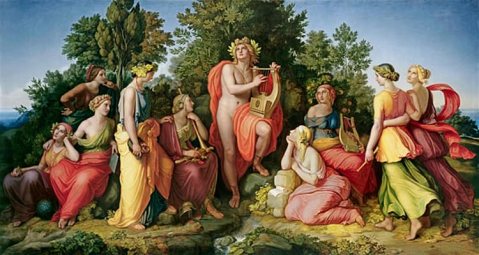
Choose one – and write a story about her, maybe you run into her at your local coffee bar, or shopping. What does she do, say, need?

“Don’t be afraid of failure. The reality is that most people successes rise out of the ashes of their previous failures.”
From a new documentary on Netflix titled Creativity. The narrator is talking to the creator of Game of Thrones. The creator is talking about how many times he’s failed.
I started this to say – what are you afraid of?
Then I wanted to ask – what if there was no such thing as fear? What would you do? What could you do?
I want you to think about that. What if fear was not in the human range of emotion or thought?
I think I read Writing Down the Bones maybe more than 20 years ago. I do believe it’s still on my bookshelf. I keep books that have spoken to me.
 Although one website says it’s a good book for beginning writers, I think we might all find some inspiration in these pages.
In yoga, sometimes we go back to level one, we go back to the training. After so many years of doing it, so many teachers putting their own twists on it, so many times we’ve worked with (or around) an injury – it’s good to go back to the basics.
I see nothing wrong with doing that in writing either.
I’m planning to pick it up again – see what else I can learn, what I might relearn.
I’ve finished my Tana French detective series and didn’t want to go to bed without another book in hand. (Nevermind there are three on my bedside table).
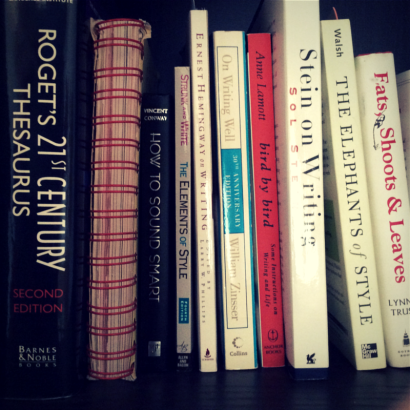 I began browsing my bookshelf, which is semi-organized: books I’ve read and loved. Books I want to read. School books. Writing books. and, of course, Poe books
I also have something mixed in that would seem, at first glance, not to belong. Books on psychology, the law, philosophy. I assume many writer’s bookshelves are this way.
A writer needs a wide variety of knowledge.
I know we have google at our disposal; however, I find reading books about, for example, the Psychology of Marketing allows me to get an in depth look that a wikipage or a few short articles are not going to give me. This allows me to create a more realistic character or more thorough background to make the story more believable.
For West End, I needed to understand two things, the idea of an absent or unloving mother, and the different forms depression can take. Anxiety runs throughout my work from Of Strays and Exes to Life of Clouds – which features children affected in different ways by the disappearance of their father.
I’ve heard handymen say they are the jack of all trades. I think writers are akin to that. We need to learn many things in order to live many lives.
Billy Collins (poet) believes we must read to be influenced, and suggests young people mimic their favorite writers in order to develop their skills and to develop their own voice.
I think many young writers do this. It’s a natural form of development.
Other writers are afraid to read when they’re  writing; they don’t want to be influenced. I think by the point you develop your own voice, you won’t so easily be influenced.
I think reading Michael Ondaatje’s In the Skin of a Lion was imperative for me to stumble across. I’d never attempted to intimate him – but he took my understanding of writing and voice to a whole new level. The storyline, the use of language, and the originality of his voice was unlike anything I’ve ever read and it blew my mind.
What reading Ondaatje did for me was to help launch my voice and style. I say this because at the time, I was mired in instructors and writers telling me no, no, no. They so strongly believed in their own way of doing things, they didn’t allow other writers to develop in other ways. It was limiting.
I’ve said this before and I’ll say it again – read far and wide! Do not be afraid of being influenced – open yourself to learning something new!
Turn off as many lights as you can bear. Except, of course, a little book light or candle so you can write.
As your eyes adjust, you’ll be able to see things, outlines, shapes; write about the darkness surrounding you, what you can see, what you can’t see, and what you wish you could see.

I was looking up taboo topics in America. It’s different for many cultures. In America, sex, race, politics, and religion are among the ones that make most people uncomfortable.
The problem with these topics is the ignorance surrounding them. Many people have insufficient information and are uncertain how to talk about the topics.
A good way to start is to open the conversation admitting to ignorance. I’m not sure that works as a writer – but we should be humble and avoid making blanket statements. But I have always believed part of being a writer was to educate people.
I don’t know that I’ve crossed any lines (no angry emails have appeared in my inbox), Perhaps I’ve been subtle enough to make someone think but not offend anyone. (Except possibly with “Harvey Levin Can’t Die.” 🙂
And although some people feel that is their job to “wake people up” by offending them, I take a different stance. While I am an honest person, it is my goal to be more effective than offensive.
I wonder if anyone has taken up any of these – or other – taboo topics and what the response was?


 Noreen Lace
You must be logged in to post a comment.