When Editors Go Cray….

beautiful ppl.jpgMany years ago, All The Beautiful People was accepted for publication. But, then, as happens sometimes, I got the dreaded letter (yes, that’s how many years ago it was) in the mail stating that they had accepted too many things and something had to be bumped. The editor apologized and said they’d keep it in their files, but I should feel free to submit it elsewhere.

I did so.

A year later, that story was accepted for publication in another journal.

Even another year later, the original journal – with a new editor – wrote me via email and said they’d decided to use All the Beautiful People in their upcoming edition.

I responded that they were welcome to use the story; however, it had been accepted and was scheduled for publication by another journal. The publications would come out about six to nine months apart.

I never heard from that second journal and believed they had removed the story from their journal and their archives.

Six months later, I received a copy of the beautiful journal and my story within its pages.  YET – they’d billed the story as a memoir – it was fiction – and they’d cut off the last paragraph.

I was a little embarrassed. The girl in the story does things I would never have never girl with elvis facedone. I was concerned what readers might think – that this might serve as some sort of legacy I couldn’t live down.
See – with the last paragraph – it could NEVER EVER EVER be mistaken as memoir. I sent off a quick email to tell them these two things.

The editor dashed off a quick and nasty response – that they had published it as received, adding some choice and unprofessional comments. She made it sound as if I’d sent it directly to her and that she hadn’t pulled it from their archives.

I responded with the history of the piece, date sent, date accepted, and by whom, date and reason it was taken out, and by whom, etc.

I received another quick and dirty response. I wish I would have kept that email – misspelled words, inappropriate language, and completely and utterly unprofessional. I decided to look this person up. I then forwarded her emails to her employer.

She had found All The Beautiful People in the other publication – the one which was attributed correctly and published fully – and accused me, in her fancy slang, of lying, cheating the system, and whatever else she felt necessary. Another email I forwarded to those who were really in charge of the journal.

I again responded – with the forward – the series of events that had transpired offering all the original letters, archived in my own files, and the emails, which I had still in my saved box.

Route-66-Texas-Midpoint.jpgI didn’t hear from any of them again. But they did put a tiny little line in an inconspicuous place on their website that the story was mislabeled as memoir and should read fiction.

Now, it could have easily been a little mistake to publish it as memoir; however, again, the last paragraph would have told ANY reader that was wrong. Therefore, the missing last paragraph and the misattribution made me wonder. Still, this problem could have been easily, politely, and professionally handled.

I was shocked to learn that the editor who had acted so poorly was a lecturer at a University and had a book or two to her own credit. I do not believe she continued as the editor after that, but I didn’t bother to check.

I learned two valuable lessons from this experience – KEEP EVERYTHING! and always act like a professional.

Submission Log

Submission-Banner.png

How do you keep track of your submissions?

I keep a log of when, where, and what I’ve submitted. I also updated it when my piece is rejected, accepted, or haven’t heard from the publisher.

There are a number of ways to keep logs, either by date, title, or other.

I keep mine by date of submission, but it’s easily searchable if I want to find out where and when I submitted anything specific.

I also keep a log of places not to submit again. It’s a very short list, but if you run across an editor who is unprofessional or a journal that operates with questionable practices, you should keep track.

Using submittable as your tracking system works if you don’t submit to journals or publishers who are not members, as I do, but I find their site challenging to navigate when I’m looking for a certain title I may have submitted at different time periods. My list is long and some journals don’t actually update.

I’ve had a few things accepted (or rejected) and the publisher has not updated my submission on the site; therefore, it appears to still be in process.

I find my own log more easy to navigate.


What’s So Scary?

leaving-your-fears-insecurities-behind.jpg

“Don’t be afraid of failure.  The reality is that most people successes rise out of the ashes of their previous failures.”

From a new documentary on Netflix titled Creativity. The narrator is talking to the creator of Game of Thrones. The creator is talking about how many times he’s failed.

I started this to say – what are you afraid of?

Then I wanted to ask – what if there was no such thing as fear? What would you do? What could you do?

I want you to think about that. What if fear was not in the human range of emotion or thought?


Writing with Bones

I think I read Writing Down the Bones maybe more than 20 years ago.  I do believe it’s still on my bookshelf. I keep books that have spoken to me.

writing-down-the-bones.jpgAlthough one website says it’s a good book for beginning writers, I think we might all find some inspiration in these pages.
In yoga, sometimes we go back to level one, we go back to the training. After so many years of doing it, so many teachers putting their own twists on it, so many times we’ve worked with (or around) an injury – it’s good to go back to the basics.

I see nothing wrong with doing that in writing either.

Writing Down the Bones – a book by Natalie Goldberg. This site gives you a generous sampling of the book.

I’m planning to pick it up again – see what else I can learn, what I might relearn.

Alone, in the dark, write

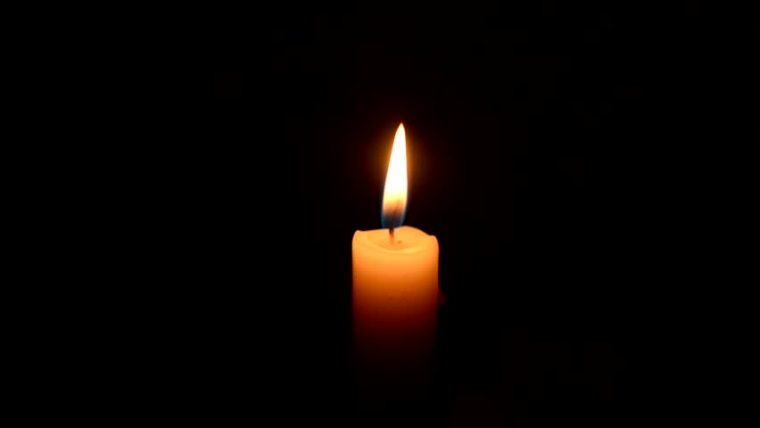
Turn off as many lights as you can bear. Except, of course, a little book light or candle so you can write.

As your eyes adjust, you’ll be able to see things, outlines, shapes; write about the darkness surrounding you, what you can see, what you can’t see, and what you wish you could see.

candle.jpg

Disabilities in fiction

People_with_Disabilities.jpgI was thinking how few people with disabilities are featured on regular television shows and movies. And rarely do we see people with disabilities in fiction, unless they are the main character.

There are a number of children’s book, teen books, and mainstream novels wherein a physical disability is the main feature and/ part of the main character and therefore the thrust of the storyline, but I think we need to incorporate people with disabilities into our secondary and background characters.

In one show I watch, they had to replace a minor character, a secretary who might be seen once or twice a week, and be required to answer a mundane question like, “Where’s the boss?” This show (which shall remain nameless) receives kudos for being among the first (many years ago) to feature minority characters, an interracial affair, gay characters, and, now, even a gay relationships; yet, they don’t have any characters with disabilities.

It’s really up to the writers – us – to push this envelop. We don’t need to know the whole back story if our main character walks into an office to say, “Where’s the boss?” and receives the same sprite answer, “if only someone would tell me!” from someone in a wheelchair.


Blocked? How to shake it loose.

wall-art-2852231_960_720

Creative blocks are brought on by various reasons.

Writers, poets, artists, musicians need to express themselves. Sometimes, something plugs our flow of creativity.

My friend and I have found release in other creative outlets. She took a watercolor painting class. She feared, at first, that she was taking away from her writing; however, what she found is that it opened her flow and she felt even more creative and was able to add even more to her usual creativity.

I take art and other classes on a regular basis. Most of the time their directly related to writing, but sometimes they are not – but they still feed my imagination and add depth to my writing.

The Healer’s Daughter will be released on May 15th in The Ear. This story came pouring out after a six week drawing class I took at a local museum/gallery. And… I feel like it’s one of my best, filled with color and meaning.

Shake something loose by trying another outlet. You may come back stronger and more creative than before.

The Joy of Acceptance…

The acceptance of being your own person, writing in your own style, not mimicking or falling in line.

I get a lot more rejections than I do acceptances, but I don’t dwell on the rejections.

56635085_2231045933643692_5441110500400168960_o.jpg


There is an art to accepting or rejecting any work. And, although any acceptance is a happy occasion, a particular nice one such as this is always a joy to receive.

To update you on my publications of late –

Heaven’s Password is about a woman who finds herself in heaven, in a line reminiscent of the DMV, and is asked for a password. She’s not the most patient person and can’t remember ever setting up a password. Just like your bank account, you can’t get in without it! This was published in the The Survivor issue of P&G.

Bowie and the Basket Case is due out any day now from ID Press. When someone breaks into her house, Anna doesn’t readily find anything missing. But soon she realizes little things are disappearing and reappearing – is someone gas-lighting her?

The Healer’s Daughter was accepted by The Ear and will be out May 15th. Self explanatory title?

And finally, or so far, Voice of Eve has sent me the lovely acceptance above for my photography and three poems – as you’ve read – June 15th.

Thanks for reading, dear souls.

Wishing you much love and happiness.

noreen

Women Writing

women writing

Humility is Success

spiritual-principle-humilityI’ve met a number of people from all different walks of life; the one trait I admire most across the board is humility.

I was at a writer’s conference signing. I happened to be waiting at the front desk when another writer walked up and took me for someone who worked there. He didn’t look at my name tag; he didn’t look at me at all. He said something to the effect, “I’m in a hurry, get my tag for me.”

I smiled and said, “let me get you someone who can help you.”

He huffed out a breath.

I found it rather humorous. He would run into me once or twice during the event and didn’t remember the front desk incident. But, moreso, I found he treated most people as if they were there to serve him.  I’d never heard of him before, and I haven’t bothered to read any of his books. Had he been the least bit human to anyone, I probably would have bought his book then and there.

We don’t have to act like asshats to get what we want. Self-importance rarely serves anyone and doesn’t  win any awards. It may get you knocked off the invite list.

Humility is not a denial of our skills or our sense of self-respect. Humility is being modest about the skills, talent, and dreams we are working to achieve. And it takes nothing away from us or from those around us.

index