Ode to Silence

cover to here in the silence.jpg

Do you love this cover? I do. I’m fascinated with the place.

I also love the title – which is what this blog used to be called.

It’s a quote by Pete Townshend from his song, I Am an Animal:

“I was always here in the silence
But I was never under your eye”

We’ve all felt that way at some point, haven’t we? Unnoticed? Unwatched. Even though we were there the whole time.

I guess that’s what inspired this book of short stories.

One of my favorite stories in this book of short fiction is “The Places Between.” A story of a couple. I want to say it’s a sad story – he’s always thinking of someone else; she needs a change.

Is that another place we’ve all been? Hopefully, not for long.


Be Inspired

Have you ever been inspired by a story? I imagine many people have: hence, fan fiction. I’m inspired by characters and what could have happened.

Think of The Great Gatsby. Fitzgerald, so it’s said, hated the hypocrisy. Parties, and alcohol, and politicians who took part or did nothing. Daisy – hated her. Would have loved to see her get her due. I don’t know how I felt about Gatsby himself. I wanted something more for him, realization or redemption.

I was inspired to write a part two in which one of those two things happened. Of course, I’d have to somehow bring Gatsby back to life first. Still working on it.

tenor.gif

There’s nothing wrong in being inspired by other authors, other stories, other’s characters. As a writer, these things should strike us.

Use the last story you read as a prompt – take a character or a location and tell your own story.

What makes good literature?

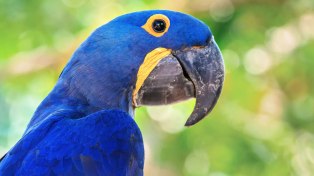
An extremely good conversation in my literature class about intelligence (Inspired by Ted Chiang’s The Great Silence). We talked about other species that fall under the definition of intelligence, which is “the ability to understand and apply knowledge.” parrot.jpgConsidering Alex the Parrot and Koko the Gorilla, and other species: crows are problem solvers and remember faces. We discussed dogs, cats, and others. Is love, as an abstract idea, understood and applied by animals? And then – is intelligence found in showing love?

This is what good literature should do. Teach, delight, and create wonder.

Read The Great Silence here

Submission Log

Submission-Banner.png

How do you keep track of your submissions?

I keep a log of when, where, and what I’ve submitted. I also updated it when my piece is rejected, accepted, or haven’t heard from the publisher.

There are a number of ways to keep logs, either by date, title, or other.

I keep mine by date of submission, but it’s easily searchable if I want to find out where and when I submitted anything specific.

I also keep a log of places not to submit again. It’s a very short list, but if you run across an editor who is unprofessional or a journal that operates with questionable practices, you should keep track.

Using submittable as your tracking system works if you don’t submit to journals or publishers who are not members, as I do, but I find their site challenging to navigate when I’m looking for a certain title I may have submitted at different time periods. My list is long and some journals don’t actually update.

I’ve had a few things accepted (or rejected) and the publisher has not updated my submission on the site; therefore, it appears to still be in process.

I find my own log more easy to navigate.


What’s So Scary?

leaving-your-fears-insecurities-behind.jpg

“Don’t be afraid of failure.  The reality is that most people successes rise out of the ashes of their previous failures.”

From a new documentary on Netflix titled Creativity. The narrator is talking to the creator of Game of Thrones. The creator is talking about how many times he’s failed.

I started this to say – what are you afraid of?

Then I wanted to ask – what if there was no such thing as fear? What would you do? What could you do?

I want you to think about that. What if fear was not in the human range of emotion or thought?


On my bookshelf

I’ve finished my Tana French detective series and didn’t want to go to bed without another book in hand. (Nevermind there are three on my bedside table).

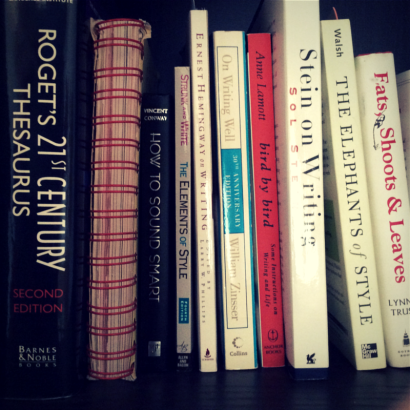
bookshelf.pngI began browsing my bookshelf, which is semi-organized: books I’ve read and loved. Books I want to read. School books. Writing books. and, of course, Poe books

I also have something mixed in that would seem, at first glance, not to belong. Books on psychology, the law, philosophy. I assume many writer’s bookshelves are this way.

A writer needs a wide variety of knowledge.

I know we have google at our disposal; however, I find reading books about, for example, the Psychology of Marketing allows me to get an in depth look that a wikipage or a few short articles are not going to give me. This allows me to create a more realistic character or more thorough background to make the story more believable.

For West End, I needed to understand two things, the idea of an absent or unloving mother, and the different forms depression can take. Anxiety runs throughout my work from Of Strays and Exes to Life of Clouds – which features children affected in different ways by the disappearance of their father.

I’ve heard handymen say they are the jack of all trades. I think writers are akin to that. We need to learn many things in order to live many lives.


The Secret to Successful Short Stories

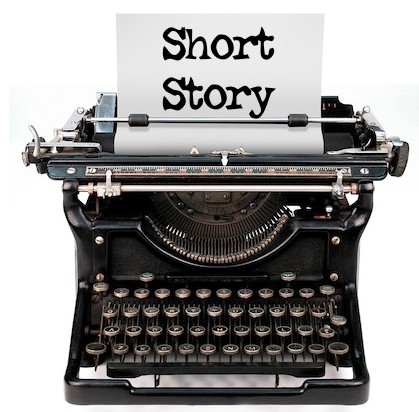
short-story-e1415920087313.jpg

I spent much of my time in grad school trying to please a certain teacher and understand the secret formula for a short story.

Up until that time, I’d only written novels (or novellas), longer pieces of work in which I developed the characters and followed a plot. These felt full and complete.

Writing one small selection vexed me.

So I read and read and researched and attempted one time after another to create a successful short piece.

I suppose there is no formula and  no one right answer, which is what I was looking for – the correct answer.

Of the things written in grad school, the one instructor I attempted to satisfy deemed them mostly unworthy.

It wasn’t until near the end of graduation that an instructor said “half of that story was the best he’d ever read.”

He didn’t tell me which half.

However, almost all those stories have been pulled out, dusted off, and accepted with few edits. Hence – dear teachers – they were good! I had learned something; I had accomplished something.  (I must be doing something right, over 30 published in the last few years!)

There may not be one right answer, and there’s no secret, nor is there a hidden formula. Short stories need to get to a point, need to have conflict, need to show a budding of growth – perhaps.


Go to Sleep

sleeping-babyIf you’ve reached a point in your story where you’re stuck, or perhaps some small thing is niggling at you, tell yourself what it is before you go to sleep.

There’s a number of things I’ve done in order to enhance or forward my writing – and the above is one of the things. Margaret Atwood recommends the same.

But I’ve gone further. I was writing a poem and I knew one line wasn’t quite right. I kept going over it and over it and could not seem to find the right words in the right order to bring the poem together. As I went to bed that night – I told myself to dream about it.

At 4am, I woke up with the line! I scribbled it in the notebook (which sits next to my bed) and turned over to go back to sleep.

Not only do I tell myself the problem I’m dealing with in my writing before I go to sleep, but I also think about different story lines for my characters. This keeps me juiced, so to speak, with inspiration. The next morning, I’m ready to hop out of bed and write.

Sometimes, of course, this backfires and I want to write then and there – which I do. But most of it can and does wait for that dreaded blank page the next morning.

Far and Wide and Every Lost Minute.

Stack-of-books-great-education-1000x520

I was doing an exercise in a seminar I was taking. I was given an article; a long, seemingly rambling, however, well executed nonfiction piece on the downfall of certain companies. Just writing that sentence feels painful. Why did I waste my time?

But, see, it turned out not to be a waste of time. In a lecture, recently, a similar topic came up and I was able to give a reasonable discussion about how this downfall relates to the business of writing.

Wow – I did not see that coming.

That is something I’ve always done, however. I’ve actively added to my body of knowledge by reading far and wide, not limiting myself just to my genre or even just to fiction.

What I’ve found is that this adds depth to my characters, validity to my narrative, realism to my stories. I’m don’t limit myself, therefore, my characters seem more authentic.

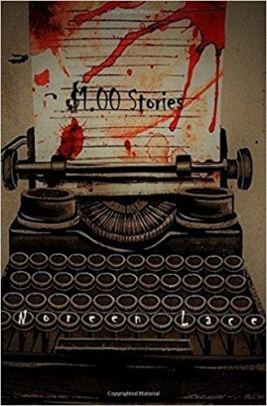
In 51WOVy2yYkL._SX326_BO1,204,203,200_$I.00 Stories, I developed the homeless man from articles I’d read about mental illness and the homeless. In West End, I was able to add more depth to my character having read psychological texts on motherless daughters.
My advice is always – read far and wide and don’t limit yourself. Read when you’re waiting in line at starbucks, read before bed, read when you wake up, or you’re waiting to pick up your kids, or meet your friends. Get off of facebook and twitter or stay on those sites and subscribe to the digital magazines.

I hear people say – I don’t have time to read. Yes. You. Do. Find where you’re losing time and capture it.


Monday Motivation


fork

Writing exercise:

Take a very common thing from your kitchen and write a poem about it.

It will most likely become a poem about something else.

Share in our Facebook group!

I think I’m going to try a spoon.  (There’s actually a pretty famous poem about a spoon – by Billy Collins)