What makes good literature?

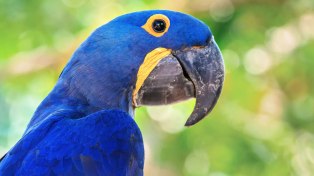
An extremely good conversation in my literature class about intelligence (Inspired by Ted Chiang’s The Great Silence). We talked about other species that fall under the definition of intelligence, which is “the ability to understand and apply knowledge.” parrot.jpgConsidering Alex the Parrot and Koko the Gorilla, and other species: crows are problem solvers and remember faces. We discussed dogs, cats, and others. Is love, as an abstract idea, understood and applied by animals? And then – is intelligence found in showing love?

This is what good literature should do. Teach, delight, and create wonder.

Read The Great Silence here

When Editors Go Cray….

beautiful ppl.jpgMany years ago, All The Beautiful People was accepted for publication. But, then, as happens sometimes, I got the dreaded letter (yes, that’s how many years ago it was) in the mail stating that they had accepted too many things and something had to be bumped. The editor apologized and said they’d keep it in their files, but I should feel free to submit it elsewhere.

I did so.

A year later, that story was accepted for publication in another journal.

Even another year later, the original journal – with a new editor – wrote me via email and said they’d decided to use All the Beautiful People in their upcoming edition.

I responded that they were welcome to use the story; however, it had been accepted and was scheduled for publication by another journal. The publications would come out about six to nine months apart.

I never heard from that second journal and believed they had removed the story from their journal and their archives.

Six months later, I received a copy of the beautiful journal and my story within its pages.  YET – they’d billed the story as a memoir – it was fiction – and they’d cut off the last paragraph.

I was a little embarrassed. The girl in the story does things I would never have never girl with elvis facedone. I was concerned what readers might think – that this might serve as some sort of legacy I couldn’t live down.

See – with the last paragraph – it could NEVER EVER EVER be mistaken as memoir. I sent off a quick email to tell them these two things.

The editor dashed off a quick and nasty response – that they had published it as received, adding some choice and unprofessional comments. She made it sound as if I’d sent it directly to her and that she hadn’t pulled it from their archives.

I responded with the history of the piece, date sent, date accepted, and by whom, date and reason it was taken out, and by whom, etc.

I received another quick and dirty response. I wish I would have kept that email – misspelled words, inappropriate language, and completely and utterly unprofessional. I decided to look this person up. I then forwarded her emails to her employer.

She had found All The Beautiful People in the other publication – the one which was attributed correctly and published fully – and accused me, in her fancy slang, of lying, cheating the system, and whatever else she felt necessary. Another email I forwarded to those who were really in charge of the journal.

I again responded – with the forward – the series of events that had transpired offering all the original letters, archived in my own files, and the emails, which I had still in my saved box.

Route-66-Texas-Midpoint.jpgI didn’t hear from any of them again. But they did put a tiny little line in an inconspicuous place on their website that the story was mislabeled as memoir and should read fiction.

Now, it could have easily been a little mistake to publish it as memoir; however, again, the last paragraph would have told ANY reader that was wrong. Therefore, the missing last paragraph and the misattribution made me wonder. Still, this problem could have been easily, politely, and professionally handled.

I was shocked to learn that the editor who had acted so poorly was a lecturer at a University and had a book or two to her own credit. I do not believe she continued as the editor after that, but I didn’t bother to check.

I learned two valuable lessons from this experience – KEEP EVERYTHING! and always act like a professional.

Submission Log

Submission-Banner.png

How do you keep track of your submissions?

I keep a log of when, where, and what I’ve submitted. I also updated it when my piece is rejected, accepted, or haven’t heard from the publisher.

There are a number of ways to keep logs, either by date, title, or other.

I keep mine by date of submission, but it’s easily searchable if I want to find out where and when I submitted anything specific.

I also keep a log of places not to submit again. It’s a very short list, but if you run across an editor who is unprofessional or a journal that operates with questionable practices, you should keep track.

Using submittable as your tracking system works if you don’t submit to journals or publishers who are not members, as I do, but I find their site challenging to navigate when I’m looking for a certain title I may have submitted at different time periods. My list is long and some journals don’t actually update.

I’ve had a few things accepted (or rejected) and the publisher has not updated my submission on the site; therefore, it appears to still be in process.

I find my own log more easy to navigate.


What’s So Scary?

leaving-your-fears-insecurities-behind.jpg

“Don’t be afraid of failure.  The reality is that most people successes rise out of the ashes of their previous failures.”

From a new documentary on Netflix titled Creativity. The narrator is talking to the creator of Game of Thrones. The creator is talking about how many times he’s failed.

I started this to say – what are you afraid of?

Then I wanted to ask – what if there was no such thing as fear? What would you do? What could you do?

I want you to think about that. What if fear was not in the human range of emotion or thought?


Writing with Bones

I think I read Writing Down the Bones maybe more than 20 years ago.  I do believe it’s still on my bookshelf. I keep books that have spoken to me.

writing-down-the-bones.jpgAlthough one website says it’s a good book for beginning writers, I think we might all find some inspiration in these pages.

In yoga, sometimes we go back to level one, we go back to the training. After so many years of doing it, so many teachers putting their own twists on it, so many times we’ve worked with (or around) an injury – it’s good to go back to the basics.

I see nothing wrong with doing that in writing either.

Writing Down the Bones – a book by Natalie Goldberg. This site gives you a generous sampling of the book.

I’m planning to pick it up again – see what else I can learn, what I might relearn.

The Joy of Acceptance…

The acceptance of being your own person, writing in your own style, not mimicking or falling in line.

I get a lot more rejections than I do acceptances, but I don’t dwell on the rejections.

56635085_2231045933643692_5441110500400168960_o.jpg


There is an art to accepting or rejecting any work. And, although any acceptance is a happy occasion, a particular nice one such as this is always a joy to receive.

To update you on my publications of late –

Heaven’s Password is about a woman who finds herself in heaven, in a line reminiscent of the DMV, and is asked for a password. She’s not the most patient person and can’t remember ever setting up a password. Just like your bank account, you can’t get in without it! This was published in the The Survivor issue of P&G.

Bowie and the Basket Case is due out any day now from ID Press. When someone breaks into her house, Anna doesn’t readily find anything missing. But soon she realizes little things are disappearing and reappearing – is someone gas-lighting her?

The Healer’s Daughter was accepted by The Ear and will be out May 15th. Self explanatory title?

And finally, or so far, Voice of Eve has sent me the lovely acceptance above for my photography and three poems – as you’ve read – June 15th.

Thanks for reading, dear souls.

Wishing you much love and happiness.

noreen

A Tribute to Poe on his Birthday

January 19th, is the 210th anniversary of Poe’s Birth.

poe4Although many people are content with the reason of Poe’s continued relevance in our society is the stereotypical tortured artist.  There is no doubt he was tortured, and for reasons of which we are all familiar; he was an orphan who lost every women he ever loved.

His battles with alcohol, I believe, are highly exaggerated. But it makes for a good story. I’m not saying he never drank – he drank to excess plenty of times, he may have officially been an alcoholic as we understand the word today; however, it was not a constant. There were many years through his marriage to Virginia that he did not drink or drink to excess. Before his death in 1849, he’d joined the Sons of Temperance Movement – to get people to stop drinking.

The reason Poe has remained relevant throughout the years is his work touchespoe our deepest fears and deepest desires. He has continued to inspire other writers


poe2and artists of all types.


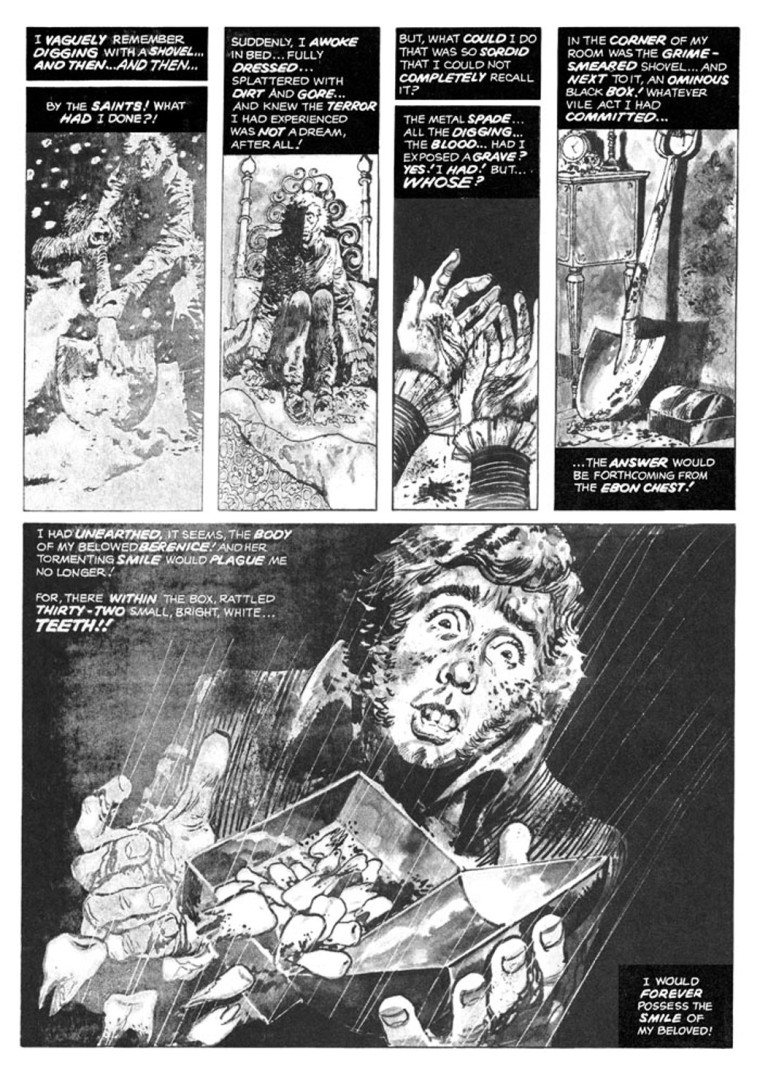
He wrote far more than what we, today, consider horror. He wrote essays, literary analysis, investigative pieces. He wrote about street paving, Stonehenge, and he was inspired by what he read in newspapers.  Berenice and others were inspired by stories of grave robbers in local papers.

poe3

The famed portrait of Edgar Allan Poe was taken three days after his suicide attempt in 1848.

Edgar_Allan_Poe_daguerreotype_crop.png

And, Eddy, my imaginative fiction, was inspired by that suicide attempt. He bought two bottles of laudanum on a cold winter night meaning to do himself in. He’d lost Virginia and felt he had no one. (Laudanum contained opium and derivatives of morphine and codeine.)

eddyfinalredonefromtresized


For Poe’s Birthday, I offer an excerpt from the novella:

   He stumbles from the pub, slips, and falls on the iced over bricks of Boston’s November streets. Save for the muddled voices beyond the closed door, the street is quiet as his body thuds to the ground. His breath billows in front of him as he gasps and grumbles and struggles to his knees, then his feet, to regain his drunken balance.

   The gaslamp on the corner offers a wavering yellow glow for the struggling figure on the lonely winter night. Thin strands of hair blow in the chilled breeze; he runs his hands over his head, straightens himself before he pulls at the sagging overcoat and tugs it closed.

     Remembering the tinctures of laudanum pried from the chary pharmacist, he hurriedly shoves his hands in his pockets, retrieves the bottles.

   His heavy breath mounds in front of him and, for a moment, he can’t see; then the luminous cloud of brandy scented air dissipates. The medicines are intact. Relieved, he stuffs them back in his pocket and buttons his jacket.

   “Edgar,” someone calls from the corner; the noise from the pub trails the swarthy figure out until the door slams to a close behind him. “You alright?”

   Edgar waves him off without turning around.

   The thick shadow chuckles as he staggers in the opposite direction.

   The winter is freezing cold, but the snow hasn’t endured. Small white crystals pile in corners and fill the air. The icy rain soaks him before he reaches his chamber on the second floor of the boarding house. The room is small, impersonal, but warmer than the street. An unlit lantern shimmies on the desk as he unsteadily seats himself, glances out the window.

   A barely discernable outline disquiets the otherwise muted darkness on the corner of the street below. He knows it’s the black dog that’s stalked him his whole life. Suddenly angered, he shoves himself forward, pushes the unlit lamp aside and topples the ink jar.

   “Get outta here, you wretched creature.” The incensed command lost in the night.

      Recovering the secreted bottles of opium from his coat pocket, he sets them side by side in front of him. Unsteadily he tugs the lid from one and snorts in a single gulp.

For More Posts on Poe – click this link.

To get the book at 3.99 – this weekend only – click this link.

To get the ebook at .99 – today only – click this link.


edgar_allan_poe_3.jpg


Much love and luck.


What’s New With You?

I’ve been remiss in my posting – which is a social media no-no.  icecreamCan I tell you a secret? I’m really just an introverted writer and I really want to do is:


Write!


Edgar_Allan_Poe_3


I had a fantastic time at the Poe Museum reading Eddy. They live streamed it (I didn’t know they were doing that!) and I’ve been invited back, hope to go soon!


27982653_1680480425366915_8840169907577678606_o

In the meantime, I’ll be at AWP.


But the real news today: my short stories – loving the covers! – are available for .99 cents on smashwords and kindle.


So – whenever you need something to do – click the link, read a story, let me know what you think!

Be Joyful!

Delphinium – with care, blooms twice

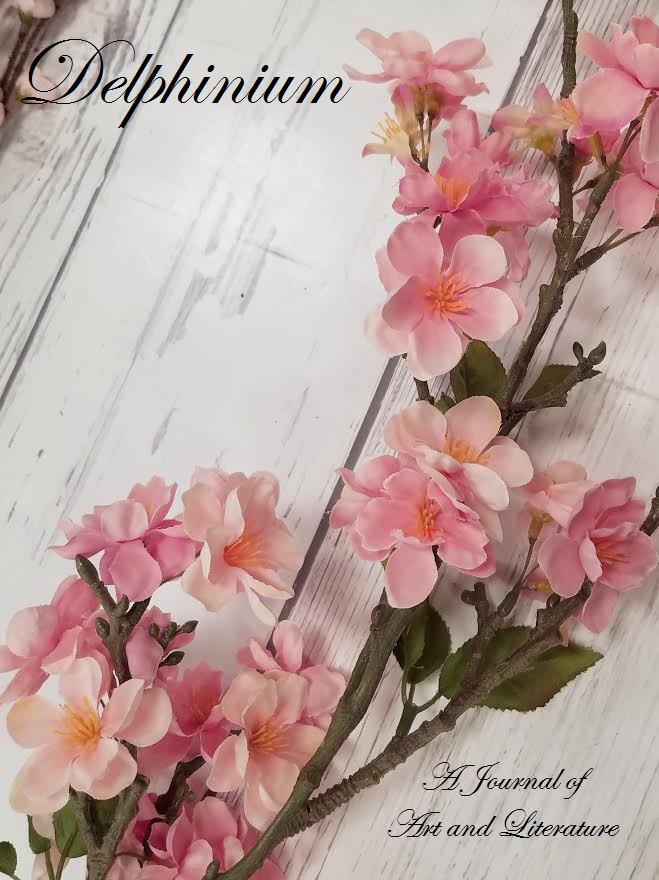
Sticking to their word, Delphinium blooms again. The lovely editors at REaDLips have promised to give some of the proceeds of Delphinium’s Summer Issue 2017 (and going into the future) to literacy programs.  I’m beginning to appreciate Delphinium and those at REaDLips more than ever. They are showing themselves to have a heart, to care about our society. I am more than proud to be affiliated with this journal, proud to be published a long side amazing award winning authors as well as my own students. That’s right! Lynn Johnson was a student in my African – American Literature class. Her poem, published in Delphinium, was one she wrote in response to one of our readings and shared in class as part of her creative project.

I hope you’ll give Delphinium a read, and not because I’m published in it (well, not JUST because), the journal features authors and artists of diverse cultures and it will benefit art and literacy programs.

delphin cover3

The Evolution of Writing Style

A prompt in a writing group to think about style inspired me to consider the evolution of my own writing style.

Writing evolves, grows, hopefully gets better, with all we learn and experience in life.  But style is something a little different. Style, sometimes, doesn’t change. Or, I should argue, doesn’t change that much. Maybe, it’s the small changes that only a critical reader might notice.

Last year, when I published Here in the Silence, I felt the stories earned that title. All the protagonists were struggling with finding their own voice. They felt silent or silenced, either from their own lack or from those around them.

This year, with Namas-Cray, my characters are different. Some are still struggling with being heard, (Of Strays and Exes), while some believe they are completely aware of who they are and what they want (A Perfect Day). There’s darkness, but there’s a dark ironic humor that embeds itself in their thoughts and actions: “Of Strays” begins with “When I killed my neighbors dog….” and in “A Perfect Day” a woman’s suicide is interrupted by an armed burglary.

What’s different between these two years of writing is the ironic humor. And, I’ve noticed that’s worked it’s way into most of my writing, including my poetry, “The Fly” features a fly who has “24 rose colored hours” of life, both celebrating and loathing those hours.

I’ve always handled my own life’s struggles with humor. When my daughter was a teenager, she looked at me and said, “Is everything funny to you?” Anyone who has a teenager knows – it’s got to be funny or you’ll lose your freaking mind. Therefore, to answer her question, I gave her a long, slow nod (gritting my teeth).

Does that mean my writing style will make you laugh at the dead dog or at the woman’s suicide attempt?  Absolutely not!  That’s where the irony comes in. It’s subtle and sardonic. The protagonist in “Of Strays,” offers to pay for the dog.  She doesn’t quite get the loss. But the protagonist grows to understand. And, in “A Perfect Day,” suicide is never a humorous topic, but our very serious plans being interrupted by life is something everyone can relate to. Her day is no longer so perfect when an armed robber says, “your money or your life.” And his plan, certainly, is not going as well either. Irony!

One of my students believes that “humor” should never be used in conjunction with a serious topic. In many cases, this is true. But we have to look at the irony surrounding the fiction that is how we learn and grow; introducing a topic with subtly allows the readers a way in to understand the situation, relate, empathize. The same is true of our lives. If you slam someone with truth, they are likely to back off and not engage. We introduce ourselves first, our struggles, along with the irony of moving on in our lives.

Let’s take a look at my life – what has happened in my life that might have made me feel more sardonic.  I teach a report writing class, which I run like a lesson in professionalism. How you present yourself as well as your writing says a lot about the person you are.  And then comes this Presidential campaign. How do I tell my 18-22 year old students to act like a professional when #45 acts like a spoiled child who’s had too much sugar?

Irony much?  This year, I was offered an African American Literature course. How do I stand in front of 36 students of diverse backgrounds as a white woman lecturing them on African American Lit?  Humor. Confront the irony. I asked them on the first day of class, “Does anyone want to know why a white girl is teaching an African American Lit Course?”

(According to the students, btw, I did a great job. Let me say, that I absolutely loved it! We built some iron bridges of communication in that class that I hope the students take out into the world with them. I took the course for a number of reasons, one of them was the above #45. But that’s a whole other story – We’re focusing on irony, life, writing style).

I do believe life affects writing style. Everything we learn, do, experience, and want should affect our writing style. We should grow and evolve as humans and as writers.

I was stuck once on a story. I’d been working with it, not quite able to get it to that sweet spot, when I decided on a vacay to New Orleans. I’m not much of a drinker, so it’s not the absinthe smoothies on Bourbon Street that inspired the trip, so much as the fanfare, the history, and the culture. I might have thought about the story while I was there; I don’t really remember. But, upon my return, the answer materialized. The story became what it needed to be. (It’s under consideration for an award as I write this).

That trip has stayed with me, as well as my other travels, other experiences: the homeless man at Starbucks focusing with intensity on a spiral bound notebook as if he was finishing his own novel – “$1.00 Stories” – the psychic who told me my illusion bubbles had burst “How to Throw a Psychic a Surprise Party” and so on. We must let life affect us, work its way into us, our style must evolve, or we stay stuck in life and in art.

writing life.jpg

I’m interested in hearing thoughts on this.  Do agree? Disagree? Has your style changed? How or why?