Family Secrets

girl with book that reads we all have secretsAll families have secrets. I think that’s why some of us become fiction writers. Maybe, much to our family’s horror.

Secrets released in fiction is like water under pressure – there’s a spurt which resembles something other than what it really is. So, mostly, our family is safe.

Some secrets come to us second hand – the things people told us, what we know of other families, friends, acquaintances. In all honesty, these are my favorites.

The Gold Tooth is an amalgamation of family secrets. These are separate things from the gold tooth cover.jpgdifferent people whispered to me at times, laughed about at other times, assumptions from other people – all mixed up in a writer’s brain to spurt out under the pressure of a story.

My grandmother told me a story in which a mother, in trying to teach her children biggest is not best, used to offer the children unmarked gifts in various sizes. Whoever choose based on the biggest gift didn’t necessarily received the best gift.

A friend told me she’d inherited teeth from an aunt.

Another friend provided details about an uneven and questionable disbursement of a will and trust.

They all mashed together to create this story of a mother who tried to teach her daughters a lesson, protect one, maybe both, by the terms of a her will.

Feel free to tell your secrets to a fiction writer. They’ll never tell the whole truth.

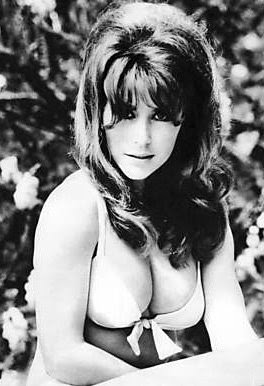
beautiful woman with wry smile.jpg


What makes good literature?

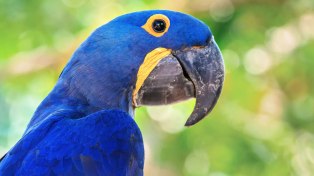
An extremely good conversation in my literature class about intelligence (Inspired by Ted Chiang’s The Great Silence). We talked about other species that fall under the definition of intelligence, which is “the ability to understand and apply knowledge.” parrot.jpgConsidering Alex the Parrot and Koko the Gorilla, and other species: crows are problem solvers and remember faces. We discussed dogs, cats, and others. Is love, as an abstract idea, understood and applied by animals? And then – is intelligence found in showing love?

This is what good literature should do. Teach, delight, and create wonder.

Read The Great Silence here

When Amazon goes Rogue

Sometimes Amazon does their own thing.

one dollar stories cover.jpgOnce I saw my book Eddy was on sale far below what I’d seen before. I contacted the publisher who told me that Amazon had put it on sale to compete with another website. Really?

Well, they’ve done it again; my book, $1.00 Stories, is on sale. Or, at least, as I write this it is.

$1.00 Stories is about an author whose success is not enough and a homeless man who has what he wants.

I enjoy imagining people’s stories. I think all writers do. $1.00 Stories originally appeared in The Chicago Tribune’s Printers Row Journal.

When Editors Go Cray….

beautiful ppl.jpgMany years ago, All The Beautiful People was accepted for publication. But, then, as happens sometimes, I got the dreaded letter (yes, that’s how many years ago it was) in the mail stating that they had accepted too many things and something had to be bumped. The editor apologized and said they’d keep it in their files, but I should feel free to submit it elsewhere.

I did so.

A year later, that story was accepted for publication in another journal.

Even another year later, the original journal – with a new editor – wrote me via email and said they’d decided to use All the Beautiful People in their upcoming edition.

I responded that they were welcome to use the story; however, it had been accepted and was scheduled for publication by another journal. The publications would come out about six to nine months apart.

I never heard from that second journal and believed they had removed the story from their journal and their archives.

Six months later, I received a copy of the beautiful journal and my story within its pages.  YET – they’d billed the story as a memoir – it was fiction – and they’d cut off the last paragraph.

I was a little embarrassed. The girl in the story does things I would never have never girl with elvis facedone. I was concerned what readers might think – that this might serve as some sort of legacy I couldn’t live down.
See – with the last paragraph – it could NEVER EVER EVER be mistaken as memoir. I sent off a quick email to tell them these two things.

The editor dashed off a quick and nasty response – that they had published it as received, adding some choice and unprofessional comments. She made it sound as if I’d sent it directly to her and that she hadn’t pulled it from their archives.

I responded with the history of the piece, date sent, date accepted, and by whom, date and reason it was taken out, and by whom, etc.

I received another quick and dirty response. I wish I would have kept that email – misspelled words, inappropriate language, and completely and utterly unprofessional. I decided to look this person up. I then forwarded her emails to her employer.

She had found All The Beautiful People in the other publication – the one which was attributed correctly and published fully – and accused me, in her fancy slang, of lying, cheating the system, and whatever else she felt necessary. Another email I forwarded to those who were really in charge of the journal.

I again responded – with the forward – the series of events that had transpired offering all the original letters, archived in my own files, and the emails, which I had still in my saved box.

Route-66-Texas-Midpoint.jpgI didn’t hear from any of them again. But they did put a tiny little line in an inconspicuous place on their website that the story was mislabeled as memoir and should read fiction.

Now, it could have easily been a little mistake to publish it as memoir; however, again, the last paragraph would have told ANY reader that was wrong. Therefore, the missing last paragraph and the misattribution made me wonder. Still, this problem could have been easily, politely, and professionally handled.

I was shocked to learn that the editor who had acted so poorly was a lecturer at a University and had a book or two to her own credit. I do not believe she continued as the editor after that, but I didn’t bother to check.

I learned two valuable lessons from this experience – KEEP EVERYTHING! and always act like a professional.
Submission Log

Submission-Banner.png

How do you keep track of your submissions?

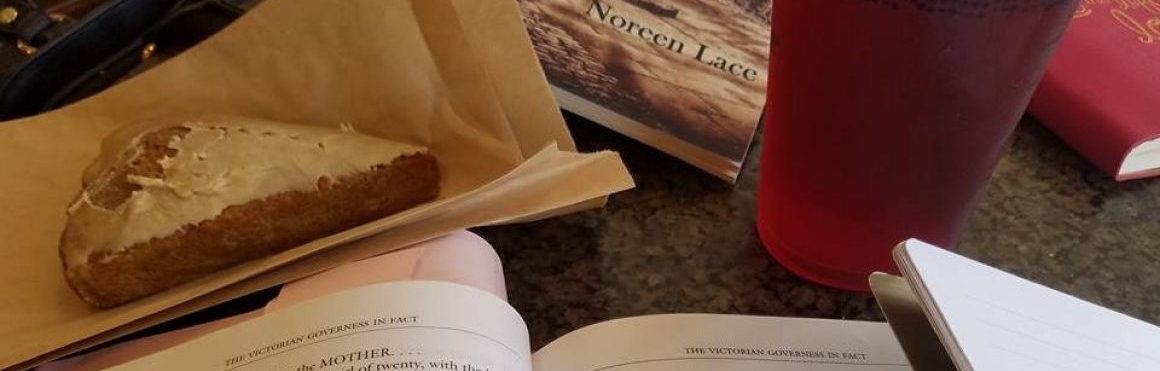
I keep a log of when, where, and what I’ve submitted. I also updated it when my piece is rejected, accepted, or haven’t heard from the publisher.

There are a number of ways to keep logs, either by date, title, or other.

I keep mine by date of submission, but it’s easily searchable if I want to find out where and when I submitted anything specific.

I also keep a log of places not to submit again. It’s a very short list, but if you run across an editor who is unprofessional or a journal that operates with questionable practices, you should keep track.

Using submittable as your tracking system works if you don’t submit to journals or publishers who are not members, as I do, but I find their site challenging to navigate when I’m looking for a certain title I may have submitted at different time periods. My list is long and some journals don’t actually update.

I’ve had a few things accepted (or rejected) and the publisher has not updated my submission on the site; therefore, it appears to still be in process.

I find my own log more easy to navigate.


What’s So Scary?

leaving-your-fears-insecurities-behind.jpg

“Don’t be afraid of failure.  The reality is that most people successes rise out of the ashes of their previous failures.”

From a new documentary on Netflix titled Creativity. The narrator is talking to the creator of Game of Thrones. The creator is talking about how many times he’s failed.

I started this to say – what are you afraid of?

Then I wanted to ask – what if there was no such thing as fear? What would you do? What could you do?

I want you to think about that. What if fear was not in the human range of emotion or thought?


Writing with Bones

I think I read Writing Down the Bones maybe more than 20 years ago.  I do believe it’s still on my bookshelf. I keep books that have spoken to me.

writing-down-the-bones.jpgAlthough one website says it’s a good book for beginning writers, I think we might all find some inspiration in these pages.
In yoga, sometimes we go back to level one, we go back to the training. After so many years of doing it, so many teachers putting their own twists on it, so many times we’ve worked with (or around) an injury – it’s good to go back to the basics.

I see nothing wrong with doing that in writing either.

Writing Down the Bones – a book by Natalie Goldberg. This site gives you a generous sampling of the book.

I’m planning to pick it up again – see what else I can learn, what I might relearn.

Alone, in the dark, write

Turn off as many lights as you can bear. Except, of course, a little book light or candle so you can write.

As your eyes adjust, you’ll be able to see things, outlines, shapes; write about the darkness surrounding you, what you can see, what you can’t see, and what you wish you could see.

candle.jpg

Taboo topics

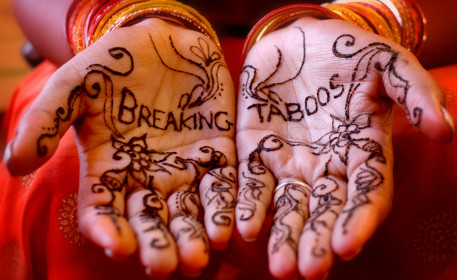
taboo.jpg

I was looking up taboo topics in America. It’s different for many cultures. In America, sex, race, politics, and religion are among the ones that make most people uncomfortable.

The problem with these topics is the ignorance surrounding them. Many people have insufficient information and are uncertain how to talk about the topics.

A good way to start is to open the conversation admitting to ignorance. I’m not sure that works as a writer – but we should be humble and avoid making blanket statements. But I have always believed part of being a writer was to educate people.

I don’t know that I’ve crossed any lines (no angry emails have appeared in my inbox), Perhaps I’ve been subtle enough to make someone think but not offend anyone. (Except possibly with “Harvey Levin Can’t Die.” 🙂

And although some people feel that is their job to “wake people up” by offending them, I take a different stance. While I am an honest person, it is my goal to be more effective than offensive.

I wonder if anyone has taken up any of these – or other – taboo topics and what the response was?

Disabilities in fiction

People_with_Disabilities.jpgI was thinking how few people with disabilities are featured on regular television shows and movies. And rarely do we see people with disabilities in fiction, unless they are the main character.

There are a number of children’s book, teen books, and mainstream novels wherein a physical disability is the main feature and/ part of the main character and therefore the thrust of the storyline, but I think we need to incorporate people with disabilities into our secondary and background characters.

In one show I watch, they had to replace a minor character, a secretary who might be seen once or twice a week, and be required to answer a mundane question like, “Where’s the boss?” This show (which shall remain nameless) receives kudos for being among the first (many years ago) to feature minority characters, an interracial affair, gay characters, and, now, even a gay relationships; yet, they don’t have any characters with disabilities.

It’s really up to the writers – us – to push this envelop. We don’t need to know the whole back story if our main character walks into an office to say, “Where’s the boss?” and receives the same sprite answer, “if only someone would tell me!” from someone in a wheelchair.