Dad Shines

“‘Dad Shining’ is a terrible name for a story.,” said a certain someone.

I replied, “The Chicago Tribune must have liked it. They’re going to publish it.”

I worked on “Dad Shining” for some time, not quite knowing what the ending needed. Then it struck me:

We grow up not really understanding our parents or why they do the things they do. When we become adults, if our maturity doesn’t lend itself to that understanding then it should lead us to empathy.dad-shining-cover

We can’t possibly know our parents challenges in the same way we comprehend our own. Therefore, we must let things go, forgive, and move on. (Whatever that forgiveness means to you. Don’t be tortured by the past)

My father passed four years ago this month. The story “Dad Shining” was published two months before he passed. (For which, I’m happy.)

It’s not a story of my father, nor of me. But it is a story of a child coming to some sort of peace with himself and extending compassion to the father he never quite understood.


(A little trivia for you – the cover was taken in Virginia where Poe’s mother is buried)


Author Attacked by Ape!

I recently visited Gibraltar. Gibraltar is a UK territory attached to the south of Spain. The Rock of Gibraltar is home to the Barbary Macaque Apes.

macaque ape.jpeg

I’m a person who likes a challenge; I crossed the highest, longest suspension bridge in North America, I swam with sharks. But, moreso, I like to explore; I saw a grisly bear in the Yukon, held a Koala in Australia, traversed the catacombs in Paris, etc.

So, I was there on the Rock of Gibraltar to get a peek at both Spain on one side and Africa on the other all the while standing in Europe. Pretty freaking cool.

The apes, which look more like monkeys (and are referred to as such), wander free there. They hang out on the patio of the visitor’s center, play in the trees and bushes, and hang out on the roads.

I did get close enough to one to have a photo. But I know better than to attempt to feed a wild animal. I did see four young women getting their picture taken by a park ranger while they fed one of the adult Macaque’s not far from the “Do Not Feed” sign.

From the visitors’ center, you can hike to other views, other places on the Rock and even all the way down. There’s another shop on the Rock where you can see a cave and buy trinkets, which is what I did. When I travel, I like to buy holiday ornaments for my tree as a remembrance.

I have the Big Ben, the Eiffel Tower, a Santa Star Fish from Hawaii, and even a Santa Chili Pepper from New Mexico to name a few.

I hiked back up to the center to grab some water and lunch before taking the cable car back down to the city. ape.png

I’d been warned not to take a big back pack or food with me. The monkeys, they said, will jump on you. I heeded these warnings, had only a small pack/purse and no food.

But approaching the visitors’ center, one of the juveniles (juvenile delinquent!) jumped on my back. I raised my hands in surprise and she bit me. She then opened my bag, took the ornament, and hopped off. (This is the picture of the monkey as it tried to eat my ornament! Thank you, Geoff)

I’m okay. Maybe “attacked” is a strong word, perhaps assaulted is better?  She left a dental impression and some scrapes on my hand. Yes, a little blood, swelling, bruising. My doctor is a little vexed with me.

But what does this have to do with writing?

We must challenge ourselves, we must overcome, we must use incidents such as these as inspiration or fodder. I feel all of these adventures make me who I am and my writing what it has become over the years.

better an oh well than a what if.jpg

I’m not suggesting you put yourself in harm’s way! I am suggesting that once in awhile get out and face your fears, do something new, experiment, explore, learn something new – this will create fresh shifts in your writing (and in yourself)!

The whole incident has me thinking of a half a dozen stories!

Who Is Noreen Lace?

I received an email which read:

I’ve finished Eddy and I downloaded and read The Gold Tooth. Who is Noreen Lace?

The sender later elaborated – These are two very different styles. I found this surprising as most of the authors I read are a single style in each piece of writing.

eddyfinalredonefromtresized                     the gold tooth

I’ve thought about this before – I feel it’s good to be able to change. To me, it shows growth. However, some disagree. Some people feel you must stick to your style because your readers have expectations and may disappointed.

For me – I want to be able to grow, change, and do what feels natural – just to write what comes out and not to force it to be what someone else wants it to be.

Stories are organic. They grow from the characters, the setting, and the force of its own motion; therefore, the writing itself must be organic which may grow into a different style.

If you know me – you’ll see the stories are still part of my personality and therefore personal style: dark, dry, ironic.

Inspired to Experience

Have you ever been inspired by a book? Chris Pellezzari’s Last Night in Granada planted lingering images of Spain, Flamenco, and Lorca.

I’ve undertaken a trip to Spain because of that book. Whereas travel is always on my mind, locations are not usually a question. I have a list. This book moved Spain to the top.

I was playing with a story in my head before leaving. A few of the people I’ve met are to become characters. I’ll decide later if I’ll tell them. 😊

20190528_120856

Travel. Experience. Write.

What makes good literature?

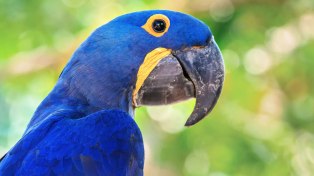
An extremely good conversation in my literature class about intelligence (Inspired by Ted Chiang’s The Great Silence). We talked about other species that fall under the definition of intelligence, which is “the ability to understand and apply knowledge.” parrot.jpgConsidering Alex the Parrot and Koko the Gorilla, and other species: crows are problem solvers and remember faces. We discussed dogs, cats, and others. Is love, as an abstract idea, understood and applied by animals? And then – is intelligence found in showing love?

This is what good literature should do. Teach, delight, and create wonder.

Read The Great Silence here

Submission Log

Submission-Banner.png

How do you keep track of your submissions?

I keep a log of when, where, and what I’ve submitted. I also updated it when my piece is rejected, accepted, or haven’t heard from the publisher.

There are a number of ways to keep logs, either by date, title, or other.

I keep mine by date of submission, but it’s easily searchable if I want to find out where and when I submitted anything specific.

I also keep a log of places not to submit again. It’s a very short list, but if you run across an editor who is unprofessional or a journal that operates with questionable practices, you should keep track.

Using submittable as your tracking system works if you don’t submit to journals or publishers who are not members, as I do, but I find their site challenging to navigate when I’m looking for a certain title I may have submitted at different time periods. My list is long and some journals don’t actually update.

I’ve had a few things accepted (or rejected) and the publisher has not updated my submission on the site; therefore, it appears to still be in process.

I find my own log more easy to navigate.


What’s So Scary?

leaving-your-fears-insecurities-behind.jpg

“Don’t be afraid of failure.  The reality is that most people successes rise out of the ashes of their previous failures.”

From a new documentary on Netflix titled Creativity. The narrator is talking to the creator of Game of Thrones. The creator is talking about how many times he’s failed.

I started this to say – what are you afraid of?

Then I wanted to ask – what if there was no such thing as fear? What would you do? What could you do?

I want you to think about that. What if fear was not in the human range of emotion or thought?


Writer Wednesday: Ode to Professor King

king1


“Most of what writers write about their work is ill-informed bullshit.”


You gotta love Stephen King, if not for his fiction, for the way he sets things straight and to the point.

This is the line that begins King’s rewrite for his novel The Gunslingerking4, originally released in 1970, rewritten and rereleased in 2003.

He rewrote and released the novel – only Stephen King could do that.

In any case, I found his forward notably valuable. His words are not only ever for his readers, but for writers as well.

His approach to revision he says, “hasn’t changed much,” and it is “to plunge in and go as fast as I can, keeping the edge of my narrative blade as sharp as possible through constant use…. Looking back,” he says, “prompts too many questions.”

I agree. I’m one to power through and not consider edits until I’m completely finished. This way I don’t get hung up wondering if this is right, if that flows, should I change this word here? Nothing is finished until the end is on paper, then comes the time for change; however, King puts his work away for a time. I, personally, give it an edit or two or ten. I give it to my friends, I reread, fawn over every word, sentence and…. it still has errors I don’t catch for six months or a year.

king2For the original writing of The Gunslinger, King has this to say about his younger self, “too many writing seminars, and had grown used to the idea those writing seminars promulgate: that one is writing for other people rather than oneself; that language is more important than story; that ambiguity is preferred over clarity and simplicity…”

I was once in one of those very seminars when someone brought up Stephen King, “don’t worry,” the professor announced, “he’ll never be remembered in the annals of history.”

The same professor, the same class, a few sessions later, eyed me after my story had been workshopped and discussed. “I’m still trying to figure out the reason for writing the story.”

“I think,” braved another student, “she wrote it for pleasure, for publication.”

The Professor’s eyes narrowed, her lips thinned, and she sat forward in the old wooden desk, “we don’t do that in this class,” she hissed.

My nervous smile slipped away as silence rose from our feet up. No one moved. No one breathed. One girl had already run out crying, perhaps they were waiting for me. I didn’t want to cry, nor run out, but I’d felt everything I’d done up til that point undeniably wrong.

I learned to write, over the next few year, the way of the MFA, ambiguous, language king5heavy, story slipping under the covers of darkness of words and rhythm.

Stephen King, I thought then and now, by sheer volume and honesty of craft, will not be forgotten. And I’m not sure he cares one way or the other.

I think we can all learn a thing or two from Professor King.
Writer Wednesday: Experience Vs. Research

Someone asked me if I write what I know. For many, that would be limiting. We write what we know in some intuitive way, like people, emotions, relationships, and some places. But that’s not all we write.catacombs

Nothing adds to a story like those little details that you’ve experienced, like the slick, moist, near sickly feel of your skin on a humid day in Paris after emerging from the chilled underground of the catacombs.

The difference in squeezing the smooth texture of black sand from Punaluʻu Beach in Hawaii between your toes and walking on fine, compacted white sand of the Whitsunday Islands in Australia.

blacksandEvery beach is just a little different. Just as the light is, depending where on the planet you stand. Being there helps.

But, research is also necessary. Maybe not to describe the sand between your toes, but other important details about place. Incorporating the general details or impressions as well as the smaller, more personal elements creates a more vibrant and more relatable to readers.

Stephen King thanked his research assistant and stated he met a lot of nice people in Oklahoma where his new book, The Outsider, is set. Experience and research.

Many of us can’t fly to Darrien, Washington and spend a week or longer researching a small town setting in the pacific northwest, but we are able to view maps, read the newspaper, follow the instagram sites, ask travel groups and even call the travel bureau in any given state.wander.jpg

I love experiences – Traveling and getting lost in a new place, picking up those sensual memories to infuse into writing and future!

Experience is a great thing, but it’s not the only thing. Research back ups and fills out details we may have missed.

Where have you been that you’ve written about?

Happy Writing!