
A Writer’s Soul
I recently visited Gibraltar. Gibraltar is a UK territory attached to the south of Spain. The Rock of Gibraltar is home to the Barbary Macaque Apes.

I’m a person who likes a challenge; I crossed the highest, longest suspension bridge in North America, I swam with sharks. But, moreso, I like to explore; I saw a grisly bear in the Yukon, held a Koala in Australia, traversed the catacombs in Paris, etc.
So, I was there on the Rock of Gibraltar to get a peek at both Spain on one side and Africa on the other all the while standing in Europe. Pretty freaking cool.
The apes, which look more like monkeys (and are referred to as such), wander free there. They hang out on the patio of the visitor’s center, play in the trees and bushes, and hang out on the roads.
I did get close enough to one to have a photo. But I know better than to attempt to feed a wild animal. I did see four young women getting their picture taken by a park ranger while they fed one of the adult Macaque’s not far from the “Do Not Feed” sign.
From the visitors’ center, you can hike to other views, other places on the Rock and even all the way down. There’s another shop on the Rock where you can see a cave and buy trinkets, which is what I did. When I travel, I like to buy holiday ornaments for my tree as a remembrance.
I have the Big Ben, the Eiffel Tower, a Santa Star Fish from Hawaii, and even a Santa Chili Pepper from New Mexico to name a few.
I hiked back up to the center to grab some water and lunch before taking the cable car back down to the city. 
I’d been warned not to take a big back pack or food with me. The monkeys, they said, will jump on you. I heeded these warnings, had only a small pack/purse and no food.
But approaching the visitors’ center, one of the juveniles (juvenile delinquent!) jumped on my back. I raised my hands in surprise and she bit me. She then opened my bag, took the ornament, and hopped off. (This is the picture of the monkey as it tried to eat my ornament! Thank you, Geoff)
I’m okay. Maybe “attacked” is a strong word, perhaps assaulted is better? She left a dental impression and some scrapes on my hand. Yes, a little blood, swelling, bruising. My doctor is a little vexed with me.
But what does this have to do with writing?
We must challenge ourselves, we must overcome, we must use incidents such as these as inspiration or fodder. I feel all of these adventures make me who I am and my writing what it has become over the years.

I’m not suggesting you put yourself in harm’s way! I am suggesting that once in awhile get out and face your fears, do something new, experiment, explore, learn something new – this will create fresh shifts in your writing (and in yourself)!
The whole incident has me thinking of a half a dozen stories!
I received an email which read:
I’ve finished Eddy and I downloaded and read The Gold Tooth. Who is Noreen Lace?
The sender later elaborated – These are two very different styles. I found this surprising as most of the authors I read are a single style in each piece of writing.


I’ve thought about this before – I feel it’s good to be able to change. To me, it shows growth. However, some disagree. Some people feel you must stick to your style because your readers have expectations and may disappointed.
For me – I want to be able to grow, change, and do what feels natural – just to write what comes out and not to force it to be what someone else wants it to be.
Stories are organic. They grow from the characters, the setting, and the force of its own motion; therefore, the writing itself must be organic which may grow into a different style.
If you know me – you’ll see the stories are still part of my personality and therefore personal style: dark, dry, ironic.
Have you ever been inspired by a book? Chris Pellezzari’s Last Night in Granada planted lingering images of Spain, Flamenco, and Lorca.
I’ve undertaken a trip to Spain because of that book. Whereas travel is always on my mind, locations are not usually a question. I have a list. This book moved Spain to the top.
I was playing with a story in my head before leaving. A few of the people I’ve met are to become characters. I’ll decide later if I’ll tell them. 😊

Travel. Experience. Write.
An extremely good conversation in my literature class about intelligence (Inspired by Ted Chiang’s The Great Silence). We talked about other species that fall under the definition of intelligence, which is “the ability to understand and apply knowledge.” 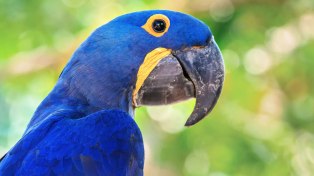 Considering Alex the Parrot and Koko the Gorilla, and other species: crows are problem solvers and remember faces. We discussed dogs, cats, and others. Is love, as an abstract idea, understood and applied by animals? And then – is intelligence found in showing love?
This is what good literature should do. Teach, delight, and create wonder.

How do you keep track of your submissions?
I keep a log of when, where, and what I’ve submitted. I also updated it when my piece is rejected, accepted, or haven’t heard from the publisher.
There are a number of ways to keep logs, either by date, title, or other.
I keep mine by date of submission, but it’s easily searchable if I want to find out where and when I submitted anything specific.
I also keep a log of places not to submit again. It’s a very short list, but if you run across an editor who is unprofessional or a journal that operates with questionable practices, you should keep track.
Using submittable as your tracking system works if you don’t submit to journals or publishers who are not members, as I do, but I find their site challenging to navigate when I’m looking for a certain title I may have submitted at different time periods. My list is long and some journals don’t actually update.
I’ve had a few things accepted (or rejected) and the publisher has not updated my submission on the site; therefore, it appears to still be in process.
I find my own log more easy to navigate.

“Don’t be afraid of failure. The reality is that most people successes rise out of the ashes of their previous failures.”
From a new documentary on Netflix titled Creativity. The narrator is talking to the creator of Game of Thrones. The creator is talking about how many times he’s failed.
I started this to say – what are you afraid of?
Then I wanted to ask – what if there was no such thing as fear? What would you do? What could you do?
I want you to think about that. What if fear was not in the human range of emotion or thought?
January 19th, is the 210th anniversary of Poe’s Birth.
 Although many people are content with the reason of Poe’s continued relevance in our society is the stereotypical tortured artist. There is no doubt he was tortured, and for reasons of which we are all familiar; he was an orphan who lost every women he ever loved.
His battles with alcohol, I believe, are highly exaggerated. But it makes for a good story. I’m not saying he never drank – he drank to excess plenty of times, he may have officially been an alcoholic as we understand the word today; however, it was not a constant. There were many years through his marriage to Virginia that he did not drink or drink to excess. Before his death in 1849, he’d joined the Sons of Temperance Movement – to get people to stop drinking.
The reason Poe has remained relevant throughout the years is his work touches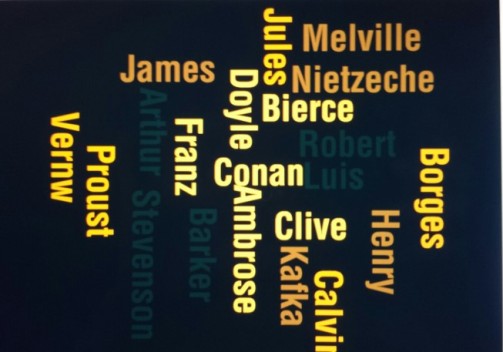 our deepest fears and deepest desires. He has continued to inspire other writers
 and artists of all types.
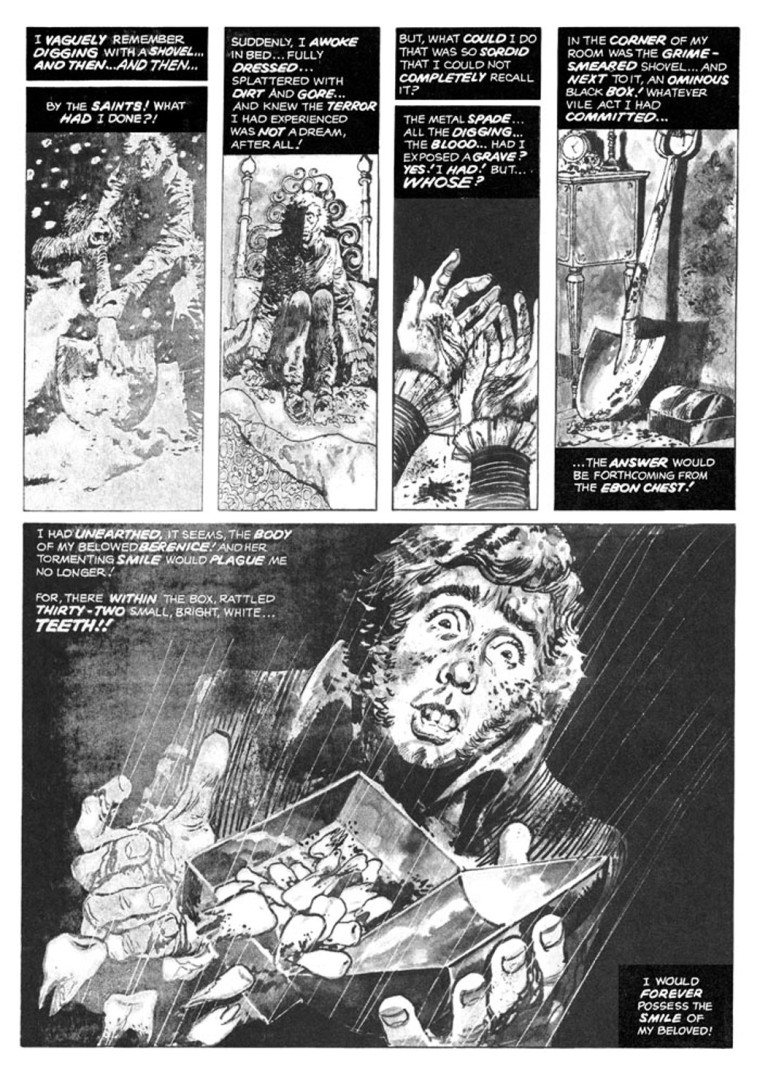
He wrote far more than what we, today, consider horror. He wrote essays, literary analysis, investigative pieces. He wrote about street paving, Stonehenge, and he was inspired by what he read in newspapers. Berenice and others were inspired by stories of grave robbers in local papers.
The famed portrait of Edgar Allan Poe was taken three days after his suicide attempt in 1848.

And, Eddy, my imaginative fiction, was inspired by that suicide attempt. He bought two bottles of laudanum on a cold winter night meaning to do himself in. He’d lost Virginia and felt he had no one. (Laudanum contained opium and derivatives of morphine and codeine.)

For Poe’s Birthday, I offer an excerpt from the novella:
He stumbles from the pub, slips, and falls on the iced over bricks of Boston’s November streets. Save for the muddled voices beyond the closed door, the street is quiet as his body thuds to the ground. His breath billows in front of him as he gasps and grumbles and struggles to his knees, then his feet, to regain his drunken balance.
The gaslamp on the corner offers a wavering yellow glow for the struggling figure on the lonely winter night. Thin strands of hair blow in the chilled breeze; he runs his hands over his head, straightens himself before he pulls at the sagging overcoat and tugs it closed.
Remembering the tinctures of laudanum pried from the chary pharmacist, he hurriedly shoves his hands in his pockets, retrieves the bottles.
His heavy breath mounds in front of him and, for a moment, he can’t see; then the luminous cloud of brandy scented air dissipates. The medicines are intact. Relieved, he stuffs them back in his pocket and buttons his jacket.
“Edgar,” someone calls from the corner; the noise from the pub trails the swarthy figure out until the door slams to a close behind him. “You alright?”
Edgar waves him off without turning around.
The thick shadow chuckles as he staggers in the opposite direction.
The winter is freezing cold, but the snow hasn’t endured. Small white crystals pile in corners and fill the air. The icy rain soaks him before he reaches his chamber on the second floor of the boarding house. The room is small, impersonal, but warmer than the street. An unlit lantern shimmies on the desk as he unsteadily seats himself, glances out the window.
A barely discernable outline disquiets the otherwise muted darkness on the corner of the street below. He knows it’s the black dog that’s stalked him his whole life. Suddenly angered, he shoves himself forward, pushes the unlit lamp aside and topples the ink jar.
“Get outta here, you wretched creature.” The incensed command lost in the night.
Recovering the secreted bottles of opium from his coat pocket, he sets them side by side in front of him. Unsteadily he tugs the lid from one and snorts in a single gulp.
For More Posts on Poe – click this link.
To get the book at 3.99 – this weekend only – click this link.
To get the ebook at .99 – today only – click this link.

Much love and luck.
Two are Better Than One; Tips for a Successful Co-Author Partnership
 When you meet the one, it all falls into place. You no longer have to carry the burden alone. The workload is shared, you encourage each other through the tough times and celebrate successes together. With the right partner, co-authoring can be an incredible experience that fuses the synergy and talents of two writers into creating one cohesive book.
About a year ago, I was talking with my writing friend Chuck. One of us (I don’t remember who) brought up the idea of writing something together. We both got excited and started discussing what we should write. He typically writes fantasy novels and I write nonfiction, short fiction and children’s books. Even our writing styles were (and still are) worlds apart, but that didn’t stop us. We both felt this could work. Not because of what we had written in the past, but because of us. Or personalities, work ethic and most of all our ability to trust one another to get the job done right.
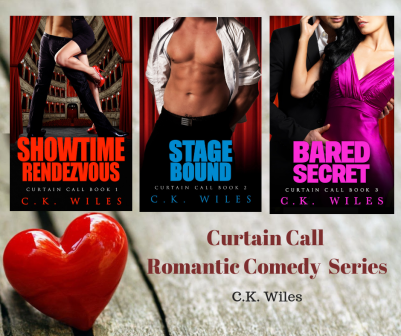
We took a strategic approach when choosing a genre to write and researched the top selling creating cohesive self-published books. According to Author Earnings, in 2017 romance had the second highest number of ebooks sold, right below literature & Fiction. We also learned that romance readers go through books like potato chips, self-published authors in this genre do well and series sell better than single titles. It wasn’t long before we decided to commit to a three-book romantic comedy series, under the pen name, C.K. Wiles, to see what would happen.
We fell easily into a system that works for us. Chuck and I would brainstorm the story 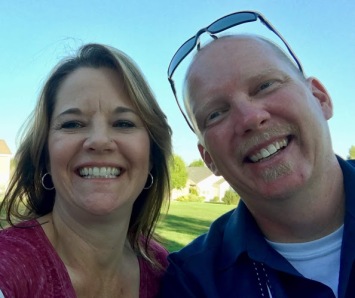 idea together, which is a fun, creative part of the process. Chuck then creates a detailed outline of the story that we then go over together to make sure everything is there. He then takes off and starts writing. After he gets a few chapters completed, he begins sending them to me. I then go through to add more emotion, fill in any holes in the storyline and tighten the writing. Once he has sent me everything, I send the edited chapters back to him so he can make final adjustments and we talk through any areas that need more work. We both read it through one more time before sending the finished manuscript to a copy editor.
While our writing system made the process smooth, we found many components that make a co-author partnership successful.
Know Your Strengths
Each writer brings his/her own strengths to each book project. Figure those out early and embrace them. This is less about making sure tasks are equally divided and more about working with your strengths to ensure you publish the best book possible. Chuck is a fast fiction writer and not a fan of developmental editing. I am a slow fiction writer, but I love taking a rough draft of a manuscript and molding it into a great story. This works well for us and we can typically get a book finished in a little over two months. When it comes to the publishing aspects, I take the lead on that since I have experience in that area. We hire out the covers and copy editing, but I am able to format the books (print and ebook) and upload them into the various platforms.
Trust Each Other
Find someone who you respect as a writer and are confident in their skills. Chuck and I knew each other for years and provided feedback and critiques on each other’s work. I value his opinion and suggestions with my writing, so I knew before forming this partnership that I could work with him and vice-versa. When it comes to co-authoring, this trust is crucial. You have to be confident that you and partner have the same goals and visions for the book. Then allow each other the freedom to make changes and adjustments to produce the best book possible. There will be times when you disagree, and that’s ok. Talk through them and come up with a solution you can both live with.
Leave Your Ego at the Door
 When you are working with a co-author, you have to let go of your ego. The whole goal is to create a book you are both proud of and you are happy to have your name (or pen name) associated with it. Chuck and I have different writing styles, but with our co-authored books, our writing melds together to create a new, unique voice. It is not about, “this is mine” and “that is yours,” it is seeing it as “ours.” If we got caught up in claiming different parts as our own or not being willing to work as a team to create the best book possible, we wouldn’t get anything finished.
Because of our effective partnership, we achieved our goal of publishing three books in our Curtain Call series. We have enjoyed our co-author experience so much, we are moving forward together with other writing projects as we work to market our series and get those books into the hands of readers. Co-authoring can be amazing with the right person. If this is something that interests you, take the time to find another writer you trust, one whose strengths and weaknesses compliment yours and one who is ok checking egos at the door. Then you will enjoy a synonymous relationship where you can create literary art as one.
BONUS: As a thank you, click here for a free digital copy of, Showtime Rendezvous.
—–
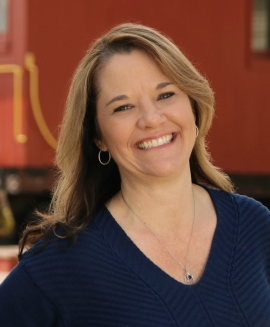
Kerrie Flanagan is an accomplished freelance writer with over 20 years’ experience. She is thrilled to be writing romantic comedies with her favorite writing partner, Chuck Harrelson. Together, under the pen-name, C.K. Wiles, they are the authors of Showtime Rendezvous, Stage Bound and Bared Secret. In addition, Kerrie is the author of, Writer’s Digest Guide to Magazine Article Writing and 8 other books published under her imprint, Hot Chocolate Press.
You can listen to this episode of the Stark Reflections Podcast where Chuck and Kerrie talk more about their co-author experiences.
~~~~~~~~~~~~~~~~~~~~~~~~~~~~~~~~~~~~~~~~~~~~
Thanks, Kerri!

 I don’t like the word “can’t.”
I don’t like people telling me I can’t do something. I’ve experienced some person or another throughout my whole life telling me I can’t do this or I can’t do that. For too many years, I believed them.
Now, it just annoys me.
I made a goal to write six short stories in a month. Someone, another writer, said, “You can’t do that.” Their point: writing must organically develop from inspiration, forcing it unnaturally would create work which was unpublishable.
Three of those six stories have already been published. Can’t? HA!
I spend time on photography, just because I like it. Unasked, another person inserted their opinion: “You can’t do that!” They had the idea that a person can only be good at one creative pursuit and I shouldn’t waste my time on another. I took up photography for the pure joy of capturing visual beauty, but I’ve had a number of photographs published now too!
Why are people so wrapped up in “can’t”?
Some people judge themselves based on how they know you. When you change or move forward or do something they never thought you would or could, it changes how they see you and, therefore, how they see themselves.
 Others have limited views of what they can accomplish and, therefore, what anyone can accomplish, so they believe their guiding you away from an upcoming failure.
Whatever their reasons, never let anyone keep you from spreading your wings, doing what you want, need, must do to achieve what you want.
Writers must be brave. Depart from the naysayers and live your fullest life. Travel. Love. Experience. Write. Try something new.
Do not listen to the “can’t”!


 Noreen Lace
You must be logged in to post a comment.