Author Quarantined After Ape Attack

Returning to the country, I imagined myself held hostage by the CDC in plastic tents on some far away airfield with my family left wondering what had happened to me.

men in contamination gear.jpgI imagined it in different ways – maybe I’d get all the way home before men in white coats and gas masks would show up, or maybe they’d come in full contamination gear and yank me from the yard to whisk me away, question me, and – oh my gosh – pull aside everyone I’d come in contact with.

The whole of the passengers on the plane, my family, the taxi driver. I cringe when I think how upset everyone would be with me or with the fact that they had the misfortune of sharing a space with me.

I wonder – would the Pandemic Control Team let me have my computer?pandemic-control_clip_image002.jpg I actually have a ton of work to catch up on. Would they let me facetime or skype with family? friends? Would they let me wave through the clear plastic tents to onlookers?

And then – from one of those speculative fiction novels – what if I started an outbreak? What if a monkey virus mixed with some other virus and the whole of the population was at risk. I was patient zero.

You see – I have a very active imagination.

I told you I had about six ideas. That was the first.

Think about this as a writing prompt: What if you had 30 days in a tent with three squares a day? What would you do? What would you miss? Would you write? Exercise? Catch up on reading? Or go absolutely insane?


Author Attacked by Ape!

I recently visited Gibraltar. Gibraltar is a UK territory attached to the south of Spain. The Rock of Gibraltar is home to the Barbary Macaque Apes.

macaque ape.jpeg

I’m a person who likes a challenge; I crossed the highest, longest suspension bridge in North America, I swam with sharks. But, moreso, I like to explore; I saw a grisly bear in the Yukon, held a Koala in Australia, traversed the catacombs in Paris, etc.

So, I was there on the Rock of Gibraltar to get a peek at both Spain on one side and Africa on the other all the while standing in Europe. Pretty freaking cool.

The apes, which look more like monkeys (and are referred to as such), wander free there. They hang out on the patio of the visitor’s center, play in the trees and bushes, and hang out on the roads.

I did get close enough to one to have a photo. But I know better than to attempt to feed a wild animal. I did see four young women getting their picture taken by a park ranger while they fed one of the adult Macaque’s not far from the “Do Not Feed” sign.

From the visitors’ center, you can hike to other views, other places on the Rock and even all the way down. There’s another shop on the Rock where you can see a cave and buy trinkets, which is what I did. When I travel, I like to buy holiday ornaments for my tree as a remembrance.

I have the Big Ben, the Eiffel Tower, a Santa Star Fish from Hawaii, and even a Santa Chili Pepper from New Mexico to name a few.

I hiked back up to the center to grab some water and lunch before taking the cable car back down to the city. ape.png

I’d been warned not to take a big back pack or food with me. The monkeys, they said, will jump on you. I heeded these warnings, had only a small pack/purse and no food.

But approaching the visitors’ center, one of the juveniles (juvenile delinquent!) jumped on my back. I raised my hands in surprise and she bit me. She then opened my bag, took the ornament, and hopped off. (This is the picture of the monkey as it tried to eat my ornament! Thank you, Geoff)

I’m okay. Maybe “attacked” is a strong word, perhaps assaulted is better?  She left a dental impression and some scrapes on my hand. Yes, a little blood, swelling, bruising. My doctor is a little vexed with me.

But what does this have to do with writing?

We must challenge ourselves, we must overcome, we must use incidents such as these as inspiration or fodder. I feel all of these adventures make me who I am and my writing what it has become over the years.

better an oh well than a what if.jpg

I’m not suggesting you put yourself in harm’s way! I am suggesting that once in awhile get out and face your fears, do something new, experiment, explore, learn something new – this will create fresh shifts in your writing (and in yourself)!

The whole incident has me thinking of a half a dozen stories!

When you get a bad review…

I wonder if thinking this will help…..

quote by jon frazen

Maybe not in all cases. Some friends are just cray!


Book Group Problems Solved

We’ve all been in book groups. And there is no perfect one. The novels are chosen in different ways, by vote or by the leader or by a different person each time. Sometimes people don’t have time to finish the novel or find it’s too boring to go on.

My friends and I wanted to read and share our thoughts on literature, but none of us had time for a full novel and we didn’t have the freedom to choose one night all of us would be free every month, so we did something a little different.

We created a short story group. We each took turns choosing the story and would email it or bring copies. We didn’t have a specific day or date, but it would be “next time we get together.” This was lunch or dinner or a walk through the park for the following week, two weeks, or occasionally a month.

This became such a wonderful part of our activities. We’d have lunch and then discuss the story, or we’d walk around the pond in our regular conversations before we moved on to talk about the reading.

It was a pleasurable, no pressure way to get our lit fix. WomenWalking.jpg

What makes good literature?

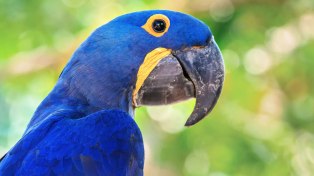
An extremely good conversation in my literature class about intelligence (Inspired by Ted Chiang’s The Great Silence). We talked about other species that fall under the definition of intelligence, which is “the ability to understand and apply knowledge.” parrot.jpgConsidering Alex the Parrot and Koko the Gorilla, and other species: crows are problem solvers and remember faces. We discussed dogs, cats, and others. Is love, as an abstract idea, understood and applied by animals? And then – is intelligence found in showing love?

This is what good literature should do. Teach, delight, and create wonder.

Read The Great Silence here

What’s So Scary?

leaving-your-fears-insecurities-behind.jpg

“Don’t be afraid of failure.  The reality is that most people successes rise out of the ashes of their previous failures.”

From a new documentary on Netflix titled Creativity. The narrator is talking to the creator of Game of Thrones. The creator is talking about how many times he’s failed.

I started this to say – what are you afraid of?

Then I wanted to ask – what if there was no such thing as fear? What would you do? What could you do?

I want you to think about that. What if fear was not in the human range of emotion or thought?


Notebook or Computer?

books.jpg

Dan Brown, Neil Gaiman, Judy Blume, and a number of other authors talk about writing in notebooks.

Blume says she fills it up from start to finish. I have to admit, a have a number of half empty notebooks. I keep them in various places, the car, the bedroom, dining room table, my desk. Then, I move them around, put them elsewhere and begin a new one before I rediscover the one I previously used.

I used to use big composition notebooks. These days I use smaller journal types.

Studies show that writing by long hand in a notebook uses a different part of the brain.

I wrote Grandma’s Last Secret by long hand in a notebook.  I wrote the whole of West End in a notebook before I ever thought of touching the laptop. I feel like there’s a difference for me. And sometimes, the notebook is easier on the eyes, easier on the brain. I don’t feel as much pressure from a pen and paper that I do when I sit in front of the computer.

But I do write on the computer sometimes too. I sit down and I’ll write a story, sometimes, from start to finish on the computer without considering a notebook.

Do you use notebooks? Or computers? or Both?  Feel free to share in our facebook group.

Read Like a Wordsmith

wordDon’t read other words like a critic looking for the good, bad, and ugly. Read to discover what the author did well and how they did it.

This is reading like a writer, like a wordsmith.

Atwood says she will only review something if she likes it. She is not a critic and won’t write a bad review.

One of my friends told me he won’t even write a bad yelp review. He says, I praise those who deserve it, but it’s not my place to criticize.

I thought this was a great idea.

If you feel you must say something to alert other readers, then be honest and specific, but do add at least one good thing about the book, story, movie, service etc.


Visualization for Success

Superego

We tell our students to do this – visualize what you want to happen.

Take your visualization a step further, especially if you’ve lost hope or are having a hard time finishing a work:

Create the cover for your book. Maybe slap an award on that cover.

Write a famous person’s review for that book then add quotes to the back cover.

Write the copy for the inside jacket cover.

Hang it or place it on your desk where you will see it every day.

Science says, visualization can help us get to where we want to be!

Read

We’ve heard that we should read aloud to ourselves. And we absolutely know this works. We are able to hear our mistakes, rewrite and hear it a different way to see if it sounds better.

Man Writing WEB

But how many of us actually do it?

Back in the day (as my students say), copy-editors and writers read the work aloud with one another or within a group to catch mistakes before publications. Some critique groups do this as well.

When I read aloud, it sounds the way I think I want it to sound. It helps me to have someone else read it to me while I’m reading it on the screen.

This is what I suggest. Microsoft word has a setting that will read the text to you. I’ve found this incredibly helpful.

There are a number of programs if you don’t have microsoft or can’t stand the monotone.

Some writers record themselves reading the story, then listen to it while they reread in order to catch mistakes.

Let’s be honest – we all make mistakes. And to be more honest – it doesn’t look good in publication. Unfortunately, I’ve sent things out with mistakes. Fortunately, I’ve had some great editors (and publishers) who called my attention to these errors.