What makes good literature?

An extremely good conversation in my literature class about intelligence (Inspired by Ted Chiang’s The Great Silence). We talked about other species that fall under the definition of intelligence, which is “the ability to understand and apply knowledge.” parrot.jpgConsidering Alex the Parrot and Koko the Gorilla, and other species: crows are problem solvers and remember faces. We discussed dogs, cats, and others. Is love, as an abstract idea, understood and applied by animals? And then – is intelligence found in showing love?

This is what good literature should do. Teach, delight, and create wonder.

Read The Great Silence here

When Amazon goes Rogue

Sometimes Amazon does their own thing.

one dollar stories cover.jpgOnce I saw my book Eddy was on sale far below what I’d seen before. I contacted the publisher who told me that Amazon had put it on sale to compete with another website. Really?

Well, they’ve done it again; my book, $1.00 Stories, is on sale. Or, at least, as I write this it is.

$1.00 Stories is about an author whose success is not enough and a homeless man who has what he wants.

I enjoy imagining people’s stories. I think all writers do. $1.00 Stories originally appeared in The Chicago Tribune’s Printers Row Journal.

When Editors Go Cray….

beautiful ppl.jpgMany years ago, All The Beautiful People was accepted for publication. But, then, as happens sometimes, I got the dreaded letter (yes, that’s how many years ago it was) in the mail stating that they had accepted too many things and something had to be bumped. The editor apologized and said they’d keep it in their files, but I should feel free to submit it elsewhere.

I did so.

A year later, that story was accepted for publication in another journal.

Even another year later, the original journal – with a new editor – wrote me via email and said they’d decided to use All the Beautiful People in their upcoming edition.

I responded that they were welcome to use the story; however, it had been accepted and was scheduled for publication by another journal. The publications would come out about six to nine months apart.

I never heard from that second journal and believed they had removed the story from their journal and their archives.

Six months later, I received a copy of the beautiful journal and my story within its pages.  YET – they’d billed the story as a memoir – it was fiction – and they’d cut off the last paragraph.

I was a little embarrassed. The girl in the story does things I would never have never girl with elvis facedone. I was concerned what readers might think – that this might serve as some sort of legacy I couldn’t live down.
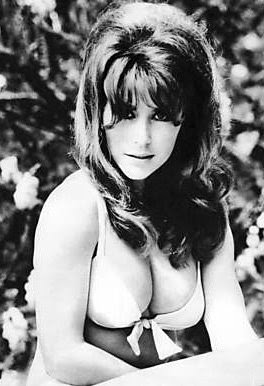
See – with the last paragraph – it could NEVER EVER EVER be mistaken as memoir. I sent off a quick email to tell them these two things.

The editor dashed off a quick and nasty response – that they had published it as received, adding some choice and unprofessional comments. She made it sound as if I’d sent it directly to her and that she hadn’t pulled it from their archives.

I responded with the history of the piece, date sent, date accepted, and by whom, date and reason it was taken out, and by whom, etc.

I received another quick and dirty response. I wish I would have kept that email – misspelled words, inappropriate language, and completely and utterly unprofessional. I decided to look this person up. I then forwarded her emails to her employer.

She had found All The Beautiful People in the other publication – the one which was attributed correctly and published fully – and accused me, in her fancy slang, of lying, cheating the system, and whatever else she felt necessary. Another email I forwarded to those who were really in charge of the journal.

I again responded – with the forward – the series of events that had transpired offering all the original letters, archived in my own files, and the emails, which I had still in my saved box.

Route-66-Texas-Midpoint.jpgI didn’t hear from any of them again. But they did put a tiny little line in an inconspicuous place on their website that the story was mislabeled as memoir and should read fiction.

Now, it could have easily been a little mistake to publish it as memoir; however, again, the last paragraph would have told ANY reader that was wrong. Therefore, the missing last paragraph and the misattribution made me wonder. Still, this problem could have been easily, politely, and professionally handled.

I was shocked to learn that the editor who had acted so poorly was a lecturer at a University and had a book or two to her own credit. I do not believe she continued as the editor after that, but I didn’t bother to check.

I learned two valuable lessons from this experience – KEEP EVERYTHING! and always act like a professional.

Submission Log

Submission-Banner.png

How do you keep track of your submissions?

I keep a log of when, where, and what I’ve submitted. I also updated it when my piece is rejected, accepted, or haven’t heard from the publisher.

There are a number of ways to keep logs, either by date, title, or other.

I keep mine by date of submission, but it’s easily searchable if I want to find out where and when I submitted anything specific.

I also keep a log of places not to submit again. It’s a very short list, but if you run across an editor who is unprofessional or a journal that operates with questionable practices, you should keep track.

Using submittable as your tracking system works if you don’t submit to journals or publishers who are not members, as I do, but I find their site challenging to navigate when I’m looking for a certain title I may have submitted at different time periods. My list is long and some journals don’t actually update.

I’ve had a few things accepted (or rejected) and the publisher has not updated my submission on the site; therefore, it appears to still be in process.

I find my own log more easy to navigate.


What’s So Scary?

leaving-your-fears-insecurities-behind.jpg

“Don’t be afraid of failure.  The reality is that most people successes rise out of the ashes of their previous failures.”

From a new documentary on Netflix titled Creativity. The narrator is talking to the creator of Game of Thrones. The creator is talking about how many times he’s failed.

I started this to say – what are you afraid of?

Then I wanted to ask – what if there was no such thing as fear? What would you do? What could you do?

I want you to think about that. What if fear was not in the human range of emotion or thought?


Writing with Bones

I think I read Writing Down the Bones maybe more than 20 years ago.  I do believe it’s still on my bookshelf. I keep books that have spoken to me.

writing-down-the-bones.jpgAlthough one website says it’s a good book for beginning writers, I think we might all find some inspiration in these pages.

In yoga, sometimes we go back to level one, we go back to the training. After so many years of doing it, so many teachers putting their own twists on it, so many times we’ve worked with (or around) an injury – it’s good to go back to the basics.

I see nothing wrong with doing that in writing either.

Writing Down the Bones – a book by Natalie Goldberg. This site gives you a generous sampling of the book.

I’m planning to pick it up again – see what else I can learn, what I might relearn.

Alone, in the dark, write

Turn off as many lights as you can bear. Except, of course, a little book light or candle so you can write.

As your eyes adjust, you’ll be able to see things, outlines, shapes; write about the darkness surrounding you, what you can see, what you can’t see, and what you wish you could see.

candle.jpg

The Joy of Acceptance…

The acceptance of being your own person, writing in your own style, not mimicking or falling in line.

I get a lot more rejections than I do acceptances, but I don’t dwell on the rejections.

56635085_2231045933643692_5441110500400168960_o.jpg


There is an art to accepting or rejecting any work. And, although any acceptance is a happy occasion, a particular nice one such as this is always a joy to receive.

To update you on my publications of late –

Heaven’s Password is about a woman who finds herself in heaven, in a line reminiscent of the DMV, and is asked for a password. She’s not the most patient person and can’t remember ever setting up a password. Just like your bank account, you can’t get in without it! This was published in the The Survivor issue of P&G.

Bowie and the Basket Case is due out any day now from ID Press. When someone breaks into her house, Anna doesn’t readily find anything missing. But soon she realizes little things are disappearing and reappearing – is someone gas-lighting her?

The Healer’s Daughter was accepted by The Ear and will be out May 15th. Self explanatory title?

And finally, or so far, Voice of Eve has sent me the lovely acceptance above for my photography and three poems – as you’ve read – June 15th.

Thanks for reading, dear souls.

Wishing you much love and happiness.

noreen

Dreamcatcher Poem

dreamcatcherThe dreamcatcher is supposed to catch bad dreams and let the good dreams through.

Write down an image remembered from a dream, a word, a sound, a thought, into each space.

Then put them together – or leave them as is.

A dreamcatcher is random. Your poem might be as well. Yet, at some point, some place, in some way, it’ll all come together.

Approaching Authenticity – Creativity, Psychology, and Christian Faith by Bozena Zawisz

bozenaSomething I often hear as a counselor is clients speaking about the weight of expectations they feel they’re carrying on their shoulders; and the frustration, guilt, or resentment they feel in relation to them.

Many of these expectations are often tied to a particular role they “fall into,” that contains within it: unexamined assumptions relating to some action(s) they feel they should be doing, rules for communicating (what they feel they should be saying, and how), pressures to take on board “shared” viewpoints…

Often they express feeling as if they lost their center or connection with themselves.

Some roles are consciously/purposefully chosen. I choose to relate to clients within the boundaries of a counselors’ role. At other times, individuals can fall into an interaction where there is an expectation/pressure to engage in a “role-play”… mindlessly… pulled by some emotional pathway, deeply engraved by a lifetime’s worth of conditioning… For example, many adults continue to feel strongly affected by their parents’ perceived expectations of them…

Sometimes individuals’ roles within relationships include assumptions about hierarchy (in some cultures more than others), expectations relating to distributions of privileges, expectations relating to the division of weight that is placed on the inner experience of each individual. Often, the language which does not fit an expected role-script is unwelcome, discouraged…

One of my favorite historical examples of a figure who modeled the importance of rising beyond roles and cultural expectations, and embodied authenticity and inner strength, was Jesus. I admire the way he kept right away from describing himself via popular roles or politically loaded terms of the time, which he perceived as a poor fit with his life’s journey and purpose.

I love the way Jesus preferred to describe his inner experience and communion with God using creative metaphors-that beautifully made use of people’s familiar associations (e.g. used imagery such as harvests, laborers, etc.) yet transcended the language of the well established familiar social and political roles, traditions, expectations, and their underlying beliefs and perceptions.

Jesus had a hard time with the Pharisees. Perhaps they perceived his non-compliance with the established roles that reinforced their power and privileges-most unsettling. Jesus smacked too much of personal power, disregard for the authority of political/social pecking order…

Possibly to connect with a sense of inner peace, he was documented to withdraw into solitude oftentimes, perhaps in this way he restored his strength by nurturing his connection with God. Just as in his case, I believe that it is a helpful first step in our journey towards authenticity to find ways to connect with a loving place of self-care and strength within ourselves.

Given the powerful focus our society (and at times other people) have on trying to hijack strong within_frontour attention and encourage us to look to the outside of ourselves for fulfillment–creative expression of, and reflection on, our inner experience allows us to re-center and reconnect with our inner journey of transformation.

And, support us in reclaiming control over reconstructing our experience so that it resonates with our values, faith, the direction of our journey, and more closely aligns with our truth.

Bozena Zawisz

Website

Neither Innocent or Guilty


~~~~~~~~~~~~~~~~~~~~~~~~~~~~~~~~~~~~~~~~~~~~~~~~~~~~~~~

Many Thanks for sharing!

noreen