Book Group Problems Solved

We’ve all been in book groups. And there is no perfect one. The novels are chosen in different ways, by vote or by the leader or by a different person each time. Sometimes people don’t have time to finish the novel or find it’s too boring to go on.

My friends and I wanted to read and share our thoughts on literature, but none of us had time for a full novel and we didn’t have the freedom to choose one night all of us would be free every month, so we did something a little different.

We created a short story group. We each took turns choosing the story and would email it or bring copies. We didn’t have a specific day or date, but it would be “next time we get together.” This was lunch or dinner or a walk through the park for the following week, two weeks, or occasionally a month.

This became such a wonderful part of our activities. We’d have lunch and then discuss the story, or we’d walk around the pond in our regular conversations before we moved on to talk about the reading.

It was a pleasurable, no pressure way to get our lit fix. WomenWalking.jpg

Family Secrets

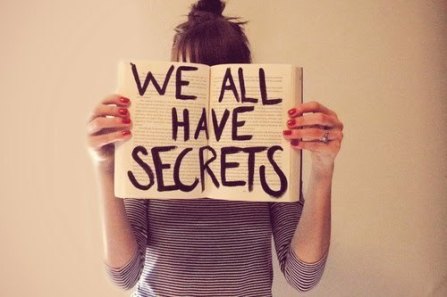
girl with book that reads we all have secretsAll families have secrets. I think that’s why some of us become fiction writers. Maybe, much to our family’s horror.

Secrets released in fiction is like water under pressure – there’s a spurt which resembles something other than what it really is. So, mostly, our family is safe.

Some secrets come to us second hand – the things people told us, what we know of other families, friends, acquaintances. In all honesty, these are my favorites.

The Gold Tooth is an amalgamation of family secrets. These are separate things from the gold tooth cover.jpgdifferent people whispered to me at times, laughed about at other times, assumptions from other people – all mixed up in a writer’s brain to spurt out under the pressure of a story.

My grandmother told me a story in which a mother, in trying to teach her children biggest is not best, used to offer the children unmarked gifts in various sizes. Whoever choose based on the biggest gift didn’t necessarily received the best gift.

A friend told me she’d inherited teeth from an aunt.

Another friend provided details about an uneven and questionable disbursement of a will and trust.

They all mashed together to create this story of a mother who tried to teach her daughters a lesson, protect one, maybe both, by the terms of a her will.

Feel free to tell your secrets to a fiction writer. They’ll never tell the whole truth.

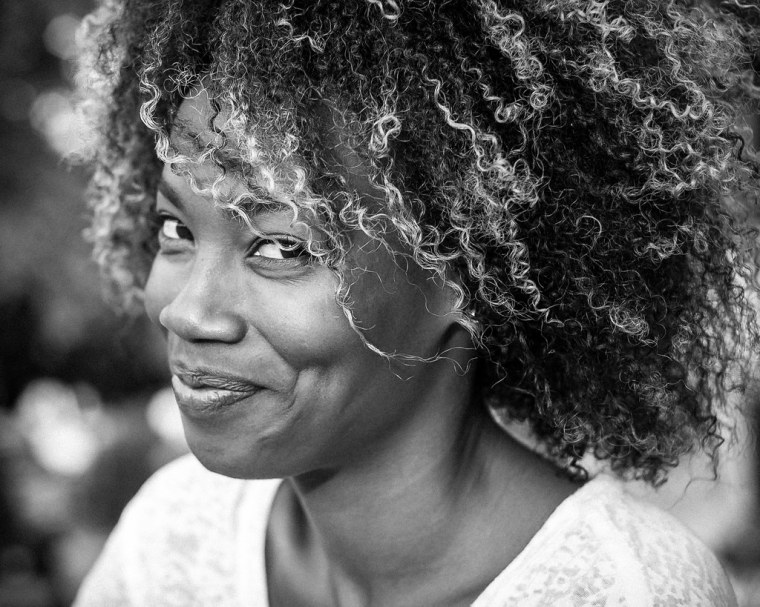
beautiful woman with wry smile.jpg


What makes good literature?

An extremely good conversation in my literature class about intelligence (Inspired by Ted Chiang’s The Great Silence). We talked about other species that fall under the definition of intelligence, which is “the ability to understand and apply knowledge.” parrot.jpgConsidering Alex the Parrot and Koko the Gorilla, and other species: crows are problem solvers and remember faces. We discussed dogs, cats, and others. Is love, as an abstract idea, understood and applied by animals? And then – is intelligence found in showing love?

This is what good literature should do. Teach, delight, and create wonder.

Read The Great Silence here

When they believe it’s about you….

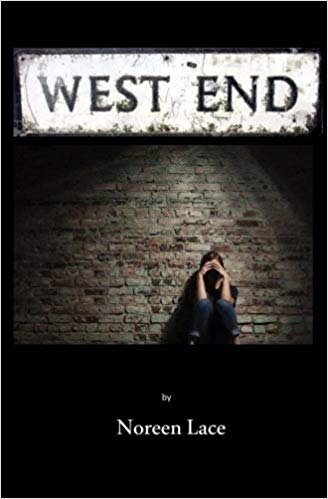
cover of west endI’ve written so many stories from first person point of view. At first, I was nervous because people did ask – is that real? is that you? and even contacted me and said – I know that’s about you.

So, it does make a person nervous about what they write and publish.

But at some point, you’ve got to let people think what they want to think. None of it will affect you in the long run.

I had an editor refuse a fictional story because, he said, it’s memoir and ultimately we didn’t ask for your personal story.

I thought – it must be good if he thought it was me! But I didn’t bother to correct him. It was a fiction call and I’d submitted fiction. If the editor didn’t realize the “I” didn’t necessarily represent the author, but the character, he is probably not the editor I need to work with nor the journal I want to be published in.

I worried about this with West End – my first big publication. One of the big criticisms girl on train tracks.jpgfrom someone who believed they knew me thought it wasn’t a realistic portrayal of me. I had to tell him because the character was not me! While the same story convinced another person that I’d led a secret life prior to moving to California.

Possibly, one of the convincing elements of the story is the setting. The place, the west side of Cleveland, where I grew up, is real. You can trace the steps of my characters who walked the path passed the baseball field and lost themselves on the train tracks, or those who played in the abandoned buildings. The streets are still there, the houses still stand, except the one which burned to the ground – a vacant lot interrupts the landscape of the neighborhood.

West End was a passion project. It was for the kids who I’d known and those I didn’t who never made it out. But it wasn’t me. Maybe parts of me live there in the pages and parts of me live on those streets.

Ultimately, you can’t allow another person’s possible opinion of you affect your writing.

What’s So Scary?

leaving-your-fears-insecurities-behind.jpg

“Don’t be afraid of failure.  The reality is that most people successes rise out of the ashes of their previous failures.”

From a new documentary on Netflix titled Creativity. The narrator is talking to the creator of Game of Thrones. The creator is talking about how many times he’s failed.

I started this to say – what are you afraid of?

Then I wanted to ask – what if there was no such thing as fear? What would you do? What could you do?

I want you to think about that. What if fear was not in the human range of emotion or thought?


Influence

Billy Collins (poet) believes we must read to be influenced, and suggests young people mimic their favorite writers in order to develop their skills and to develop their own voice.

I think many young writers do this. It’s a natural form of development.

Other writers are afraid to read when they’re lion.jpgwriting; they don’t want to be influenced. I think by the point you develop your own voice, you won’t so easily be influenced.

I think reading Michael Ondaatje’s In the Skin of a Lion was imperative for me to stumble across. I’d never attempted to intimate him – but he took my understanding of writing and voice to a whole new level. The storyline, the use of language, and the originality of his voice was unlike anything I’ve ever read and it blew my mind.

What reading Ondaatje did for me was to help launch my voice and style. I say this because at the time, I was mired in instructors and writers telling me no, no, no. They so strongly believed in their own way of doing things, they didn’t allow other writers to develop in other ways. It was limiting.

I’ve said this before and I’ll say it again – read far and wide! Do not be afraid of being influenced – open yourself to learning something new!


Free Reads

cofffee.jpgWhat’s better than coffee?  FREE COFFEE!  Or coffee that someone else bought for you.  And that’s what happened to me the other day. I ordered my coffee and the guy said – “On me – because you’re a great teacher!”

That coffee tasted better than any coffee I’d had of late.

So – for you – free reads.

Here’s a story of mine – originally printed in Avatar: All the Beautiful People.

And here’s some freebies from other authors: 23 Free Stories

If you’re a kindle subscriber, there are many more stories!

Notebook or Computer?

books.jpg

Dan Brown, Neil Gaiman, Judy Blume, and a number of other authors talk about writing in notebooks.

Blume says she fills it up from start to finish. I have to admit, a have a number of half empty notebooks. I keep them in various places, the car, the bedroom, dining room table, my desk. Then, I move them around, put them elsewhere and begin a new one before I rediscover the one I previously used.

I used to use big composition notebooks. These days I use smaller journal types.

Studies show that writing by long hand in a notebook uses a different part of the brain.

I wrote Grandma’s Last Secret by long hand in a notebook.  I wrote the whole of West End in a notebook before I ever thought of touching the laptop. I feel like there’s a difference for me. And sometimes, the notebook is easier on the eyes, easier on the brain. I don’t feel as much pressure from a pen and paper that I do when I sit in front of the computer.

But I do write on the computer sometimes too. I sit down and I’ll write a story, sometimes, from start to finish on the computer without considering a notebook.

Do you use notebooks? Or computers? or Both?  Feel free to share in our facebook group.

Study the Masters….

faulkner“Read, read, read. Read everything — trash, classics, good and bad, and see how they do it. Just like a carpenter who works as an apprentice and studies the master. Read! You’ll absorb it.
Then write. If it’s good, you’ll find out. If it’s not, throw it out of the window.”


Some people feel they should not read others or study the masters because it will influence their voice; however, experts recommend that is where you begin in order to develop your voice. Finding your voice takes time and it takes writing, regardless of who you read.  But you do, without a doubt, need to read far and wide.

Visualization for Success

Superego

We tell our students to do this – visualize what you want to happen.

Take your visualization a step further, especially if you’ve lost hope or are having a hard time finishing a work:

Create the cover for your book. Maybe slap an award on that cover.

Write a famous person’s review for that book then add quotes to the back cover.

Write the copy for the inside jacket cover.

Hang it or place it on your desk where you will see it every day.

Science says, visualization can help us get to where we want to be!