Family Myths

grandmas last secret coverFamily myths are the richest to mine for stories. Family myths are things that a great aunt or uncle might have done, where they may have worked, lives they may – or may not – have lived.

It is rumored that one of my great grandmothers was Hoffa’s ex-girlfriend. Although when we tried to match up the timeline, it didn’t quite match; however, given a few corrections here and there – who knows?! It’s fun to think about.

Another family myth involves my grandfather – even telling the story here feels like I’m giving away secrets about my family, but my grandmother swore to her dying day that the tale was myth.

My grandfather was shot in the back by a police officer. A number of different stories are told as to why he was shot, but the officer stated he was aiming for his legs.

My grandfather was over 6 feet tall. The cop must have been the worst shot in the world if he was aiming at his legs.

My grandmother lived with people creating myths as to why he was shot. She would tell us stories about aunts and cousins who came to her asking for the truth, asking for money, asking for what they believed my grandmother had which caused his death. I was present for one such argument before my grandmother passed of a cousin asking her for the truth before she died. Grandma’s Last Secret is about one of those myths.

I love family myths so much, that I’m planning to write more stories about them. Maybe I’ll write “Hoffa’s Runaway Bride” someday.

newspaper about hoffa.jpg

The Conspiracy of Theories

eyes on a coded screen.jpg

I read friend’s blog about Conspiracy Theories; it inspired me to write this blog. 

I published a story about conspiracy theories in which a few of the characters believe that the microchip is a government tracking device. I believe it appeared in the first issue of Delphinium.

I don’t believe these theories, but I do find some of them interesting. I wonder how they begin. Who is the person that starts them? For example, how did the flat earth conspiracy begin? I was speaking to someone who believes wholeheartedly the world is flat and scientists have been covering for the government for centuries!

We had a rather long discussion of proof wherein he finally said, “Are you only going to believe credentialed sources?”

Uhm. Yes. Sorry. (one of the problems with our country is that people are believing any old damn thing they read on social media or the internet without checking where it comes from. – and another reason why my credentials are published for all to see).

I stumped him with – what is the purpose of hiding the “truth” that the earth is flat? What could be gained by our earth not being round?

I don’t want to tell you his answer.

What does this have to do with writing? EVERYTHING! These conspiracy theories may begin by word of mouth, but someone writes them down and shares them – especially today when everyone and his brother has a website.

This can affect your character – do they believe in any of these? Is your MC an otherwise educated person who is concerned about the identification chips in his dog? Or do they question – maybe not believe – but question the validity of fluoride in our water as a means to mind control?

Or – write a story about one of the theories. There’s a full list on Wiki.

Or – make up your own!

Enjoy – because, you know, because the powers that be want you to laugh at the list.

The Sad Story of Those who Shall Remain Nameless.

Have you heard something like “don’t piss off a writer, they may kill you off in a book.”

the text reads still not famousI guess it’s a threat to make people not want to cross a writer, make them afraid they’ll be named. An odd thing is sometimes people think I put them in a book or poem even though they hadn’t occurred to me at all during the writing. Then there are those who want to be in a story.

I had a friend cancel plans on me at the very last moment. Not a problem, except this was at the long end of his excuses and bs, so I was done. The funny thing – he wasn’t. He sent me an unending barrage of drunken text messages:  it seems, in his liquid bravado, he admitted he’d wanted me to make him famous.

“wat wil u writ but me if u nvr gve me shce”

read one of this texts. A day later:

“I cuold be ur bes t s tory vr!”

A few years after that, someone asked me what chapter they would be.

I don’t take people wholly and insert them into a story. There are just little bits and parts, an essence, a scent, a glance. They are a single speckle of mortar in the building of a house. I guess, one might argue, they are then in a story, poem, book, but they’ll never actually be named.


Family Secrets

girl with book that reads we all have secretsAll families have secrets. I think that’s why some of us become fiction writers. Maybe, much to our family’s horror.

Secrets released in fiction is like water under pressure – there’s a spurt which resembles something other than what it really is. So, mostly, our family is safe.

Some secrets come to us second hand – the things people told us, what we know of other families, friends, acquaintances. In all honesty, these are my favorites.

The Gold Tooth is an amalgamation of family secrets. These are separate things from the gold tooth cover.jpgdifferent people whispered to me at times, laughed about at other times, assumptions from other people – all mixed up in a writer’s brain to spurt out under the pressure of a story.

My grandmother told me a story in which a mother, in trying to teach her children biggest is not best, used to offer the children unmarked gifts in various sizes. Whoever choose based on the biggest gift didn’t necessarily received the best gift.

A friend told me she’d inherited teeth from an aunt.

Another friend provided details about an uneven and questionable disbursement of a will and trust.

They all mashed together to create this story of a mother who tried to teach her daughters a lesson, protect one, maybe both, by the terms of a her will.

Feel free to tell your secrets to a fiction writer. They’ll never tell the whole truth.

beautiful woman with wry smile.jpg


What makes good literature?

An extremely good conversation in my literature class about intelligence (Inspired by Ted Chiang’s The Great Silence). We talked about other species that fall under the definition of intelligence, which is “the ability to understand and apply knowledge.” parrot.jpgConsidering Alex the Parrot and Koko the Gorilla, and other species: crows are problem solvers and remember faces. We discussed dogs, cats, and others. Is love, as an abstract idea, understood and applied by animals? And then – is intelligence found in showing love?

This is what good literature should do. Teach, delight, and create wonder.

Read The Great Silence here

When they believe it’s about you….

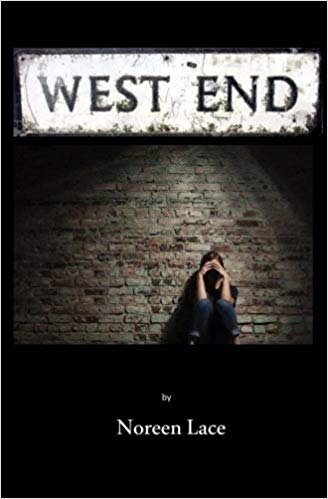
cover of west endI’ve written so many stories from first person point of view. At first, I was nervous because people did ask – is that real? is that you? and even contacted me and said – I know that’s about you.

So, it does make a person nervous about what they write and publish.

But at some point, you’ve got to let people think what they want to think. None of it will affect you in the long run.

I had an editor refuse a fictional story because, he said, it’s memoir and ultimately we didn’t ask for your personal story.

I thought – it must be good if he thought it was me! But I didn’t bother to correct him. It was a fiction call and I’d submitted fiction. If the editor didn’t realize the “I” didn’t necessarily represent the author, but the character, he is probably not the editor I need to work with nor the journal I want to be published in.

I worried about this with West End – my first big publication. One of the big criticisms girl on train tracks.jpgfrom someone who believed they knew me thought it wasn’t a realistic portrayal of me. I had to tell him because the character was not me! While the same story convinced another person that I’d led a secret life prior to moving to California.
Possibly, one of the convincing elements of the story is the setting. The place, the west side of Cleveland, where I grew up, is real. You can trace the steps of my characters who walked the path passed the baseball field and lost themselves on the train tracks, or those who played in the abandoned buildings. The streets are still there, the houses still stand, except the one which burned to the ground – a vacant lot interrupts the landscape of the neighborhood.

West End was a passion project. It was for the kids who I’d known and those I didn’t who never made it out. But it wasn’t me. Maybe parts of me live there in the pages and parts of me live on those streets.

Ultimately, you can’t allow another person’s possible opinion of you affect your writing.
What’s So Scary?

leaving-your-fears-insecurities-behind.jpg

“Don’t be afraid of failure.  The reality is that most people successes rise out of the ashes of their previous failures.”

From a new documentary on Netflix titled Creativity. The narrator is talking to the creator of Game of Thrones. The creator is talking about how many times he’s failed.

I started this to say – what are you afraid of?

Then I wanted to ask – what if there was no such thing as fear? What would you do? What could you do?

I want you to think about that. What if fear was not in the human range of emotion or thought?


On my bookshelf

I’ve finished my Tana French detective series and didn’t want to go to bed without another book in hand. (Nevermind there are three on my bedside table).

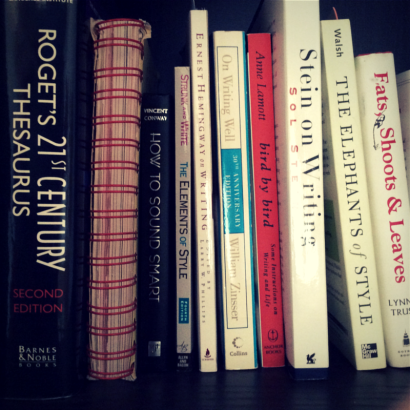
bookshelf.pngI began browsing my bookshelf, which is semi-organized: books I’ve read and loved. Books I want to read. School books. Writing books. and, of course, Poe books

I also have something mixed in that would seem, at first glance, not to belong. Books on psychology, the law, philosophy. I assume many writer’s bookshelves are this way.

A writer needs a wide variety of knowledge.

I know we have google at our disposal; however, I find reading books about, for example, the Psychology of Marketing allows me to get an in depth look that a wikipage or a few short articles are not going to give me. This allows me to create a more realistic character or more thorough background to make the story more believable.

For West End, I needed to understand two things, the idea of an absent or unloving mother, and the different forms depression can take. Anxiety runs throughout my work from Of Strays and Exes to Life of Clouds – which features children affected in different ways by the disappearance of their father.

I’ve heard handymen say they are the jack of all trades. I think writers are akin to that. We need to learn many things in order to live many lives.


Read Like a Wordsmith

wordDon’t read other words like a critic looking for the good, bad, and ugly. Read to discover what the author did well and how they did it.

This is reading like a writer, like a wordsmith.

Atwood says she will only review something if she likes it. She is not a critic and won’t write a bad review.

One of my friends told me he won’t even write a bad yelp review. He says, I praise those who deserve it, but it’s not my place to criticize.

I thought this was a great idea.

If you feel you must say something to alert other readers, then be honest and specific, but do add at least one good thing about the book, story, movie, service etc.


The Comma Coma – a deadly disease

Do you go into a coma when someone starts talking about commas?

Don’t get bit by the deadly comma coma bug! Figure out how to make the comma work for you, not against you!

tumblr_static_comma

The purpose of all punctuation is to clarify your thoughts and ideas so readers can enjoy and understand the book!

Did you have a teacher that told you, “whenever you feel the need to pause, insert a comma”?

WORST ADVICE EVER!

When we are writing, we naturally pause to think. That is not necessarily where a legal-grammar-rules-keep-calm-and-use-commas-e1490740001283comma needs to be.

Commas have a number of rules. My favorite site to use – and to introduce to my students – is the Owl at Purdue. Their comma usage explanations are clear and detailed.

One of my editor-friends believes the comma used for introductory words, phrases, and clauses is “going the way of the dinosaur.” While I agree that some people and publications seem to think so, I think it’s still a valid and needed use. [I’ve used introductory commas in this blog – one was in the previous sentence, “While I agree…]

The Fanboys rules is the easiest to remember; however, because of the number of teachers giving the pause advice, I get sentences that look like this:

The Rams won but, not everyone was happy.

We sometimes punctuate our speech this way for emphasis, but you can’t hear tone in these words, and it’s just wrong.  < this sentence contains correct use of the fanboys rule.

co-ordinating-conjuctions-banner-810x405

My students often ask me to explain the whole “Oxford Comma” disagreement. Well, it goes like this: There are people who use the oxford comma and then there are monsters!

Example:Oxford-comma-explained.png

Commas are confusing, but they’re not impossible to learn. Any editor is going to appreciate the correct use of commas regardless of how much they appreciate or introductory comma. 🙂