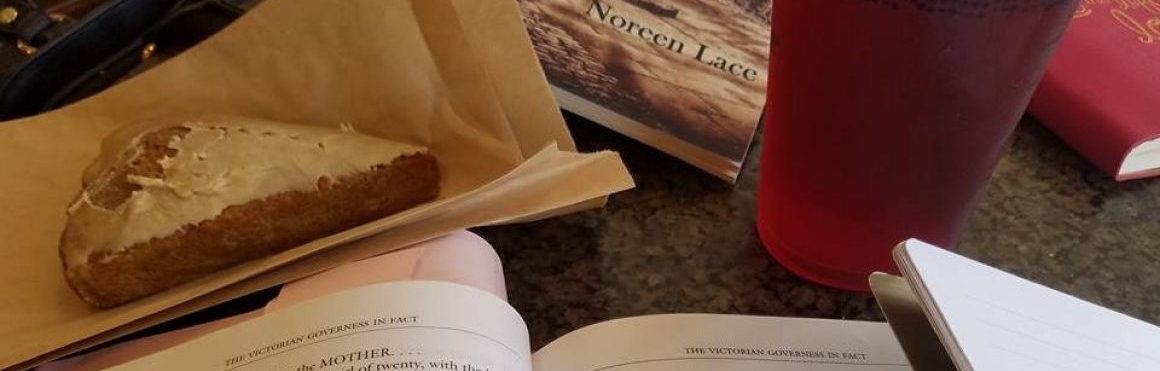
Reviews are so important to writers; it helps other readers make more informed decisions. I’m always grateful for a review and even more grateful for a good review!
My first review for the new book of short fiction! Thank you! See it on Amazon!
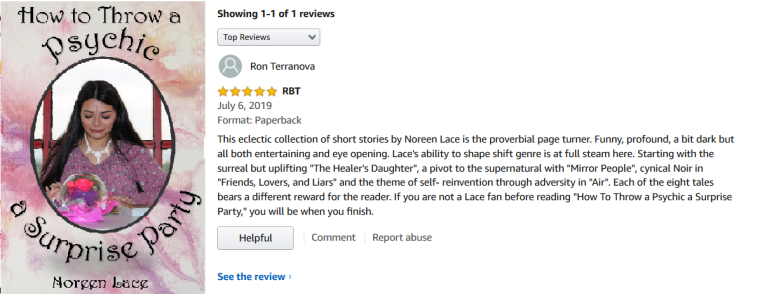
Reviews are so important to writers; it helps other readers make more informed decisions. I’m always grateful for a review and even more grateful for a good review!
My first review for the new book of short fiction! Thank you! See it on Amazon!
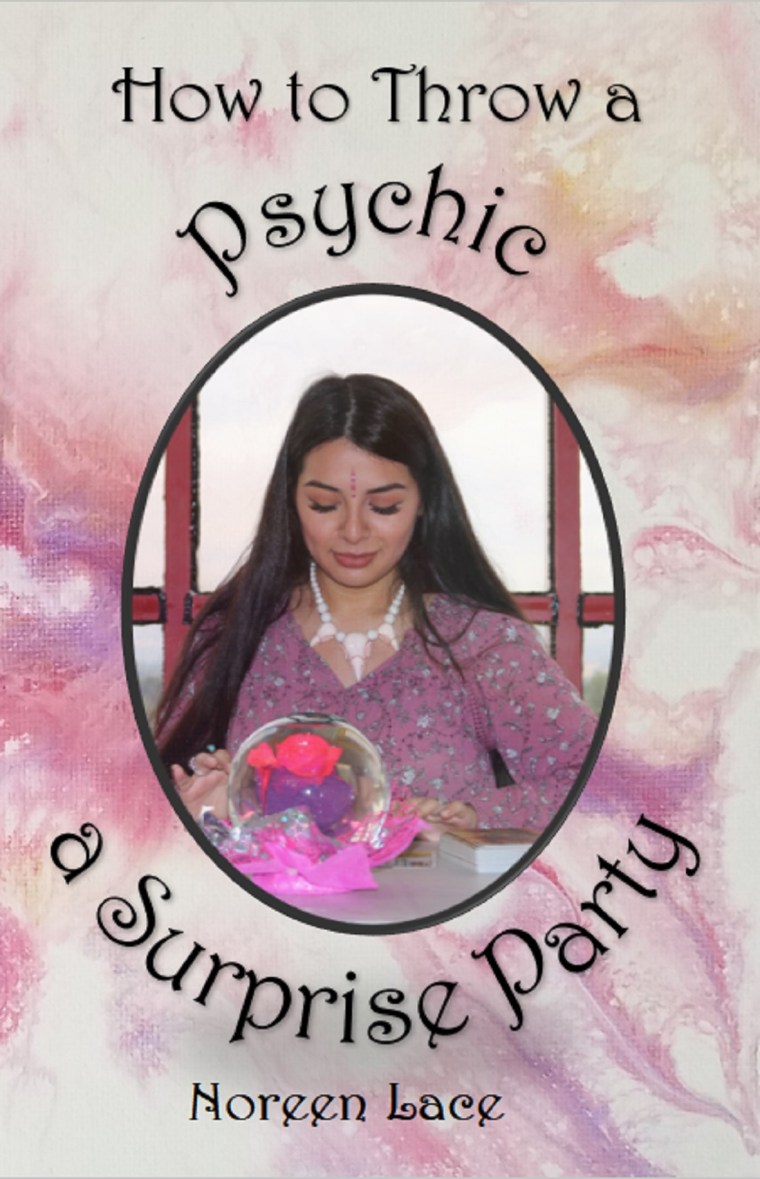
These might be some of the best stories I’ve ever written – even if I do say so myself.
Malcom Gladwell has a theory – it takes 10,000 hours to perfect one’s craft. Well, I think, perhaps I’ve hit 50,000, maybe 100,000.
Beyond that – one learns, one grows wiser with age; hopefully, that is what you’ll read in these stories. Wisdom. Empathy. Healing.
Available now. on amazon and kindle.
Find out how to throw a psychic a surprise party.
Okay, so not bragging, but….. I’ve been hard at work….

The Healer’s Daughter in The Ear
The Healer’s Daughter is a departure for me. It marks a turns in my writing that came about just this year. It’s more mystical. Risky, maybe. A woman’s daughter describes her mother’s gift and discovers she has her very own gift, but will she actually use it?
The Healer’s Daughter will be featured in my summer release of How to Throw a Psychic a Surprise Party. It’s a book of short stories, all of which have a special or surprising twist.

Friends, Lovers, and Liars in Home Renovation
Originally titled Deception, it didn’t find a home. In fact, the topic of lies and cheating offended one editor. I think it may have hit too close to home. It, too, will be released in the summer release of How to Throw a Psychic a Surprise Party.
How to Throw a Psychic Surprise Party in The Electric Press Magazine
The title story for the book of short stories. Inspired by a show in which I saw a television host throw a “surprise” party for a psychic. It struck me – How do you throw a psychic a surprise party?
This story may answer that question. Maybe not. How much empathy can you muster?
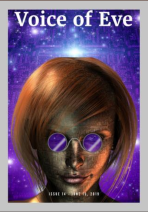
Hunger and other poems as well as some photography in Voices of Eve
Not in the book of short stories. But well worth the read. Hunger is one of my favorite poems.
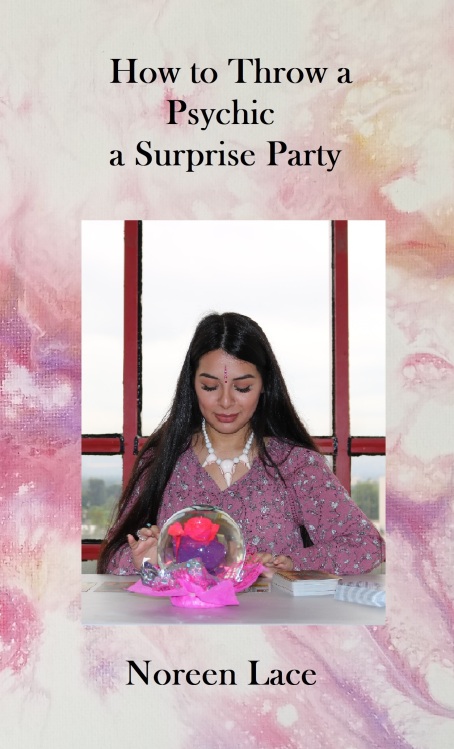
Also in the book of short stories –
The Crier: In a time when emotions are unheard of, people need a release.
The Mirror People: Ever wondered what’s inside the mirror? You know there’s something, right? Here’s a woman who collects them – she knows.
Bowie and the Basket Case: Anna’s things keep disappearing and reappearing. At first she thinks she’s misplaced them, but then she’s sure she hasn’t!
How to Throw a Psychic a Surprise Party is available for Pre-order!
I recently visited Gibraltar. Gibraltar is a UK territory attached to the south of Spain. The Rock of Gibraltar is home to the Barbary Macaque Apes.

I’m a person who likes a challenge; I crossed the highest, longest suspension bridge in North America, I swam with sharks. But, moreso, I like to explore; I saw a grisly bear in the Yukon, held a Koala in Australia, traversed the catacombs in Paris, etc.
So, I was there on the Rock of Gibraltar to get a peek at both Spain on one side and Africa on the other all the while standing in Europe. Pretty freaking cool.
The apes, which look more like monkeys (and are referred to as such), wander free there. They hang out on the patio of the visitor’s center, play in the trees and bushes, and hang out on the roads.
I did get close enough to one to have a photo. But I know better than to attempt to feed a wild animal. I did see four young women getting their picture taken by a park ranger while they fed one of the adult Macaque’s not far from the “Do Not Feed” sign.
From the visitors’ center, you can hike to other views, other places on the Rock and even all the way down. There’s another shop on the Rock where you can see a cave and buy trinkets, which is what I did. When I travel, I like to buy holiday ornaments for my tree as a remembrance.
I have the Big Ben, the Eiffel Tower, a Santa Star Fish from Hawaii, and even a Santa Chili Pepper from New Mexico to name a few.
I hiked back up to the center to grab some water and lunch before taking the cable car back down to the city. 
I’d been warned not to take a big back pack or food with me. The monkeys, they said, will jump on you. I heeded these warnings, had only a small pack/purse and no food.
But approaching the visitors’ center, one of the juveniles (juvenile delinquent!) jumped on my back. I raised my hands in surprise and she bit me. She then opened my bag, took the ornament, and hopped off. (This is the picture of the monkey as it tried to eat my ornament! Thank you, Geoff)
I’m okay. Maybe “attacked” is a strong word, perhaps assaulted is better? She left a dental impression and some scrapes on my hand. Yes, a little blood, swelling, bruising. My doctor is a little vexed with me.
But what does this have to do with writing?
We must challenge ourselves, we must overcome, we must use incidents such as these as inspiration or fodder. I feel all of these adventures make me who I am and my writing what it has become over the years.

I’m not suggesting you put yourself in harm’s way! I am suggesting that once in awhile get out and face your fears, do something new, experiment, explore, learn something new – this will create fresh shifts in your writing (and in yourself)!
The whole incident has me thinking of a half a dozen stories!
An extremely good conversation in my literature class about intelligence (Inspired by Ted Chiang’s The Great Silence). We talked about other species that fall under the definition of intelligence, which is “the ability to understand and apply knowledge.”  Considering Alex the Parrot and Koko the Gorilla, and other species: crows are problem solvers and remember faces. We discussed dogs, cats, and others. Is love, as an abstract idea, understood and applied by animals? And then – is intelligence found in showing love?
This is what good literature should do. Teach, delight, and create wonder.

“Don’t be afraid of failure. The reality is that most people successes rise out of the ashes of their previous failures.”
From a new documentary on Netflix titled Creativity. The narrator is talking to the creator of Game of Thrones. The creator is talking about how many times he’s failed.
I started this to say – what are you afraid of?
Then I wanted to ask – what if there was no such thing as fear? What would you do? What could you do?
I want you to think about that. What if fear was not in the human range of emotion or thought?

“Most of what writers write about their work is ill-informed bullshit.”
You gotta love Stephen King, if not for his fiction, for the way he sets things straight and to the point.
This is the line that begins King’s rewrite for his novel The Gunslinger , originally released in 1970, rewritten and rereleased in 2003.
He rewrote and released the novel – only Stephen King could do that.
In any case, I found his forward notably valuable. His words are not only ever for his readers, but for writers as well.
His approach to revision he says, “hasn’t changed much,” and it is “to plunge in and go as fast as I can, keeping the edge of my narrative blade as sharp as possible through constant use…. Looking back,” he says, “prompts too many questions.”
I agree. I’m one to power through and not consider edits until I’m completely finished. This way I don’t get hung up wondering if this is right, if that flows, should I change this word here? Nothing is finished until the end is on paper, then comes the time for change; however, King puts his work away for a time. I, personally, give it an edit or two or ten. I give it to my friends, I reread, fawn over every word, sentence and…. it still has errors I don’t catch for six months or a year.
 For the original writing of The Gunslinger, King has this to say about his younger self, “too many writing seminars, and had grown used to the idea those writing seminars promulgate: that one is writing for other people rather than oneself; that language is more important than story; that ambiguity is preferred over clarity and simplicity…”
I was once in one of those very seminars when someone brought up Stephen King, “don’t worry,” the professor announced, “he’ll never be remembered in the annals of history.”
The same professor, the same class, a few sessions later, eyed me after my story had been workshopped and discussed. “I’m still trying to figure out the reason for writing the story.”
“I think,” braved another student, “she wrote it for pleasure, for publication.”
The Professor’s eyes narrowed, her lips thinned, and she sat forward in the old wooden desk, “we don’t do that in this class,” she hissed.
My nervous smile slipped away as silence rose from our feet up. No one moved. No one breathed. One girl had already run out crying, perhaps they were waiting for me. I didn’t want to cry, nor run out, but I’d felt everything I’d done up til that point undeniably wrong.
I learned to write, over the next few year, the way of the MFA, ambiguous, language  heavy, story slipping under the covers of darkness of words and rhythm.
Stephen King, I thought then and now, by sheer volume and honesty of craft, will not be forgotten. And I’m not sure he cares one way or the other.
I think we can all learn a thing or two from Professor King.
Someone asked me if I write what I know. For many, that would be limiting. We write what we know in some intuitive way, like people, emotions, relationships, and some places. But that’s not all we write.
Nothing adds to a story like those little details that you’ve experienced, like the slick, moist, near sickly feel of your skin on a humid day in Paris after emerging from the chilled underground of the catacombs.
The difference in squeezing the smooth texture of black sand from Punaluʻu Beach in Hawaii between your toes and walking on fine, compacted white sand of the Whitsunday Islands in Australia.
 Every beach is just a little different. Just as the light is, depending where on the planet you stand. Being there helps.
But, research is also necessary. Maybe not to describe the sand between your toes, but other important details about place. Incorporating the general details or impressions as well as the smaller, more personal elements creates a more vibrant and more relatable to readers.
Stephen King thanked his research assistant and stated he met a lot of nice people in Oklahoma where his new book, The Outsider, is set. Experience and research.
Many of us can’t fly to Darrien, Washington and spend a week or longer researching a small town setting in the pacific northwest, but we are able to view maps, read the newspaper, follow the instagram sites, ask travel groups and even call the travel bureau in any given state.
I love experiences – Traveling and getting lost in a new place, picking up those sensual memories to infuse into writing and future!
Experience is a great thing, but it’s not the only thing. Research back ups and fills out details we may have missed.
Where have you been that you’ve written about?
Happy Writing!
 I know people say writing is a commitment, but it’s more than that. Writing isn’t “like” a relationship, it IS a relationship. A writer must be involved with the whole process of writing, must love it, need it, want to continue to work to make it better. It takes commitment, time, dedication, and the desire to move forward in life with writing.
A few years ago, I was at a conference where the main speaker (don’t remember his  name) said, “You have to be selfish. You must take the time for yourself, for your writing.” He went on to say he spent every Friday at a hotel with his writing. (are you picturing him checking into a seedy, no-tell motel with an old typewriter?;-)
My friend joked, “Noreen does this thing where she actually spends time writing.” My regular action became fodder for humor because he is a writer, but he falls under the category of non-writing writers like many others.
Life happens. We have families, pets, jobs, homes, tons of responsibilities. But notice that list – I put family first. People we love comes first. This is why a writer might consider writing as a relationship – so they give it priority.
I schedule things around my writing whenever possible. I will make doctor appointments, meetings, and everything I have power to plan secondary to my writing by scheduling them before or after my planned writing time.
Once a person considers themselves in a relationship with their writing, they may  naturally form relationship goals! If writing were a romantic relationship, how would you handle it differently? Would you want to go to sleep with it or wake up with it or both? What would you want to give it? Would you spend more time with it, going over the details, working it out so it was just perfect, going over it and over it again to work it out nice and smooth? What do you do for your significant other? Take it out to dinner? On vacation?
Writing, like a lover, needs constant attention and nourishment. Placing it on the back burner means we may never get to it. It’ll be there, but not as warm and flush as we’d like. Being in a relationship with writing means the needs of both are fulfilled. Writing is fresh and flowing and continually improved and the writer is happier, more productive.
We do this because we love it, we are driven to do it. Treat writing like it’s important to you.
Think of writing before you fall asleep, when you wake up in the middle of the night just to say one more thing.

Recently, I read a mini article posted on a blog of sorts, wherein the writer called out Stephen King’s book On Writing, concluding that “famous writers don’t know Jack.”

WOW! Really?
I was shocked and offended. And I assume that is the reaction she wanted to elicit in order to bring traffic to her article or her own website.
Let me clarify that I am not an avid Stephen King reader. I’m not much into science fiction, but I have been reintroduced to his work upon reading Doctor Sleep, the continuation, in some sense, of The Shining. I have read On Writing some years ago. I’m pretty certain it’s still on my bookshelf as it’s required reading for anyone who wants to write – whether you like it or not. And my favorite essay of his, which I sometimes share with students is “Why We Crave Horror Movies.”
Therefore, I’m not defending a writer I love with a passion but an author I admire with sincerity. And I am taking issue with the blogger’s lack of professionalism in her disrespectful and disingenuous response to a successful and prolific author.

In Academia, occasionally members of the community in praising literary fiction take issue with popular literature. In one such class, when someone asked about King, the instructor responded – “In 100 years, no one will remember him.”
Yeah, I’m guessing someone who has written over 50 novels as well as over 200 short stories, among others projects will be remembered.
Again, my issues with her article is that she comes across as disingenuous. I don’t believe she really believes King is wrong, I think she wants to make a name for herself and create a controversial reaction and bring traffic to her website, so she can look at the numbers and get a little thrill when it pops up instead of actually presenting sound and original ideas. I say this because she didn’t actually say much of value.
This blogger’s premise is that writing is a gift and it is done intuitively, so authors don’t necessarily know how to explain writing. Understood. As well, she takes issues with some basic rules that I’ve learned since third grade. She says, “we’d all end up sounding like Stephen King.” Not necessarily so.

Her final claim: “You can do anything, provided that you can pull it off.”
Well, duh! You can break every damn rule of writing if you’ve got a story so great that Hollywood will buy it and the publishers are going to make bank from it. Dare I talk about The Hunger Games? As an English teacher, it hurt my eyes to read the numerous punctuation errors. But, as one of my editors said, Story is King. It’s the story that matters, not the comma splices that most non academics won’t even notice.
However, every good writer should know the “rules.” And I’m using that term loosely here. A writer should be familiar with what has come before, what others are doing, as well and what others believe the rules should be. How many people have commented on Picasso’s blue period, ignorant of his background, and said “I could do that!” Picasso learned and practiced the rules. Then he chose to break them. When I break a rule of writing, I ask myself: “Is it for effect, and is it resulting in the desired effect?
I say: “Break that damn rule if you want. Just know why you’re doing it and if it’s working.” If Stephen King breaks a rule, even his “own” rule, I imagine he knows it and knows why he’s doing it. I don’t think On Writing is prescriptive; I believe it’s meant to be descriptive.
So, I suppose I don’t even have that much issue with what she said, but it’s how she said it. Stephen King is an award winning, multi-best-selling author, show some respect. That’s called Professionalism. You can disagree with someone, you just want to do it respectfully. She says she leaves the “writing instruction” to the “less qualified people -“.
 REALLY? The author of over 200 short stories is less qualified than who – YOU? How many books have you published? I looked her up. A few “middle grade readers,” a nonfiction book, a few short stories. She says she prefers to tell people how to get published.
I go back to her line, “famous writers don’t know Jack.” How unprofessional can you be?
I teach a business writing class (among others); I run the class like a course in professionalism. And this is something I would say is an absolute NO! We can disagree with anyone – I tell my students – but we should know how to respectfully disagree.
As a writer, I see a lot of unprofessional behavior. (I in no way claim to be perfect myself). I belong to writers’ groups and read (more than I post) in these online writers’ groups. And it can be things like this – open to the public – that can get a person in trouble. You never know who you are dealing with on the other end of that computer. Random arguments, stupid comments, and radical, unqualified statements can hinder one’s success.
I was asked recently by a publishing company for my CV. This is not a problem; I sent it right over. Why would I not? I posted asking for advice about the CV, for future reference. Some people seemed beside themselves, as if a publishing company asking for my CV was out of line. The publishing company is my potential employer. They are entitled to my CV and, as a professional writer, I want to show it to them!
Now, what if I had written a blog such as that – disrespectfully and disingenuously criticizing one of their best authors? It might cause the publishing company to think twice about even looking at my work, let alone looking at my CV. The cold, hard fact in this world is most companies are not going to hire or work with people who are unprofessional. While they may want people to speak their minds, they don’t want people publicly running off at the mouth. Charlie Sheen and any number of actors learned this the hard way.

I am not at all saying that we shouldn’t voice our opinions! If you disagree with anyone, you should be able to, and have the absolute right to speak your opinion. I’m suggesting it be done with polite professionalism.
Who is this author of a few middle-grade books to be criticizing King? She is never going to convince ME or many writers that King is wrong. However, had she respectfully disagreed with his views on the certain aspects of writing, clearly stated her reasoning – it would have been far more professional and more believable! I would have read it, taken her opinion into consideration, and possibly even agreed with her. However, by her announcing that he is “less qualified” and doesn’t “know Jack,” not only do I question her intelligence and her integrity, she’s possibly offended people she’d rather have as friends or colleagues. (You’ll notice I didn’t link her article here. I’d prefer not to give attention-seekers more attention).
I, personally, would rather respectfully disagree with people than announcing contrary opinions for the sake of readership. I guess being boisterous will get you noticed. But, it will also get you noticed, if you know what I mean.
I’ll take her words, “You can do anything, provided that you can pull it off.” – Yes, yes, you can. You’ve seen numerous examples of people running off at the mouth about others and nothing happened to them or their career. However, are you sure you can do it and not experience consequences? Have y ou built up enough credit, have enough backing, or whatever else you need, to make certain you will not face consequences. OR – have you done this, seen it done, heard it done, and the person hasn’t gone very far in their career. Hmmmm. Might be a reason.
Say what you will. I suggest you say it with respect.


 Noreen Lace
You must be logged in to post a comment.