Overcoming Procrastination

Procrastination-lead-1000x486

Something happens after a book is published. Writers, then, have a dual focus. Trying to promote and continuing to work on their next project. This leaves me, personally, overwhelmed. And I don’t function well in that place.

Some authors speak of a “let down” time after their novel or book is published. That they feel depressed, blue, unable to work.

I wonder if it’s something like postpartum depression. You’ve worked so hard and birthed this marvelous creation, and you’re somewhat exhausted and now have so much to take care of.

Writers do refer to their writing as offspring in some sense or another.

The thing about procrastination is that it becomes a habit.

When I’m overwhelmed and don’t know what to do first, I tend to procrastinate. We’re not just talking about a lot to do. I regularly have a lot to do and have it scheduled, done, and still have writing time.

I think scheduling helps overcome or even usurp any potential procrastination. So it’s summer, no schedule, makes it even harder.

I got a schedule book, instead of just my phone, and keep that on the table I pass most often in the house. There it is, laying open, telling me what needs to be done and by what time. No phone beep that I tend to ignore or swipe to dismiss, but an open book written in pen and ink.

I’m old school. An open book is my catnip.

I’m a tad neurotic. A to-do list is my medicine.

Take that procrastination!


The Process

Joy is in the process.

Gratitude in purpose.


How it feels to write after a long time

How+it+feels+to+write+after+a+long+time+right_543743_4803084.jpg

The Healing Power of Writing

I’m not sure if all people begin to heal from writing, but it does happen. Once a person gives their stories air, light, voice – they begin to heal from whatever was hurting and holding them back.

healing.jpgMany years ago, when I was in school. A woman showed up late to class. She could barely walk, used a cane, struggled to a seat and didn’t speak for half the semester. Then, one day, she spoke.
Maybe it’s important to tell you about the class. It was a women’s studies class. The instructor gave voice through stories, studies, lectures, and guest speakers to women’s issues, including what we call today the #metoo movement.

For most of the semester the beautiful woman, long hair, tight lipped, rarely smiled, spoke even less, barely moved and every little moment seemed to drop into depths of pain.

Then one day, she spoke up. She said, about ten years earlier she had been raped by her husband’s best friend. If you tell, he warned her, I’ll tell your husband that came on to me and it was consensual. Afraid of not being believed, afraid of losing her husband and her son, she remained quiet, believing she could push down the shame and pain.

The class was stunned into silence that the woman could share such a secret with us. The instructor hugged her and thanked her for being brave enough to share with us.

None of us knew the power of her statements.

The following week she moved with much more ease, and by the end of the month she showed up without the cane.

She shared that since she’d let that secret out, she’d been feeling better. Her mysterious mobility issues, the serious pain that had riddled her body for years, was dissipating.

I believe, she told the class, it was the pain of that secret that was locking into my own body.

She felt freed.

Writers often talk about needing to write. Stories need to be told. Secrets need to be shared. There’s a healing power for the teller and the listeners.

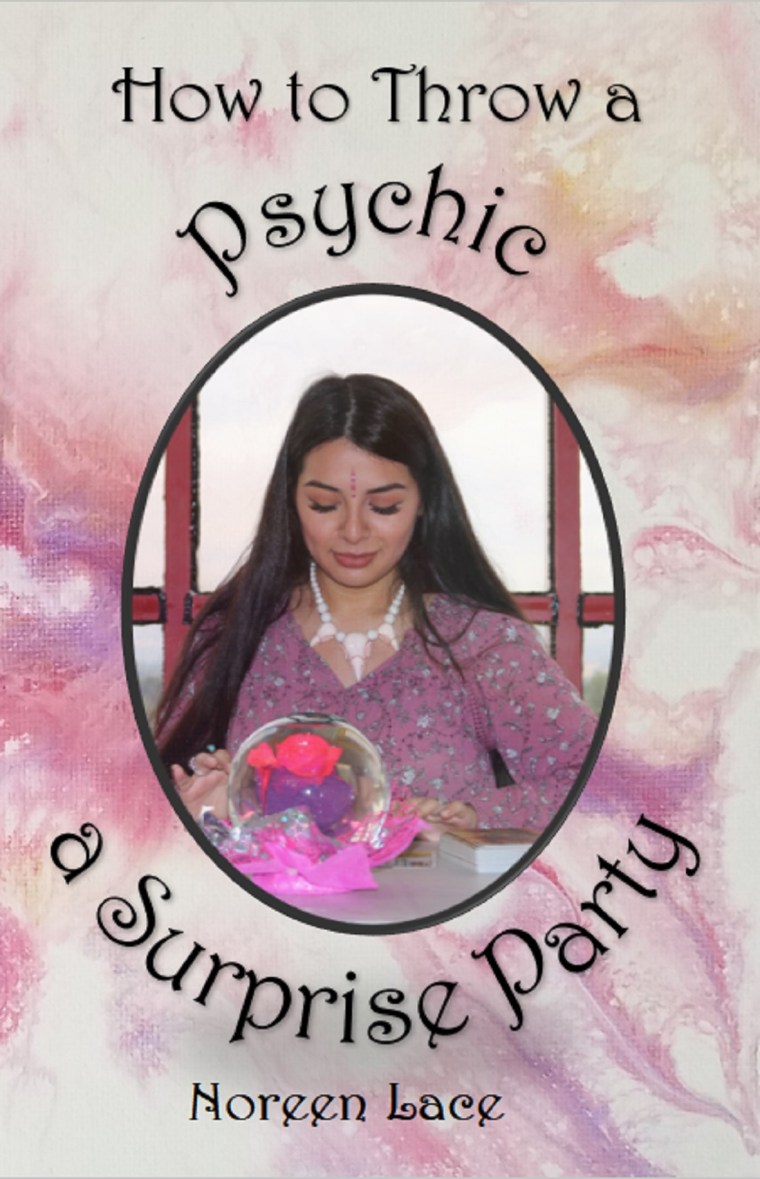
I actually began this blog today to talk about my story “The Healer” in How to Throw a Psychic a Surprise Party. But this isn’t that story. There are many times of healing in that book, but this story wasn’t mine. It was hers. But it taught me something about healing and releasing stories which might hurt us or hold us back.

3 Things Writers Hate About You (jk)

You don’t have to be a psychic to know there are things writers have in common. Some love them, some hate them. But, if you’re a writer and they haven’t happened to you yet, they will!

  1. Every writer runs into multiple people who, upon find out they’re a writer, says, “I have this story I want to write…” the conversation then progresses in a few ways. The person will tell them they’re story, will ask them to write it for them (for free), or will suddenly be afraid their story will be stolen.
  2. Every writer has someone ask them for free copies. Writers get a limited number of copies, unless, of course, they are Stephen King or someone like that. And sometimes the copies aren’t exactly free.
  3. Almost every writer who has a social media account has had some amateur plug their own book on the writer’s page by dropping a link, comparing it, or other. This is rude, distasteful, and will not win the person friends. I’ve deleted and blocked people who’ve done that.

Now, given this is my page – I’ll plug my own book – released this week. Get it here!

psych cover for kdp


Submission Fees for Writers

I sincerely understand when print journals ask for a reading fee of a few dollars. Print journals do not sell well, they have a staff, and some of the ones on the “best literary journals” get many more submissions than they can use. As well, if they are using submittable, the larger print journals have to pay a fee to use the service.dollar-signs-smiley-face_burned

Submission fees can range from $1 to $10. I’ve seen some as high as $20 or $25 for a submission of a short story. I call bullshit.

I understand a reading fee of $5.00 or under. $10.00 is questionable. But then – more than that – No. No. And no.

Especially for an online literary journal run by one or two people. I’m not saying they don’t deserve to earn money. I am saying I don’t think they should be charging writers that much to read their fiction, poetry, or memoir.

There’s one website run by a single person – I won’t publically shame them – who has “contests” nearly every month. This person charges between $7.00 and $10.00 for each contest and offers minimal feedback; however, I have yet to see one print journal even though her copy says, winners will be published in the journal.

I have no idea how many people fall for that.

Research the journal carefully and ask yourself what you’re supporting. If you believe in what they are doing – then by all means pay the fee. Don’t pay a fee in desperation of being published. If you’re good, publication will come.


How Your Book Becomes a Finalist…

The Lone Escapist (1st  Illustration) - Copy - Copy.JPGAs a writing community, I believe we need to help one another. There doesn’t need to be a competition or an unfriendly or unhealthy antagonism between us. We are people who share a love of the written word, a desire to share our stories.


When one of my writer friends introduced me to one of her writer friends, I was happy to join and jump in to help.

I had the honor of helping Dan Rhys bring The Lone Escapist to publication life.

When I heard he’d become a finalist in the Chanticleer Awards, I knew his book would be a great success.

It’s a detective, sort of mystery, sort of noir of old. I think Hitchcock would have loved it.  The baser of our human needs and selves sometimes win out and cause us larger problems. Where exactly was Kelton when a school shooting took place in his very own classroom?

Wracked with guilt, he wants to find the shooter himself.

Released just this week – the writing is tight and the topic is contemporary – The Lone Escapist is available on kindle and in print. Audiobook to follow.

How do you get your book to become a finalist? to win an award? – Read Dan’s and find out!


Successful Writing

Okay, so not bragging, but….. I’ve been hard at work….

voices of eve

The Healer’s Daughter in The Ear

The Healer’s Daughter is a departure for me. It marks a turns in my writing that came about just this year. It’s more mystical. Risky, maybe. A woman’s daughter describes her mother’s gift and discovers she has her very own gift, but will she actually use it?

The Healer’s Daughter will be featured in my summer release of How to Throw a Psychic a Surprise Party. It’s a book of short stories, all of which have a special or surprising twist.


voices of eve.png

Friends, Lovers, and Liars in Home Renovation

Originally titled Deception, it didn’t find a home. In fact, the topic of lies and cheating offended one editor. I think it may have hit too close to home.  It, too, will be released in the summer release of How to Throw a Psychic a Surprise Party.


voices of eve

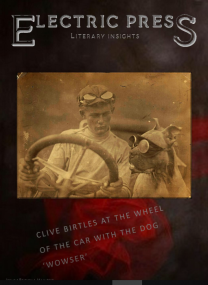
How to Throw a Psychic Surprise Party in The Electric Press Magazine

The title story for the book of short stories. Inspired by a show in which I saw a television host throw a “surprise” party for a psychic. It struck me – How do you throw a psychic a surprise party?

This story may answer that question. Maybe not. How much empathy can you muster?


voices of eve

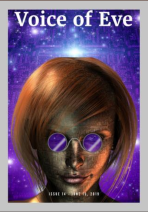
Hunger and other poems as well as some photography in Voices of Eve


Not in the book of short stories. But well worth the read. Hunger is one of my favorite poems.


psychic cover front


Also in the book of short stories –

The Crier: In a time when emotions are unheard of, people need a release.

The Mirror People: Ever wondered what’s inside the mirror? You know there’s something, right? Here’s a woman who collects them – she knows.

Bowie and the Basket Case: Anna’s things keep disappearing and reappearing. At first she thinks she’s misplaced them, but then she’s sure she hasn’t!

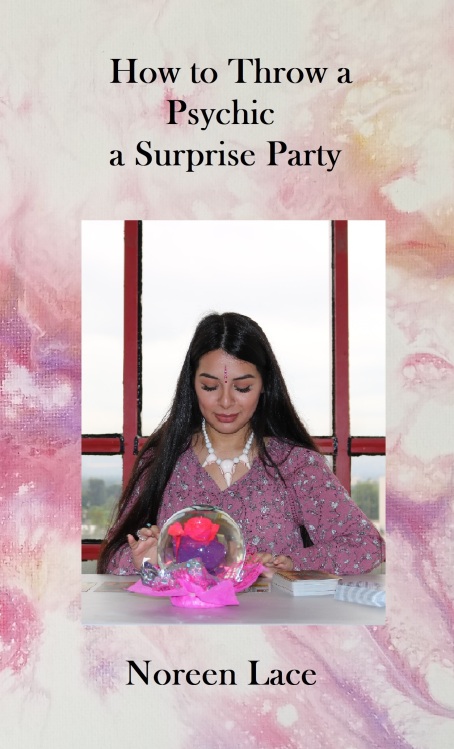
How to Throw a Psychic a Surprise Party is available for Pre-order!


Seeing Stories

engel.png

Rules of Writing?

I came across this list from Margaret Atwood and had to share. It’s quite humorous.

Margaret Atwoodphoto of margaret atwoods book covers.jpg

1 Take a pencil to write with on aeroplanes. Pens leak. But if the pencil breaks, you can’t sharpen it on the plane, because you can’t take knives with you. Therefore: take two pencils.

2 If both pencils break, you can do a rough sharpening job with a nail file of the metal or glass type.

3 Take something to write on. Paper is good. In a pinch, pieces of wood or your arm will do.

4 If you’re using a computer, always safeguard new text with a ­memory stick.

5 Do back exercises. Pain is distracting.

6 Hold the reader’s attention. (This is likely to work better if you can hold your own.) But you don’t know who the reader is, so it’s like shooting fish with a slingshot in the dark. What ­fascinates A will bore the pants off B.

7 You most likely need a thesaurus, a rudimentary grammar book, and a grip on reality. This latter means: there’s no free lunch. Writing is work. It’s also gambling. You don’t get a pension plan. Other people can help you a bit, but ­essentially you’re on your own. ­Nobody is making you do this: you chose it, so don’t whine.

8 You can never read your own book with the innocent anticipation that comes with that first delicious page of a new book, because you wrote the thing. You’ve been backstage. You’ve seen how the rabbits were smuggled into the hat. Therefore ask a reading friend or two to look at it before you give it to anyone in the publishing business. This friend should not be someone with whom you have a ­romantic relationship, unless you want to break up.

9 Don’t sit down in the middle of the woods. If you’re lost in the plot or blocked, retrace your steps to where you went wrong. Then take the other road. And/or change the person. Change the tense. Change the opening page.

10 Prayer might work. Or reading ­something else. Or a constant visual­isation of the holy grail that is the finished, published version of your resplendent book.