Successful Writing

Okay, so not bragging, but….. I’ve been hard at work….

voices of eve

The Healer’s Daughter in The Ear

The Healer’s Daughter is a departure for me. It marks a turns in my writing that came about just this year. It’s more mystical. Risky, maybe. A woman’s daughter describes her mother’s gift and discovers she has her very own gift, but will she actually use it?

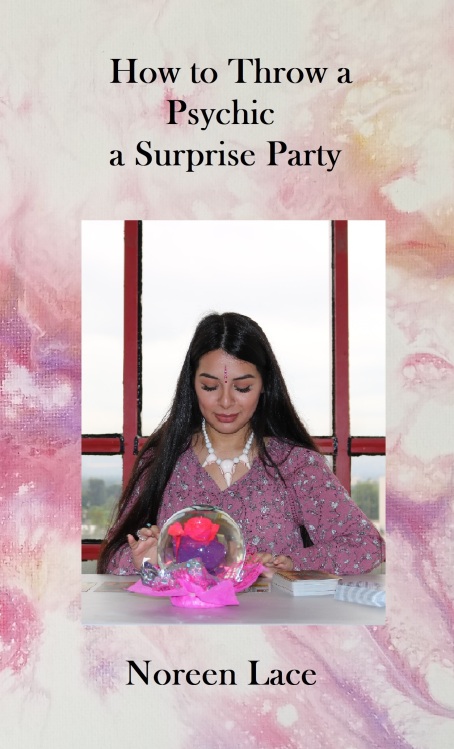
The Healer’s Daughter will be featured in my summer release of How to Throw a Psychic a Surprise Party. It’s a book of short stories, all of which have a special or surprising twist.


voices of eve.png

Friends, Lovers, and Liars in Home Renovation

Originally titled Deception, it didn’t find a home. In fact, the topic of lies and cheating offended one editor. I think it may have hit too close to home.  It, too, will be released in the summer release of How to Throw a Psychic a Surprise Party.


voices of eve

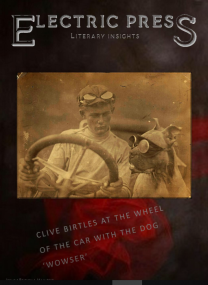
How to Throw a Psychic Surprise Party in The Electric Press Magazine

The title story for the book of short stories. Inspired by a show in which I saw a television host throw a “surprise” party for a psychic. It struck me – How do you throw a psychic a surprise party?

This story may answer that question. Maybe not. How much empathy can you muster?


voices of eve

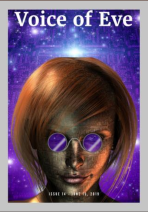
Hunger and other poems as well as some photography in Voices of Eve


Not in the book of short stories. But well worth the read. Hunger is one of my favorite poems.


psychic cover front


Also in the book of short stories –

The Crier: In a time when emotions are unheard of, people need a release.

The Mirror People: Ever wondered what’s inside the mirror? You know there’s something, right? Here’s a woman who collects them – she knows.

Bowie and the Basket Case: Anna’s things keep disappearing and reappearing. At first she thinks she’s misplaced them, but then she’s sure she hasn’t!

How to Throw a Psychic a Surprise Party is available for Pre-order!


Rules of Writing?

I came across this list from Margaret Atwood and had to share. It’s quite humorous.

Margaret Atwoodphoto of margaret atwoods book covers.jpg

1 Take a pencil to write with on aeroplanes. Pens leak. But if the pencil breaks, you can’t sharpen it on the plane, because you can’t take knives with you. Therefore: take two pencils.

2 If both pencils break, you can do a rough sharpening job with a nail file of the metal or glass type.

3 Take something to write on. Paper is good. In a pinch, pieces of wood or your arm will do.

4 If you’re using a computer, always safeguard new text with a ­memory stick.

5 Do back exercises. Pain is distracting.

6 Hold the reader’s attention. (This is likely to work better if you can hold your own.) But you don’t know who the reader is, so it’s like shooting fish with a slingshot in the dark. What ­fascinates A will bore the pants off B.

7 You most likely need a thesaurus, a rudimentary grammar book, and a grip on reality. This latter means: there’s no free lunch. Writing is work. It’s also gambling. You don’t get a pension plan. Other people can help you a bit, but ­essentially you’re on your own. ­Nobody is making you do this: you chose it, so don’t whine.

8 You can never read your own book with the innocent anticipation that comes with that first delicious page of a new book, because you wrote the thing. You’ve been backstage. You’ve seen how the rabbits were smuggled into the hat. Therefore ask a reading friend or two to look at it before you give it to anyone in the publishing business. This friend should not be someone with whom you have a ­romantic relationship, unless you want to break up.

9 Don’t sit down in the middle of the woods. If you’re lost in the plot or blocked, retrace your steps to where you went wrong. Then take the other road. And/or change the person. Change the tense. Change the opening page.

10 Prayer might work. Or reading ­something else. Or a constant visual­isation of the holy grail that is the finished, published version of your resplendent book.

Friday Motivation

poe.jpgIn the morning, when I’m writing, I have a cup of tea sitting next to the computer as I write. It starts steaming hot and I sip. I set it down and if I get moving on my writing, it slowly grows cold.

My cup sees me in the morning the way no one else does, hair up, sweats on, staring at the screen with the cup pressed between my hands, sometimes next to my lips. What else does my coffee cup see?

What would your coffee cup say about you?

Imagine a story about you or your family from your coffee cup’s point of view.

Special Needs Authors and Readers – an Interview with Patty Fletcher

Hello:

Thank you so much for having me on your blog. I’m very glad to be here.

As I’ve been reading over the questions you ask, I’ve decided the best way to begin answering them is to start by telling a bit about myself, and why I write.

As you read, you’ll also see that I’ve included Campbell my Seeing Eye Guide Dog and why I chose to do so.

SmashwordsCoverMy name is Patty L. Fletcher. I’m a single mother with a beautiful daughter, of whom I am very proud. I have a great son-in-law and five beautiful grandchildren. Three girls, and two boys. I own and handle a Black Labrador from The Seeing Eye™ named Campbell Lee—a.k.a. Bubba Lee or King Campbell, to give just a couple of his nicknames.

I’m multiply disabled. I not only suffer from Bipolar Disorder, and Fibromyalgia but I’m totally blind as well. I was born premature and my blindness was caused by my being given too much oxygen in the incubator. I was partially sighted until 1991, at which time I lost my sight due to an infection after cataract surgery and high eye pressure. I used a cane for 31 years before making the change to a Guide Dog, which was the inspiration for my first book, ‘Campbell’s Rambles: How a Seeing Eye Dog Retrieved My Life’ CN-2014.

When I began my writing career with the publishing of that first book, my purpose was to tell the story of how going to The Seeing Eye™ and getting Campbell, learning to love, handle, and work him, then coming home and adding him to my life, gave me true freedom. I told of how changing from being a 31-year cane user to being a guide dog handler taught me things about myself I had never known before. I told of the wonderment I experienced when I finally took that chance.

Continuing onward,  as in the beginning, a major goal of mine is to help others who find themselves in domestic violence situations. I also want to help others learn more about mental illnesses and how different situations and environments can drastically affect those with such challenges.

As I write I focus on bipolar disorder, on how it can go horribly wrong and cause a person to behave in ways they normally would not.

Another thing I have attempted to show in these many years of writing is how, in certain institutional settings, attachments can develop—and how those attachments can become unhealthy for all concerned if they are not handled correctly. Most simply, I want others to know more about me.

I’ve written a second book as well. Campbell and I wrote it together.

‘What do you mean? What was the purpose of this book?’ You ask. Let me explain.

The book is, ‘Bubba Tails From the Puppy Nursery At The Seeing Eye’

In Bubba Tails From the Puppy Nursery At The Seeing Eye, it is King Campbell Super Seeing Eye Dog A.K.A Bubba’s turn to tell his tale.

While helping to ready a group of pups to go and meet their puppy raiser families, so they too, might one-day become Seeing Eye dogs, he tells of what it was like for him, to grow up and become a Seeing Eye dog.

As he speaks to the wee pups, he speaks about the importance of facing one’s fears, of honesty and how telling the truth no matter how hard, is always best. He speaks of love, faith and of believing in one’s self

Because Campbell and I are together I feel it is important for you to know him as well.

WHO IS CAMPBELL AND FROM WHERE DOES HE COME…?

Campbell was born in Chester N.J. November 28, 2008.

He lived with his Dog Mother and Litter Mates until he was approximately eight weeks old, and then he went to live with his Puppy Raisers.

Then, when he was just over a year-old, he was taken away from his Puppy Raiser family, to be trained at The Seeing Eye.

After only four short months he was chosen to become the guide of his now human mother Patty L. Fletcher.

One more important thing we must add, because of The Seeing Eye being the first ever school of this kind and due to its continuing to be the largest and oldest school in the world, before we continue, we’re obligated to post the following information. We’d love it if you’d visit the site sometime to learn all about how this wonderful Guide Dog movement began and what it takes to continue today.

Legal Notes THE SEEING EYE® and SEEING EYE® are registered trademarks of The
Seeing Eye, Inc.See: www.SeeingEye.org


What do you think the publishing world needs to do more of in order to meet the needs of those who are differently-abled/disabled?

I must say I am quite pleased to have an opportunity to answer this question. Being a multiply disabled writer most certainly can be extremely challenging. So much so that I wrote an article about it. Which, I might add was well received by many in the self-publishing world. If readers would like to have a look they may visit:  https://­campbellsworld.wordpr­ess.com/2018/02/07/­challenges-of-a-disab­led-writer/.

In the article which was also published in the Indie Publishing Magazine, I talk about the various challenges disabled writers face. Things such as:

  • Photos, Screenshots, and Memes which have no descriptive text.
  • The challenges of correctly dealing with words which sound the same and are spelled different, and:
  • Books that aren’t TTS (Text To Speech) enabled, websites that aren’t accessible to those using screen reader or voice over technology, and lots of other things the general writing world just doesn’t consider when dealing with writers who have special needs.

I must say the next question you ask is my favorite and comes to me at a time in my life when I find daring to be different whether by design or choice is hard as the devil to do.

You ask:

What do you think the world in general needs to do in order to understand the needs of those who are differently-abled/disabled?

The best way I can answer this is this…

Be open minded. Don’t put people into boxes. I’m a multiply disabled person. I think, act, and work differently than anyone else.

But.

That’s not all due to my disability and I see a lot of this going on.

The world needs to be more accepting of things that aren’t the “Traditional way of doing things.”

One of the biggest reasons I gravitated to Indie Publishing and especially blogging was so that I could go my own way, do my own thing and be OK doing so but of late I don’t seem to fit in.

Honestly, it’s starting to seriously drag me down. Seems like no matter where I go or what I do someone somewhere disapproves.

Well, to be blunt I’m quite tired of it. No two people are the same. We’re all “differently abled” All of us no matter who we are have things that are hard for us. If people stopped and seriously took a good, long, look at themselves they’d realize that no one is without some kind of disability and I just get tired of there being all these pigeonholes that I’m supposed to fit into.

I just want to be allowed to be myself, write in a way that makes me happy, tell my stories in a way that feels comfortable to me and not have all these other people telling me what I should and should not do.

I am not them and they’re not me. They don’t live my life and I don’t live theirs.

I am a 51-year-old totally blind woman who suffers from other types of disorders as well and these disorders cause me to think, feel, and process life around me in a way that is unique to only me.

But.

Is that not true of everyone? Do we not all deal with life as it comes to us in a different way? If you read something and I read that same thing are we both going to receive the very same message?

If you choose one way to put your work out there for the world to enjoy and I choose another is your way any better than mine?

I guess I’m just tired of the “world” thinking it knows what’s best for me.

I’ve a favorite affirmation it goes like this…

“The world is not perfect, so there-for I need not be perfect.”

If I were to sum it all up into one word it would be, ‘allow’

‘Allow’ me to be who I am. ‘Allow’ yourself to be who you are.

In closing let me share these words a dear friend once wrote to me during a time in my life when I was doubting my ability to succeed. He wrote…

“Patty,

Congratulations on your success! Yes, success.  All successful people (writers are people too!) get criticized – a lot.  There is an entire industry based on criticizing books, movies, plays, sports, cars, etc.… the list goes on forever.

Don’t let the criticism get to you.  You put in the work, you made it happen – only you get to decide if it turned out the way you intended.  No one else is qualified.  Forge ahead, do what is in your heart, write your books, sing your songs, dance your dance – be you.  Everyone else can worry about being themselves!”

Thank you very much for this opportunity to speak about myself and what it is to be a disabled writer in a world in which it can at times be hard to work and belong in.
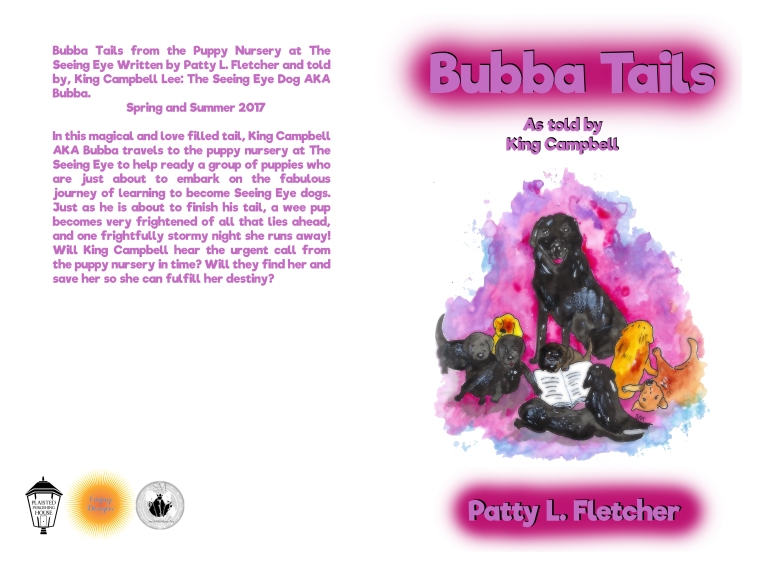
Bubba Tails Wrap 6x9


~~~~~~~~~~~~~~~~~~~~~~~~~~~~~~~~~~~

Thank you, Patty!

noreen


Fear of …?

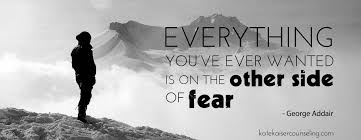
istock_000012625357xsmall1There’s a theory that we don’t fear failure, we fear success.
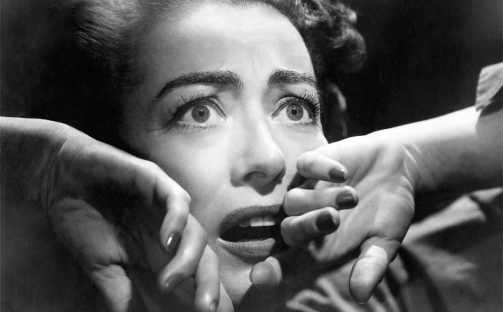
A researcher gave graduating students an impromptu essay prompt: “After finding out Joe/Jane aced their medical exams for graduation, he/she …..”

It’s reported that the vast majority of students set up a scenario in which Joe or Jane went out and partied, got in some sort of trouble, an accident, arrested, or in some cases just gave up and “decided to do something else with their lives.”

The researchers decided this was not an indication of the fear of failure, because they’d set up a scenario in which the person(Joe/Jane) had already succeeded, yet the students then wrecked the plan. Therefore, they surmised it a fear of success.fear

This possible fear of success comes from anxiety, which is rampant in society today. People stay where they are comfortable, where they are familiar, and their habits serve them. Moving on to the next level, success, will bring about different challenges, and the fear of the unknown wins out.

It occurs to me that this happens to writers. People write, and write, and write, but then don’t submit. Is it really the rejection they fear? or is it the success?  Think of all the anxiety that comes with the next level of publishing. You’ll be expected to do well, to do it again. And, what else might change?

What do you think? What do you fear?

images


Reader Response

Some authors are unhappy when readers see something in their story, novel, or poem that was not intended.

I subscribe to the theory of reader response. Our work is going to touch different people in different ways; readers are going to get out of it something related to what they bring to it, so if they don’t see what we originally intended, they are not wrong, nor did they read it wrong, they are merely giving the writer an insight.front-cover-small

I, personally, am thrilled when readers see something I hadn’t intended. For my novella, West End, one reader said the melancholy of the main character haunted her. Other readers believed some of the characters might have actually been spirits or ghosts. One of the characters, I left open. His questionable appearances deepened the story and the effects on the main character who is dealing with depression.

However, when another reader felt that the son might have been a ghost – it made me go back and reread my own work!

Once the story, novel, or poem is out there, readers are going to take away or put into it whatever is in their own toolbox and we can not control it. We may not like it – I had one person mistake me for one of my characters – but we do have to accept it. I usually thank the reader for their insights, regardless of what I feel about the response.

All readings are good readings!

If you’re interested in reading West End – it’ll be on sale Saturday and Sunday. And – then let me know what you think!

Infused Writing

365day5Hobbies can reinforce our writing. I like hiking, being out in the natural world absorbing scents and sounds as well as images. I use hiking and nature to recharge my soul and in my writing by way of description.

Everyone needs something to recharge their soul. And adding authenticity to writing is always a benefit.

365day5aSome writers have hobbies, such as fencing, they use in their story. The descriptions of actual movements, aches, pains, body benefits, makes the story feel authentic.

Do you have any hobbies which feeds your creativity?

Word Problems – a poem by Noreen Lace

communication-problems.png

Word Problems


I hate when men write

soft poetry about their ex’s.

It’s easier to read the hate

than to let your mind wonder

“what went wrong?”


It’s easier to hear, I don’t love

you anymore,

than to hear I love you, but…

and the thousand buts

that say you just didn’t add up.


I mean she…

back to the poet with the soft poetry

and the lost wife.

He writes it, not to her,

but for himself,

to remind himself

of what he let go,

the additions he didn’t add in

when he was subtracting

all she didn’t have.


All the things he didn’t have

all the while he’s telling himself

he was right

to let her go

when he did

because things would have gotten worse

had they not parted before the math was done.

At least this way he can ruminate,

look back fondly and say,


we parted as friends,

Meaning,

I departed quietly to search for something more,


she just got hurt.


*originally published in the Northridge Review 2002.

northridge review


This was written long ago, while I was finishing graduate school. I think it’s still so relatable. One person is always ready to go before the other. One person walks away, the other crawls.  (But don’t worry – the one who crawls gets up, becomes stronger, and thrives!)

Much love, readers.


Friday Feature: The Overlooked, The Forgotten, The Displaced: Unbridled Inspirations – By Dianna Brown


Close your eyes for a few seconds and think of the word ‘inspiration.’ inspirationWhat comes to mind? Are there images of magnificent places you’ve been, impressive people you’ve met, or extravagant stories that stimulates your soul, sparks your imagination and almost brings you to tears? These everyday inspirations lead me to be the best version of myself, however, this is not a source of inspiration for my writing.

What if I told you my writing inspiration is in the overlooked, the forgotten and the displaced? I see potential in the bleakness of a shadow. I take interest in peculiar sights. I notice the unnoticed. My desire to write stems from the stories that are cut short. Not just unrequited love stories, but stories attached to the abandoned—whether objects, people or places. I am intrigued by ghost towns, and the remnants of memories left behind.

Sometimes inspiration comes from one word. I have a fascination and love of words. Maybe it’s a name, a word I overhear in conversation, or one that stands out while I’m reading. To me, words hold weight and are springboards for the fine details of characters, setting and, sometimes, plot. I call these words, triggers. One word triggers a plethora of infinite possibilities. Couple this with an innate curiosity about the little things in life and inspiration calls out from every direction.

Inspiration also comes from pain. Writing is a resiliency of spirit. It provides an avenue to unleash hurt by navigating emotions through an alignment of fictitious stories. I also believe the act of writing is an acute desire to heal. This is true for reading as well, as there is nothing more enjoyable than being whisked away in the transfixation of a book.

I wonder sometimes if writing is a window into the subconscious. Much of what I write is not intentionally thought about, but comes out in a stream of consciousness that can surprise me. In dreams, I hear the music of the most haunting melodies and poetic lyrics. In the middle of the night you can find me scribbling what I remember by the light of my phone, blurry-eyed. Unfortunately, in the morning the indecipherable lines can never match the beauty of my dreams. Words that enter my mind are often ones I’ve never heard of before, and after I’ve written my word count goal, I will look up the definition of the word, to find it fits perfectly with the meaning of the sentence. Although it’s likely words stored in my subconscious, that I’ve encountered somewhere along the way, it shocks me nonetheless.

When I wrote the novel ‘Saltwater Joys’ I had inspirations from childhood memories of oral Newfoundland folktales and ghost stories—ones I still love to hear again and again. I explored these memories and extended the stories into what might have been, had the story taken a different turn. It is like a scavenger hunt in my mind. One idea gives me a clue to where I might go with the story or character next. Other inspirations for this literary fiction novel came from the works of Edgar Allan Poe, as well as many classic tales and poems that made me see the unimaginably intricate, and sometimes horrific, connections in life.

inspiration2I like to explore the darker sides of life, which is interesting to me because I am naturally a good humoured optimistic individual. There are an unbounding instances of inspirational dualities in life, the play between light and dark, life and death, vice and virtue, and I realize as a writer I am one of them.

Dianna Brown’s Website


~~~~~~~~~~~~~~~~~~~~~~~~~~~~~~~~~~~~~~~~~~~~~~~

Thanks, Dianna.

noreen

Friday Feature: Just a Bit O’ Dialect by Expert Story Teller David Francis Curran

Just A Bit O’ Dialect

Dialect can make anything from a Sci-fi novel to a western story come alive with unique and realistic voices. But if your English fiction contains text as obtuse as:

Da grill da bik rude

it is unlikely that your work will be published.

To master the mystery of writing good dialect it helps to have a little insight into the difference between the rules of English, and effective communication. Some years ago a communications researcher at the University of Colorado, Dr. Sally Planalp, did a study on transitions. She took articles featuring various types of transitional links between paragraphs, broke them up into individual paragraphs, and then scored each transition on how well students could put the paragraphs back in the proper order using transitions as the key.

Most of us are to used to the idea that there are rules in the English language and students get graded on how well they know them. What Planalp did was grade the rules on how well they helped people understand what was going on. When we write in dialect we are breaking the rules. What we need to know is how to break them in such a way that people will still know what is going on.

There are three basic rules that pretty much sum up how we understand what we do understand in our language.

Semantic rules govern the meaning assigned to words. For example in the obtuse example above I substituted “da” for “the.” Semantic rules are arbitrary. There is no reason, for example, why a cat couldn’t have been named a “Meow.”

Syntactic rules govern the way in which sentences are put together in a language. In English we would say “The girl rode the bike.” Other languages have different syntactic rules. A German, would say, for example, “The girl the bike rode.”

The final rule, is Regulative. These govern the meaning of a communication based on the context. For example, the difference in a mother saying, “Johnny!” when her son gets a good report card, and “Johnny!” when the boy has just emptied the entire laundry detergent box into the washer. There is much more to regulative rules. They are the reason that, even though we somethings mispronounce words, or use the wrong words when speaking, our friends still understand us. If you make the context clear your dialect will always be understandable.

Now that you know the rules you can write effective dialect. To write effective dialect, that is dialect your reader will be able to understand, break either the semantic or syntactic rules but never more than one of these rules at any given time.

To prove this, in my fiction writing classes I give students one long paragraph to translate in which I’ve broken only the semantic rules. I’ve included a shorter example below. (It will probably be more fun to try solving this by reading it out loud with a friend.) See if you can figure it out.

Hum pieity Dun pieity at onta wrull. Hum pieity Dun pieity wrad o grit brawl. Sol ta binks borsis wrend sol ta binks ben, wroudn’t but Hum pieity agrather awren.

Similar things have successfully appeared in popular fiction. In Larry Shue’scomic play The Foreigner the main character is presented as someone who does not speak English. When asked to tell a story, he tells Little Red Riding Hood, substituting made up words for the English equivalent. The audience always gets it, the characters on the set think it sounds familiar and the result is hilarious.

Did you solve the example above yet? As in Shue’s play I used regulative trick to help you. In both the story in Shue’s play and the nursery rhyme I used in my example above,the words sound a bit like the original English words. The sound helps, but when understanding comes it is more than just the sound of the words, it is that the syntax is English and words themselves sound familiar. The sound helps remind you of a context that you should remember from your childhood.

Let’s go back to the obtuse example at the beginning of this article. “Da grill da bik rude” hard to understand is that two rules have been broken, syntactic and semantic. You probably guessed by now that this is an attempt at a German accent, saying, “The girl the bike rode.” Two far simpler ways to hint at the German accent and still get the color of the speakers voice across would be:

(1) To use the german syntax with only words that can be found in an English dictionary, “The frÑulein the bike rode.”

(2) Or to use some German, or made up German words but with English syntax. “Da frÑulein rode da bike.” If you use another languages syntactic rules(1) your writing will be far harder for English readers to understand.

If you must break syntactic rules keep your writing to short sentences. The second version(2) gives a sense of a foreign language but is much easier for an English readers to follow, and is the most often recommended way to include dialect in a story.

We’ve talked about semantic and syntactic rules, but not regulative rules. Regulative rules are the most important of all. Regulative rules govern the meaning of what is written in the context of how you tell the story. Regulative rules are so important that, If you make the context clear enough you can go beyond dialect and even write in a foreign language. If you set up the context so well, that when a character speaks in a foreign tongue we know from the context ( that has been given in English ) the basic gist of what the character must say. Randy Wayne White in his Doc Ford mystery series does this exceptionally well in books like North of Havana. However, again, you want to keep the foreign language sections as short as possible.

One thing you should keep in mind when using dialect is that there is a paradox in the “translation” of foreign languages. Look at these examples of translations of Ihara Saikaku’s book The story of Seijuro in Himeji.

Here is a short section of the translation by Wm. Theodore De Bary:

1. Darkness is the time for Love; Love makes night of day In spring the treasure ships lay, with waves their pillows, on a quiet sea before the bustling harbor of Murotsu. . . .

Here is the exact same work translated by Ivan Morris:

1. Love Is Darkness, But in the Land of Love the Darkest Night Is Bright as Noon. The town of Murotsu is a great bustling harbour and here, in the peaceful springtime waves, rest the ships with their heavy cargos of treasure. . . .

I ask my students, how can two men, translating the exact same text come up with such different translations. The paradox is that in languages with far different grammatical rules, words and metaphors, the writer’s tools, may not be directly “translatable” into English and vice versa. Which means you should concentrate on capturing your story and not worry too much about the language. Dialect should be used only to give your writing flavor, like spice in cooking. If you put too much in and try to capture the foreign language itself you’ll ruin your soup.

To used dialect effectively break either syntactic or semantic rules, but break only one of these rules. Then use dialect sparingly, and your fiction will come alive.

David Francis Curran

~~~~~~~~~~~~~~~~~~~~~~~~~~~~~~~~~~~~~~~~~~~

Many Thanks, David!

noreen